Deity Work
Beltane Deities: Gods and Goddesses of the Fire Festival
Rowenna
Solitary witch and the founder of Grimoire. Built the app she couldn't find anywhere else. Writes about the craft with primary sources, honest lineage notes, and a low tolerance for vague correspondences. Based in the UK with more herbs than shelf space.
· 8 min read
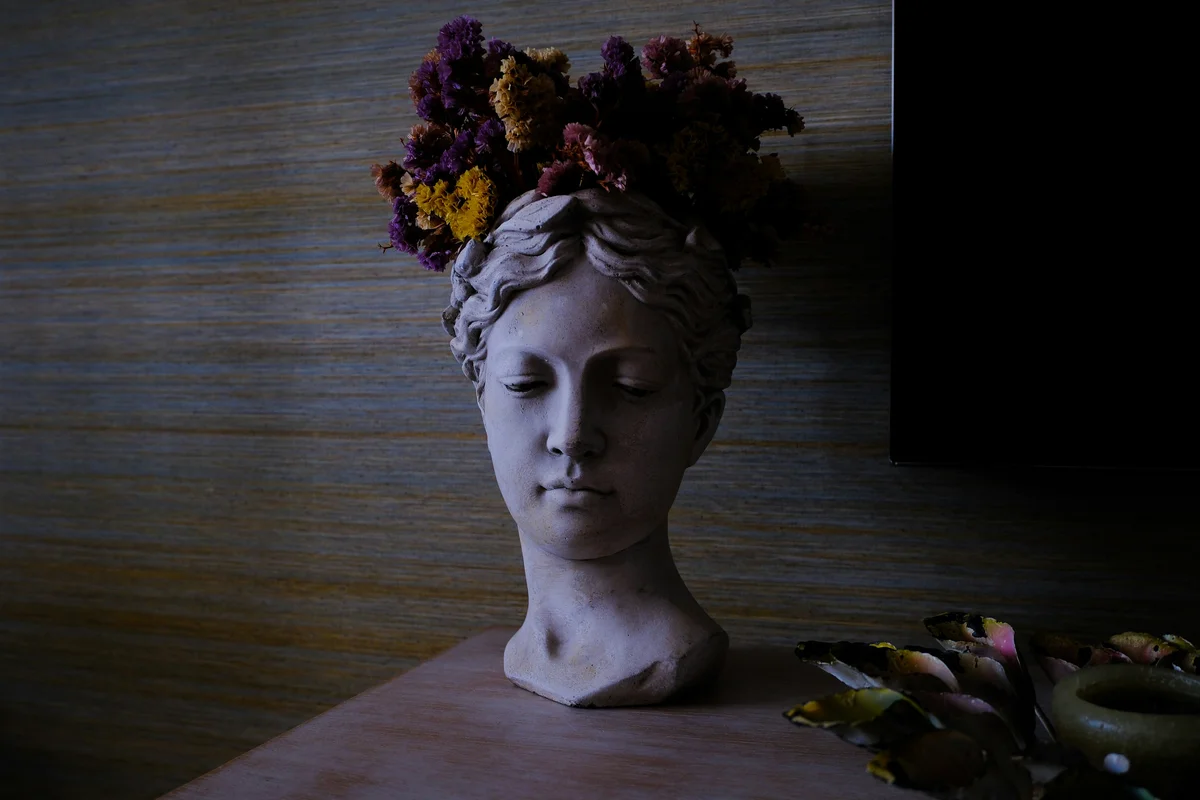
Beltane is the sabbat I feel most strongly as a presence rather than a practice. The deities associated with it are not quiet or peripheral figures; they are the energy of the season itself: fire, fertility, wildness, the world at full flowering with no apology for it.
Some of them I work with directly. Some I acknowledge and step carefully around. All of them are worth knowing.
The Green Man
The Green Man is one of the most widely recognised figures of Beltane: a being of leaves and branches, of the wildwood's own consciousness. He appears in stone carvings on medieval churches across Europe, his face wreathed in foliage, sometimes with vines growing from his mouth. He predates Christianity and was absorbed, imperfectly, into the church's decorative vocabulary.
He represents the masculine principle of nature: the wildness, the fertility, the regenerative power of the green world. He is not a god in the traditional sense so much as an archetype, or genius loci: the spirit of growing things, made visible at the point of year when they are most insistent. Ronald Hutton, in Stations of the Sun (Oxford University Press, 1996), the most thorough scholarly account of the British ritual year, traces the deep roots of these foliate figures through the seasonal calendar. Their persistence into Christian iconography speaks to how profoundly embedded this energy is in the landscape itself.
My own practice tends toward the feminine divine, and the Green Man is not a figure I work with closely. But his presence at Beltane is real (felt in the land rather than in any formal invocation) and worth acknowledging. For practitioners drawn to the wildwood and the green world of early summer, he is entirely appropriate to call in.
Cernunnos
Cernunnos is the Horned God of Celtic tradition: antlered, cross-legged, surrounded by animals. His most famous image appears on the Gundestrup Cauldron, a gilded silver vessel dated to the 1st century BCE, found in Denmark but believed to depict Celtic subjects. His name is attested only once in surviving inscription, on the 1st-century CE Pillar of the Boatmen in Paris, which means we know considerably less about his actual cult than we might wish. But his image is widespread across Gaul and the Celtiberian world, and his nature as lord of wild things, of the forest, of the between-spaces, is consistent across his appearances.
Miranda Green, in The Gods of the Celts, describes him as "a peaceful god of nature and fruitfulness": a characterisation that sits well with Beltane's energy of abundance. He is also a liminal deity, associated with thresholds and the meeting places between worlds. At Beltane, when the veil thins in the direction of vitality and wildness rather than death, he is a natural figure for those drawn to the Celtic tradition.
Brigid at Beltane
Brigid is more closely associated with Imbolc (the February cross-quarter day that marks winter's first retreat) but fire is fire, and her flame does not go out between sabbats. She is the goddess of the forge and the hearth, of poetry and healing, of the sacred well and the sacred fire held together in the same hands. The Brigidine tradition of tending her perpetual flame at Kildare, maintained by her sisters for centuries before the Reformation extinguished it, was revived by the Brigidine Sisters in 1993 and continues to burn today. That kind of continuity is not accidental.
Brigid is one of the deities I return to regularly, and at Beltane I call on her when I am beginning something: a creative working, a commitment I want to enter properly rather than casually, a project that needs the kind of transformation that forging implies. The Beltane fire is a transformative flame and she governs that transformation as well as any figure of the season. If you have an existing relationship with Brigid (or if her name has been surfacing in your cards or your attention lately) her energy at Beltane is worth calling in deliberately.
Flora
Flora is one of the most ancient goddesses in the Roman pantheon: not a deity of great remoteness, but a presence intimately tied to the sensory world of flowers, spring, and the earth's abundance. She had her own flamen, a state-appointed high priest, one of only fifteen such dedications in the entire Roman religious system, which tells you how seriously she was held. She is not simply the Roman name for the Greek Chloris; Ovid's Fasti (Book V) describes Chloris, a Greek nymph of the flowers, being transformed into Flora by Zephyr, the west wind, who gifted her dominion over all blooms. They are related figures, but Flora is distinctly and wholly Roman.
I find Flora compelling at Beltane specifically because of the Floralia, her festival, which ran from April 28 to May 3, its timing overlapping directly with the sabbat. The Floralia was known for pleasure, colour, theatrical performance, and the joyful release of the social constraints that governed Roman life for the rest of the year. Flora's energy is not solemn. She is the goddess of life's immediate, sensory beauty: the pleasure of warmth returning, of flowers opening, of the world at its most willing. That is exactly the register Beltane asks for.
The Fairy Queen
In many folk traditions, Beltane is when the Queen of the Fairies rides out: when the Otherworld's most vital energies are closest to the surface world. She is not a single named deity but a figure who appears across Scottish and Irish folk tradition as the embodiment of Otherworldly power at this time of year: sovereign of a realm that is beautiful, dangerous, and entirely indifferent to human concerns. She appears most clearly in the great Scottish ballads: Tam Lin and Thomas the Rhymer. Reading them before Beltane is not a bad way to attune to her nature.
Working with the Fairy Queen means approaching the Otherworld with respect and without assumptions. Offerings, care, and the awareness that this power is not domesticated and cannot be made so. You can explore her alongside other Otherworldly figures from the traditions you're drawn to in the Grimoire Pantheon.
How to Work with Beltane Deities
You do not need a permanent relationship to work with a deity at a sabbat. Beltane's figures can be approached as seasonal presences: welcomed to your space, honoured with appropriate offerings, held in attention during the festival, and released at its close. That is a complete and legitimate form of deity work.
If you feel a stronger pull (if one of these figures has been appearing in your dreams, your cards, or your thoughts without your invitation) I would trust that. Record what you notice in your Deity Journal and return to it over the weeks that follow. The relationships that last are usually the ones that begin with a pull you did not entirely choose.
Beltane is generous. The deities of this season tend toward vitality rather than severity. It is a good time to begin.
For the broader Beltane context (the fires, the altar, the threshold of the season) see Beltane for Solitary Witches and Herbs of Beltane.
Sources
- Ronald Hutton, Stations of the Sun: A History of the Ritual Year in Britain, Oxford University Press (1996): global.oup.com
- Miranda Green, The Gods of the Celts, Sutton Publishing (1986): Google Books
- Ovid, Fasti, Book V: primary ancient source for Flora and the Floralia, English translation via Theoi Classical Texts Library
- Wikipedia, Cernunnos (Gundestrup Cauldron dating and Pillar of the Boatmen): en.wikipedia.org/wiki/Cernunnos
- Wikipedia, Floralia (festival dates and Roman context): en.wikipedia.org/wiki/Floralia
- World History Encyclopedia, Cernunnos, Gundestrup Cauldron: worldhistory.org
More from the Blog
What Is a Patron Deity and How Do You Find Yours?
A patron deity isn't assigned at birth or chosen from a list. It's a relationship that develops over time; and often begins before you notice it.
How to Begin Working With a Deity: A Guide for Solitary Witches
Deity work doesn't begin with an elaborate ritual. It begins with attention. A beginner's guide for solitary witches.
Begin your practice
Grimoire is available now on Android and as a web app. Start today.