HERBOLOGY
Magical Herbology & Botanical Guide
The green library of the ancient world.

The Herbology compendium is the knowledge layer behind several other tools in Grimoire. Every herb in the library links directly to your Apothecary, so you can check your stock while reading about a plant, or add it to your shopping list with a tap. When you're ready to use an ingredient, Scent Magic pulls from the same library to help you build intentional oil and incense blends, and the Spells & Oils library shows you traditional recipes using the herbs you have.
Every entry also connects to the Spell Builder, and when composing a working, you can select herbs by their magical correspondence and see instantly whether they're in your pantry. Knowledge and practice, kept close together.
What's Inside
Full Herb Compendium
Over 90 entries (herbs, roots, flowers, resins, bark, and seeds) each with its magical tradition, primary properties, and notes on ritual use. Search by name or browse by property.
Planetary Rulerships
Every herb has a planetary ruler: Saturn for banishing, Venus for love, Mercury for communication. The guide shows each rulership and how it shapes a herb's magical application.
Elemental Correspondences
Fire, water, earth, air: each element carries its own energetic quality, and each herb belongs to one. Filter the entire compendium by element to find what your working needs.
Safety & Contraindication Notes
Some plants are toxic. Some shouldn't be burned indoors. Some should be avoided during pregnancy. The guide notes safety concerns clearly, because responsible practice is still practice.
Cross-Referenced to Practice
Every herb links back to your Apothecary, your Scent Magic recipes, and the Spells & Oils library. Knowledge connected to use, not knowledge for its own sake.
Definition
What is magical herbology?
Magical herbology is the study of plants as agents of magical work. Where medicinal herbalism asks what a plant does in the body, magical herbology asks what it represents, what it amplifies, and what tradition has assigned to it. It is one of the oldest threads of the witch's craft, drawing on folk magic, classical occult writing, and the systematic correspondences mapped by Renaissance occultists like Cornelius Agrippa.
The Herbology compendium in Grimoire is a working reference for this material, built for use, not for display. Every entry feeds into the rest of the app: your Apothecary, your Spell Builder, your Scent Magic blends.
The compendium covers ninety-four herbs, resins, and botanicals. I came to most of these through practice rather than study: rosemary first, because it was already in the kitchen; then mugwort, because I needed something for the dreams; then the slower ones, like mullein and yarrow, that entered the practice as it found its own shape. The depth here (the folklore, the medicinal tradition, the magical correspondences) is what I always wanted to find in a single source and never quite could.
Foundational Herbs
What are the most useful herbs to know?
A working apothecary does not need everything. Twelve well-known herbs cover most magical work a solitary witch will ever do, and most of them are already in a kitchen cupboard. The table below summarises the foundational set.
| Herb | Planet | Element | Primary uses |
|---|---|---|---|
| Rosemary | Sun | Fire | Protection, memory, purification |
| Lavender | Mercury | Air | Peace, sleep, calming the mind |
| Sage | Jupiter | Air | Wisdom, cleansing, banishing stagnation |
| Mugwort | Moon | Earth | Dreams, divination, the lunar cycle |
| Basil | Mars | Fire | Protection, prosperity, warding the home |
| Rose | Venus | Water | Love, beauty, emotional opening |
| Mint | Mercury | Air | Communication, abundance, clarity |
| Bay laurel | Sun | Fire | Victory, protection, prophetic dreams |
| Thyme | Venus | Water | Courage, healing, working with the dead |
| Yarrow | Venus | Water | Courage, divination, boundary work |
| Frankincense | Sun | Fire | Consecration, spirit work, sacred space |
| Mullein | Saturn | Fire | Protection, courage, banishing fear |
Safety
A note on safety.
The compendium flags well-known toxicities, common contraindications, and basic handling concerns where they apply. These notes are a starting point for responsible practice, not a substitute for medical advice. If you are pregnant, on medication, or planning to consume any plant, consult a qualified herbalist or medical professional first. Many magical herbs have physical effects, and respecting those effects is part of working with them seriously.
FAQ
Frequently asked questions.
What is magical herbology?
Magical herbology is the practice of working with plants as magical agents: through their correspondence to planets, elements, deities, and seasons, and through the tradition of folk use accumulated over centuries. It asks different questions from medicinal herbalism: not what a plant does physiologically, but what energy it carries, what it amplifies, and what tradition has assigned to it in working practice. Grimoire's compendium covers ninety-four herbs, resins, and botanicals with their full magical tradition, safety notes, and cross-references to the rest of your practice.
How is magical herbology different from medicinal herbalism?
Medicinal herbalism is concerned with the physiological effects of plants: what they do in the body, at what dose, with what risks. Magical herbology is concerned with their symbolic and energetic correspondences: what they represent, what they amplify, what tradition has assigned to them. The two fields overlap historically (most magical herbalists were also medicinal herbalists) but they ask different questions. Grimoire's compendium is concerned with the magical layer, with safety notes flagged where physical use is involved.
How are magical correspondences chosen?
Correspondences in the compendium draw on three traditions: the classical planetary attributions formalised by writers like Cornelius Agrippa in the sixteenth century; the elemental associations rooted in Western occult philosophy; and folk-magical uses that have survived in living practice. Where sources differ (and they often do) the compendium notes the variants rather than picking one as canonical. A working witch can read across the traditions and choose what resonates.
Are the safety notes medical advice?
No. The safety notes flag well-known toxicities, common contraindications (such as plants traditionally avoided during pregnancy), and basic handling concerns (such as resins that should not be burned without ventilation). They are a starting point for responsible practice, not a substitute for medical guidance. If you are pregnant, on medication, or planning to consume any plant, consult a qualified herbalist or medical professional first.
Can I use kitchen herbs for magic?
Yes, and many witches do. Most of the foundational magical herbs are kitchen herbs: rosemary, sage, basil, thyme, mint, bay. Their long history as both food and magical agent is precisely what makes them powerful. The compendium includes them alongside the more specialised ritual herbs because a working apothecary should reflect what a practitioner actually has.
Why are herbs assigned to planets?
Planetary rulership is a system of correspondences that connects each plant to one of the seven classical planets (Sun, Moon, Mercury, Venus, Mars, Jupiter, Saturn) based on the qualities the plant shares with the planet. A martial herb like basil supports protection and courage; a venusian herb like rose supports love and beauty. Knowing a plant's planetary ruler tells you which workings it amplifies and which planetary hours best suit it.
How does Herbology connect to the rest of Grimoire?
The compendium is the knowledge layer behind several other features. Every herb links directly to your Apothecary, where you can track what you have in stock. Scent Magic uses the same library to suggest oil and incense blends. The Spells & Oils library shows traditional recipes built on these herbs. And the Spell Builder cross-references the entire compendium when you compose a working, so you can select an ingredient by its magical correspondence and see at once whether it is in your pantry.
More from the Blog
Practical guides to building and using your herbal practice.
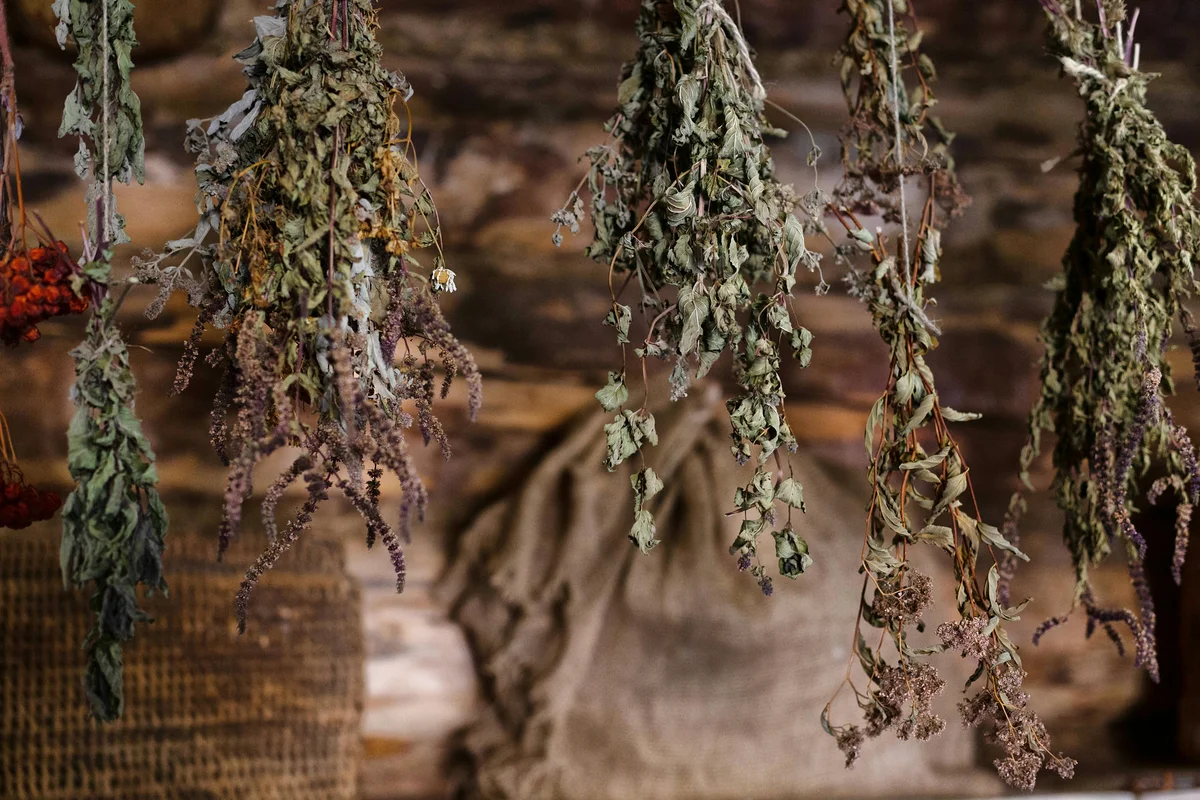
Five Herbs Every Witch Should Have in Their Apothecary
You don't need a fully stocked herb cabinet to practise effectively. You need a handful of versatile, accessible plants and an understanding of why they work.
22 April 2026
Herbs of Beltane: Working with the Plants of the Fire Festival
Beltane's herbs are the plants of late spring, flowering, fragrant, and full of the season's expansive energy.
1 May 2026What you'll find inside
Explore More
Begin your practice
Grimoire is available now on Android and as a web app. Start today.