LESSONS
Witchcraft Classes & Self-Paced Learning
A second voice in the room.

The Lessons section is designed to sit alongside your active practice, not replace it. The tarot course works hand in hand with the Tarot Gallery: as you learn the structure of the deck, the suits, and how to work with reversed cards, the Gallery gives you the full reference entry for every card you study. And once you're reading with confidence, the Daily Pulse gives you a card to practice with every morning. Ritual and spellwork lessons connect directly to the Spell Builder: so as you learn how a working is structured, you can start building your own immediately.
The astrology lessons connect to Discovery: where your natal chart, horoscope, and numerology give the theory a personal grounding. Sacred timing lessons sit alongside the Sacred Calendar, and the shadow work foundations in the Lessons section are the natural starting point before you open Shadow Work. When a lesson references a foundational text (the Kybalion, Agrippa, the Book of the Dead) the Bibliotheca has it available in full, so you can move from introduction to primary source without leaving the app.
What's Inside
Beginner Foundations
Grounding and centering. Circle casting. The elements. Sacred tools and their uses. The wheel of the year. The building blocks of practice that go beneath any specific tradition.
Tarot Lessons
From the structure of the deck to reading spreads with confidence. The Major Arcana. The suits. Reversed cards. Intuitive reading versus book meaning. A complete self-paced tarot course.
Astrology for Witches
The planets, their qualities, and their magical applications. Reading your natal chart. Understanding transits. Timing workings by the sky. Astrology as a practical tool, not just a personality type.
Herbs & Correspondences
How to work with plants in practice. Planetary rulerships and what they mean. Building a working from correspondence up. The logic behind the herbology system.
Ritual & Spellwork
How a ritual is structured. The role of intent, timing, and tools. Writing your own spells. Understanding why workings succeed or fall short. The mechanics behind the magic.
Definition
What is the Lessons section?
Lessons is Grimoire's structured learning library: six courses covering the foundations of contemporary witchcraft. The courses are tradition-agnostic, written for adults who actually want to learn, and built around the underlying systems (Hermetic correspondence, the wheel of the year, ceremonial structure, folk magic) that contemporary witchcraft draws on rather than the specific practices of any one lineage.
The aim is to make solitary practice less lonely: to give witches without access to a structured tradition or a teaching coven a second voice in the room. The lessons sit alongside active practice, not above it.
The Courses
What courses are included?
The Lessons section currently spans six core courses. Each is self-contained but deliberately cross-referenced: readers move between them constantly. The library grows over time as new courses are added.
| Course | Covers | Suited to |
|---|---|---|
| Foundations of practice | Grounding, centering, circle casting, the elements, sacred tools, the wheel of the year | First-year practitioners, or anyone returning after time away |
| Tarot, from the deck up | Structure of the deck, suits, courts, reversals, building intuition, journalling | Beginners through to readers wanting to deepen the system |
| Astrology for witches | The planets, signs, houses, aspects, transits, ritual timing | Practitioners ready to read their own chart, not just sun-sign content |
| Herbs & correspondences | Planetary rulerships, elemental work, building from correspondence, substitution | Anyone wanting the logic underneath the herbology compendium |
| Ritual & spellwork | Anatomy of a working, intention, timing, correspondence, writing your own | Practitioners who want to compose rather than copy |
| Shadow work foundations | What shadow work is and isn't, how it differs from therapy, working safely | Anyone preparing to begin shadow work as a practice |
Approach
How are the lessons written?
For depth, not for speed. The lessons are written in the same voice as the rest of Grimoire (literary, declarative, restrained) and the material rewards slow reading. A unit is meant to be read in twenty to forty minutes, sat with for a day or two, and returned to once practice has had a chance to test what was read. Rushing produces less than letting the material settle.
The lessons are also written to be honest about uncertainty. Where a topic is contested across traditions, and most are, the lessons note the disagreement rather than choosing one orthodoxy. The aim is to give the reader the tools to think about practice for herself, not to produce graduates of a particular school.
I wrote each course as I would have wanted it written for me when I was starting out: without the condescension that plagues most witchcraft writing, but also without the false certainty that papers over real disagreement between traditions. The tarot course is the one I return to myself, because it is the tool I use most and the one I had to learn more carefully after years of reading cards from habit rather than attention. The astrology course exists because I needed to write down what twenty years of using it as a timing system had actually taught me.
FAQ
Frequently asked questions.
What is the Lessons section?
Lessons is the structured learning section inside Grimoire: six courses covering the foundations of contemporary witchcraft, each woven into the app's practical tools. The tarot course works alongside the Tarot Gallery and the daily draw in the Pulse. The herbs course feeds into the Herbology compendium and the Spell Builder. The shadow work foundations are the recommended starting point before opening the Shadow Work journal. Learning and practising are designed to run together, not sequentially.
Who are the lessons written for?
Lessons is built for solitary practitioners who do not have access to a structured tradition or a teaching coven, and for practitioners who do but want a second voice in the room. The material is written for adults (no condescension, no oversimplification) and assumes you are reading because you actually want to learn, not because you need to be entertained into engaging.
Are lessons tied to a specific tradition?
No. The Lessons section is tradition-agnostic: it teaches the underlying systems that contemporary witchcraft draws on (Hermetic correspondence, the wheel of the year, ceremonial structure, folk magic) rather than the specific practices of any one lineage. A Wiccan, a chaos magician, a folk practitioner, and an unaffiliated solitary witch can all use the same material; the application is theirs to make.
Do I need to read them in order?
No, although the Foundations course makes the most sense as a starting point if you are new to practice. The other courses can be read in any sequence, and most witches find themselves moving between them, reading a unit on planetary rulerships in the herbs course, then jumping to the corresponding unit in the astrology course, then back. The cross-referencing is part of how the material is meant to be used.
How long does each course take?
The lessons are designed to be read at a working pace: a unit at a time, returning between sittings to let the material settle. A typical unit is twenty to forty minutes of reading, plus whatever practice it suggests. A full course usually contains eight to fifteen units, so a witch reading one unit a week will finish a course in two to four months. The material rewards slow reading; rushing through it produces less than letting it sink in.
What's the difference between Lessons and the Bibliotheca?
The Lessons section teaches the systems of practice in modern, structured prose written for direct learning. The Bibliotheca holds the primary historical texts those systems are drawn from: Agrippa, the Kybalion, the Hávamál, the Greek Magical Papyri. A typical reader uses the Lessons to build a working understanding of a topic, then uses the Bibliotheca to engage the source material once the framework is in place. The two are designed to be read together.
How do Lessons connect to the rest of Grimoire?
Each course is woven into the practical tools that put its content to work. The tarot course is designed to be used alongside the Tarot Gallery and the daily card in the Pulse. The astrology course connects to your natal chart and horoscope in Discovery. The herbs course feeds directly into the Herbology compendium and the Spell Builder. The shadow work foundations are the recommended starting point before you open the Shadow Work journal. Reading and practising are designed to be a single rhythm rather than two separate activities.
What you'll find inside
Explore More
From the Blog
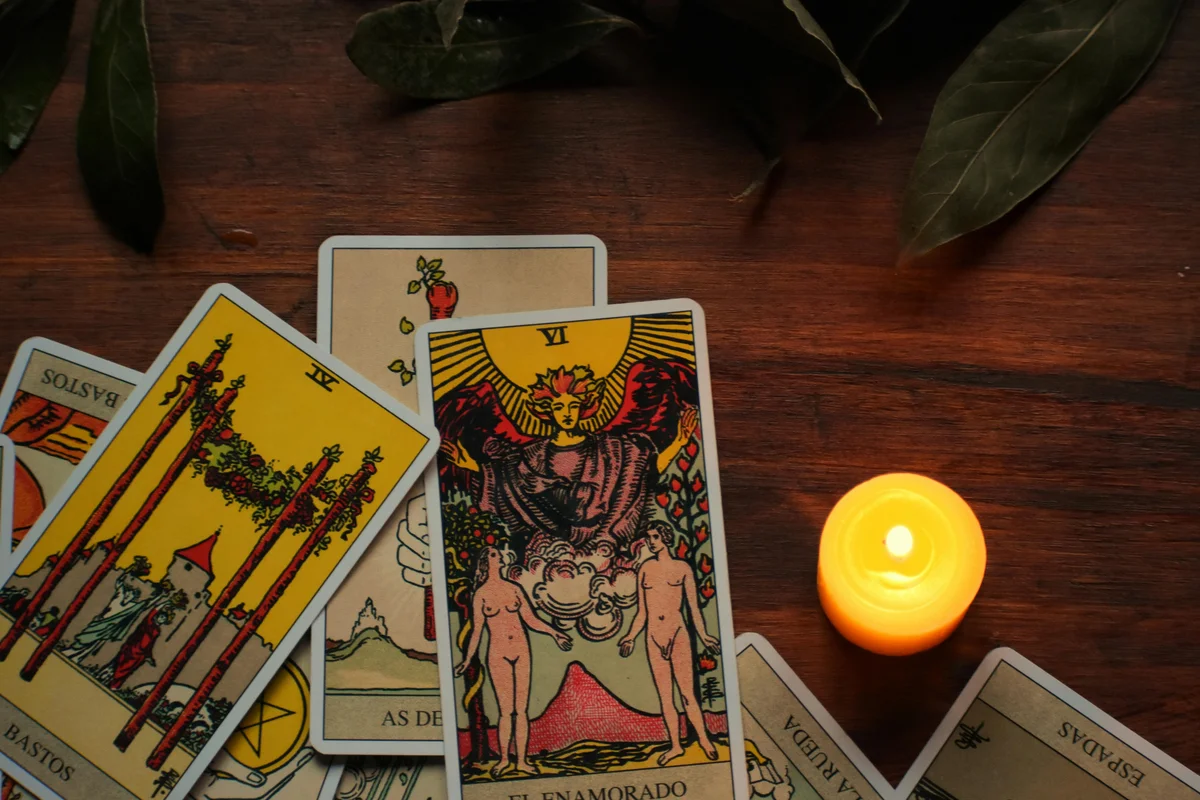
A Beginner's Guide to Tarot for Solitary Witches
Tarot is not fortune telling. It is a mirror, a way of asking better questions.

How to Begin Working With a Deity: A Guide for Solitary Witches
Deity work doesn't begin with an elaborate ritual. It begins with attention. A beginner's guide for solitary witches.

What Is Shadow Work (And Why Does It Matter in Practice)?
Shadow work isn't about darkness for its own sake; it's about wholeness. A gentle, grounded guide for solitary witches: what it is, and safe ways to begin.
Begin your practice
Grimoire is available now on Android and as a web app. Start today.