TAROT GALLERY
Tarot Meanings & Digital Card Gallery
78 cards. A lifetime of practice.
The Tarot Gallery is the reference companion to your daily practice. Every morning in the Daily Pulse, your drawn card links directly to its full Gallery entry: so you can move from the daily draw to upright and reversed meanings, elemental associations, and astrological correspondences in a single tap. The Gallery is always a tap away when a card needs deeper context.
If you're still learning to read the cards, the Lessons section includes a complete self-paced tarot course: covering the structure of the deck, the suits, reversed cards, and how to move from book meanings to intuitive reading. The Gallery and the Lessons work together: study the system in Lessons, then use the Gallery as your reference during practice.
What's Inside
Full 78-Card Gallery
All 78 cards (22 Major Arcana and 56 Minor Arcana) each with its illustration, card number, and visual description. Browse the full deck or navigate by suit.
Upright & Reversed Meanings
Every card has both meanings. Upright and reversed: not sanitised into a single positive reading, but the full range of what the card can say depending on how it falls.
Elemental & Suit Correspondences
Wands are fire. Cups are water. Swords are air. Pentacles are earth. The Gallery makes those connections explicit: so you can read the deck as a correspondence system.
Astrological Associations
Every card in the Major Arcana has a planetary or zodiacal ruler. Each court card has an astrological correspondence. The Gallery makes those links visible.
Daily Draw Context
Pull from the Gallery into your daily practice. When a card appears in the Daily Pulse, the Gallery gives you the full reference: so you can read with depth from the first draw.
Definition
What is the Tarot Gallery?
The Tarot Gallery is a complete digital reference for the 78-card Rider-Waite tarot deck. Every card is presented with its illustration, upright and reversed meanings, elemental and astrological correspondences, and the interpretive context a working reader needs. It is not a beginner's primer and not a fortune-telling tool. It is the kind of reference book a witch keeps at her elbow during practice.
The Gallery is the reference companion to your Daily Pulse and the structured course in Lessons. Study the system in the lessons; reference it in the Gallery; apply it in your daily draw.
The Suits
What do the four tarot suits mean?
The Minor Arcana is divided into four suits, each tied to a classical element. Reading the suits as elements turns the deck from a set of memorised meanings into a coherent system you can think with.
| Suit | Element | Domain | Reads |
|---|---|---|---|
| Wands | Fire | Will, passion, action | Initiative, drive, the spark of beginning |
| Cups | Water | Emotion, intuition, relationships | Feeling, connection, the inner life |
| Swords | Air | Intellect, thought, conflict | Decisions, communication, struggle of the mind |
| Pentacles | Earth | Body, money, material work | Resources, craft, the physical world |
Approach
How does Grimoire approach tarot?
Tarot in Grimoire is treated as a reflective tool, not a predictive one. The cards do not foretell fixed outcomes. They surface the dynamics, choices, and unconscious patterns shaping a situation, and they are most useful when read as a mirror for the questioner's own thinking. The Gallery provides the meanings; your daily practice provides the context that turns them into something readable.
I drew cards for years before I actually understood the suit system: treating each card as a memorised symbol rather than a piece of a coherent language. The Tower meant disruption; the Star meant hope; the Three of Swords meant heartbreak. That is not reading tarot. Reading tarot is seeing a Three of Swords and knowing: air, the element of mind; three, the number of expression; a painful thought spoken aloud. The system is what makes the card readable, not the memory.
The full system (major and minor arcana, suits and elements, planetary and zodiacal correspondences) is taught in Lessons, used in the Daily Pulse, and held alongside the broader correspondences in The Vault. The Gallery itself is the reference layer that connects them.
FAQ
Frequently asked questions.
What is the Tarot Gallery in Grimoire?
The Tarot Gallery is Grimoire's complete reference for the 78-card Rider-Waite-Smith deck. Each card is presented with its illustration, upright and reversed meanings, elemental and suit correspondence, and planetary or zodiacal rulership. The Gallery links directly from the daily card draw in the Daily Pulse: when a card appears in your morning practice, one tap takes you to its full entry. For practitioners building the deck from the ground up, the tarot course in Lessons pairs directly with the Gallery.
Which tarot deck does the Gallery use?
The Gallery uses the Rider-Waite-Smith deck, originally published in 1909 with illustrations by Pamela Colman Smith. It is the foundational deck of modern tarot (the symbolic vocabulary almost every later deck builds on or responds to) and the meanings used throughout the Gallery are drawn from this tradition.
What's the difference between the Major and Minor Arcana?
The Major Arcana is the set of 22 numbered cards (0 to 21) that depict archetypal forces: the Fool, the Magician, the High Priestess, and so on, through to the World. They tend to indicate large themes, life lessons, or significant turning points. The Minor Arcana is the set of 56 cards divided into four suits (Wands, Cups, Swords, and Pentacles) each running ace through ten plus four court cards (Page, Knight, Queen, King). They tend to indicate the everyday textures of a situation. Together they make a deck of 78.
What are reversed tarot cards?
A reversed card is one drawn upside down. Reversed cards are not simply negative versions of the upright meaning; many readers approach them as the same card's energy in shadow form, blocked, internalised, or expressing in an unhealthy register. The Gallery provides distinct upright and reversed meanings for every card, so you can read with the full range of what each card can say rather than collapsing the deck into a single tone.
What are the four tarot suits and their elemental correspondences?
Wands correspond to fire: the element of will, passion, and action. Cups correspond to water: the element of emotion, intuition, and relationships. Swords correspond to air: the element of intellect, thought, and conflict. Pentacles correspond to earth: the element of the body, money, and material work. Reading the suits as elements gives the deck a coherent system rather than a set of arbitrary symbols.
Do tarot cards predict the future?
Tarot is best understood as a reflective tool rather than a predictive one. The cards do not foretell fixed outcomes. They surface the dynamics, choices, and unconscious patterns shaping a situation, and they are most useful when read as a mirror for the questioner's own thinking. Grimoire's approach throughout the app (and in the writing on the blog) treats tarot as a way of asking better questions rather than a way of receiving fixed answers.
How does the Tarot Gallery connect to the rest of Grimoire?
The Gallery is integrated with the Daily Pulse: every morning's card draw links directly to its Gallery entry, so you can move from draw to reference in a single tap. It is also paired with the Lessons section, which includes a complete self-paced tarot course covering the structure of the deck, the suits, reversed cards, and the move from book meanings to intuitive reading.
More from the Blog
Guides to building a tarot practice that lasts.
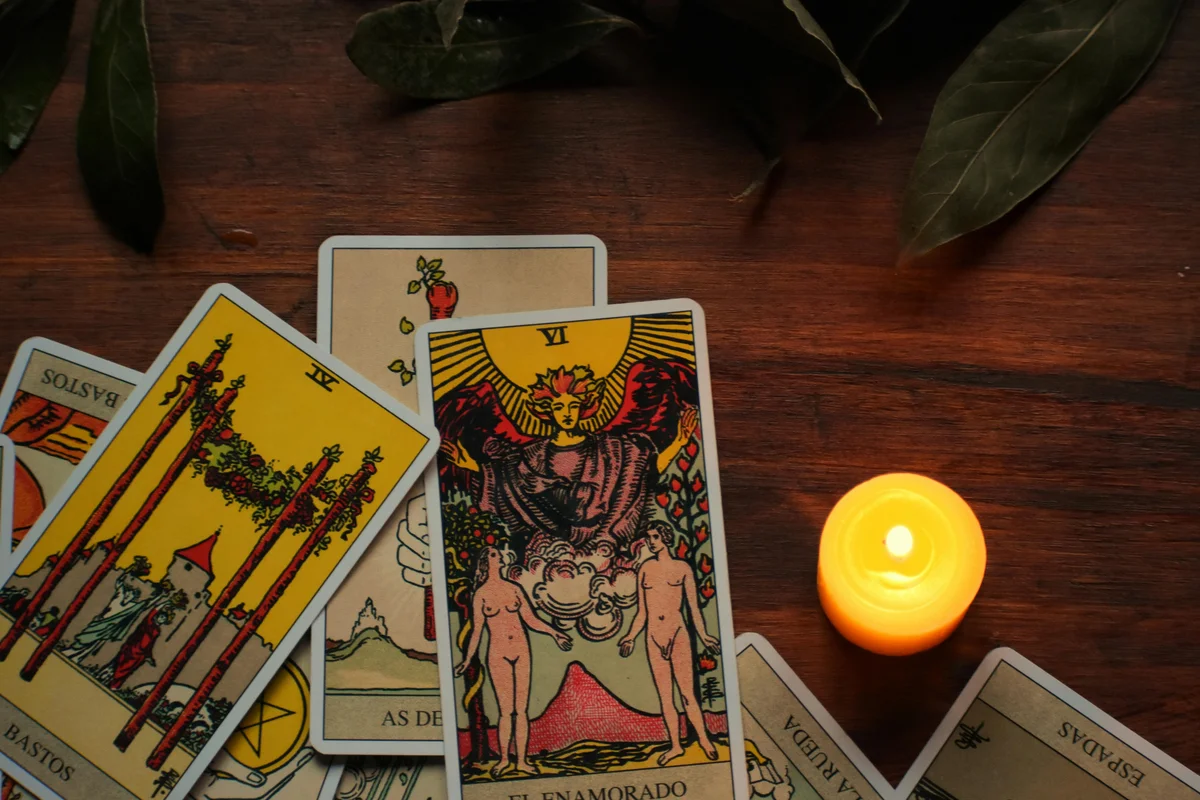
A Beginner's Guide to Tarot for Solitary Witches
Tarot is not fortune telling. It is a mirror, a way of asking better questions.
15 March 2026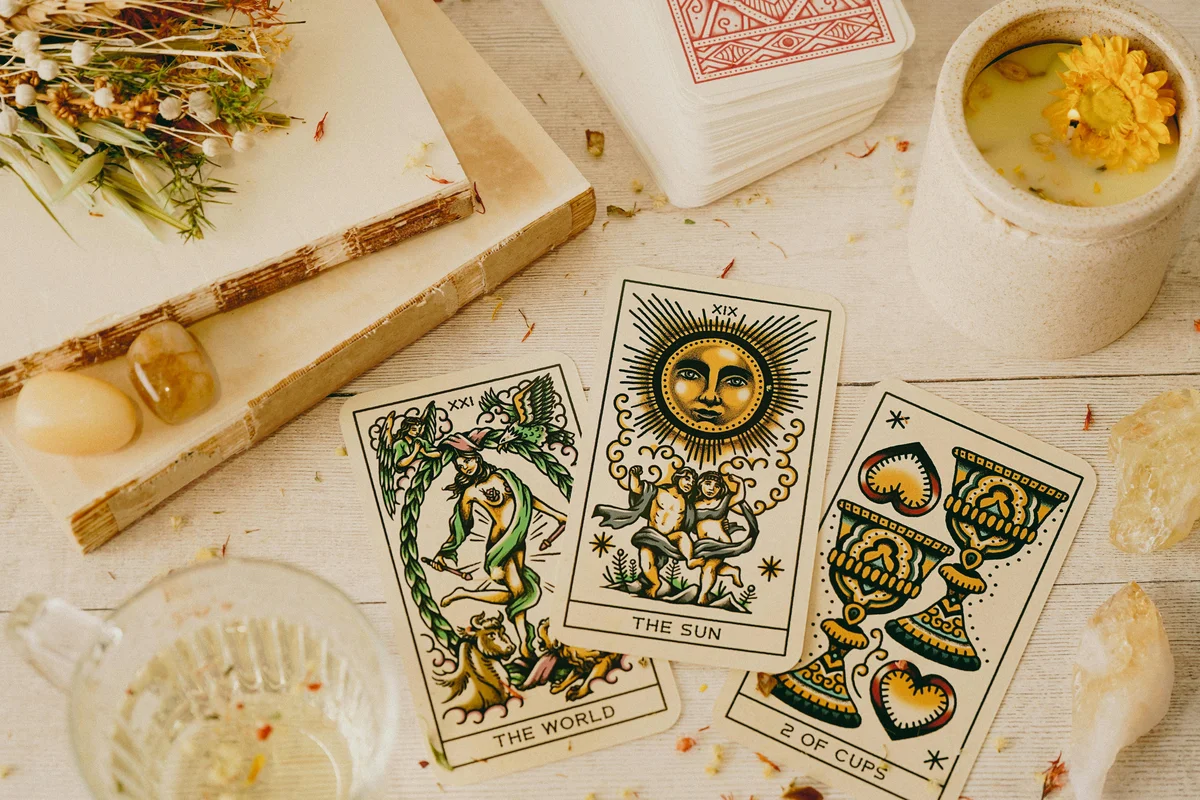
How to Start a Daily Tarot Practice (And Actually Stick to It)
A daily tarot practice doesn't require an hour of quiet and a perfectly set altar. It requires a card, a moment, and a way to remember what you noticed.
20 April 2026What you'll find inside
Explore More
Begin your practice
Grimoire is available now on Android and as a web app. Start today.