Apothecary
Agrimony: Magical Properties & Uses
Agrimonia eupatoria
Also known as Cocklebur, Stickwort
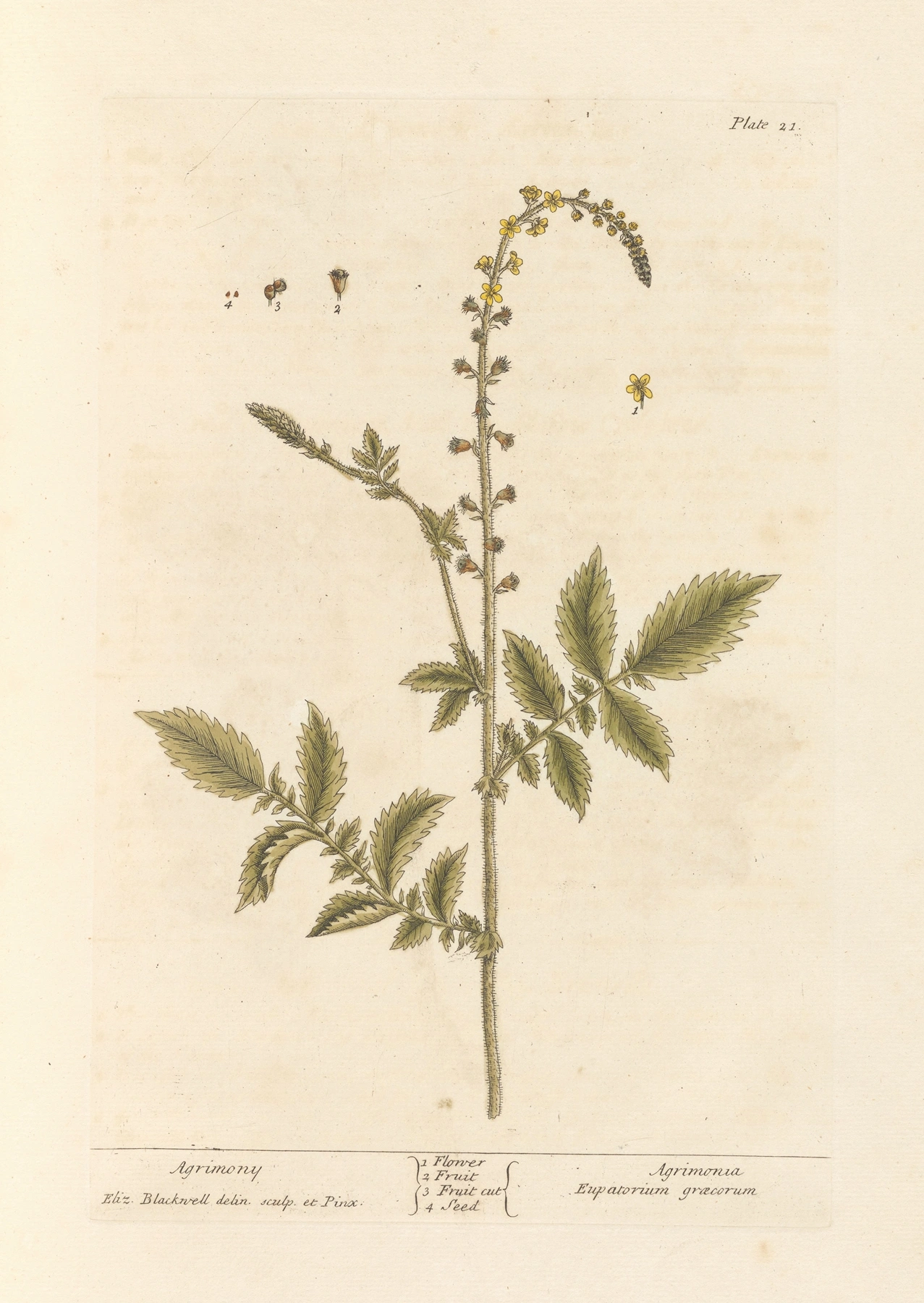
A modest yellow-spired plant whose unassuming face hides one of the oldest reversal charms in Western witchcraft. Where the work of tongue or eye seeks to harm, agrimony turns the spell back upon its sender, and lays the troubled mind down into a sleep so deep no curse can find it.
Correspondences
Element
Air
Planet
Jupiter
Zodiac
Cancer
Chakra
Solar Plexus
Parts Used
Aerial parts, root
Harvest
Late summer
Practice
Magical Properties
Protection, sleep, banishing, reversal
Agrimony's primary magical use is reversal: the returning of sent harm to its sender. This tradition is among the oldest continuous practices in Western folk magic, appearing in Anglo-Saxon charms and persisting through the cunning-folk traditions of early modern Britain. It is specifically a herb of justice rather than attack: it does not seek to harm, only to reflect. This distinction matters in practice: agrimony works best in defensive contexts, when you know interference is coming, when you suspect ill-wishing, or when something already in motion needs to be redirected. Paired with its deep-sleep associations, it guards both the waking practitioner from magical interference and the sleeping one from what follows her into dreams.
Mundane
Mundane Uses
Agrimony has been used medicinally in Europe for at least a thousand years. Its high tannin content gives it genuine astringent properties useful for wound-binding, skin complaints, and sore throats. Culpeper recommended it for jaundice, liver complaints, and digestive difficulties, and it was widely used in medieval European herbalism for these purposes. It remains a recognised herb in modern European herbal medicine, used as a mild digestive bitter and astringent tonic. It is generally considered safe for most adults.
Devotion
Deity Associations
None specific
History
Folklore & History
Agrimony appears in the Lacnunga (the Anglo-Saxon herbal compiled around the 10th century) as one of the nine herbs invoked in the Old English Charm Against Poison, a sign of how seriously early medieval practitioners held its protective properties. The name derives from the Greek argemone, a plant reputed to heal conditions of the eye. By the time it reached the English herbalists its reputation had shifted firmly toward protection and reversal. Culpeper, writing in the 17th century, recorded the folk practice of placing it beneath a sleeping person's head to produce a deep, enchanted slumber from which they could not be woken until the herb was removed: a use that persisted in British folk magic into the early modern period.
Safety
Safety Notes
Avoid in pregnancy. Do not use with blood-thinning medications.
This information is provided for educational and magical reference only. Always consult a qualified practitioner before using herbs medicinally.
FAQ
Frequently Asked Questions
What is Agrimony used for in witchcraft?
A modest yellow-spired plant whose unassuming face hides one of the oldest reversal charms in Western witchcraft. Where the work of tongue or eye seeks to harm, agrimony turns the spell back upon its sender, and lays the troubled mind down into a sleep so deep no curse can find it. Its primary magical uses are protection, sleep, banishing, and reversal.
What element is Agrimony associated with?
Agrimony is associated with the Air element, the sign of Cancer, and resonates with the Solar Plexus chakra.
What planet rules Agrimony?
Agrimony is ruled by Jupiter. In the classical planetary system, this gives the herb its characteristic energetic signature and indicates which workings it most readily amplifies and which planetary hours best suit it.
Is Agrimony safe to use?
Some care is required when working with Agrimony. Avoid in pregnancy. Do not use with blood-thinning medications. The information here is provided for educational and magical reference only: always consult a qualified practitioner before using any herb medicinally.
In Your Practice
Track your work with Agrimony.
Record spells, rituals, and observations in your private digital grimoire.
Related
Related Herbs
Lavender
Mercury
Perhaps no herb in the Western tradition is more beloved or more endlessly useful. Lavender is peace, sleep, love, and c…
Cinquefoil
Jupiter
Five-fingered as a hand cast in plant form, cinquefoil is the herb of the five-fold blessing: love, money, health, power…
Blackthorn
Saturn
Twisted, thorned, and black-barked, the wishing thorn is the witch's tree of fate and reckoning. Where blessing has fail…
Dragon's Blood
Mars
A scarlet resin that bleeds from a palm tree of the East, said by the old herbalists to be the very gore of dragons slai…
Begin your practice
Grimoire is available now on Android and as a web app. Start today.