Apothecary
Sandalwood: Magical Properties & Uses
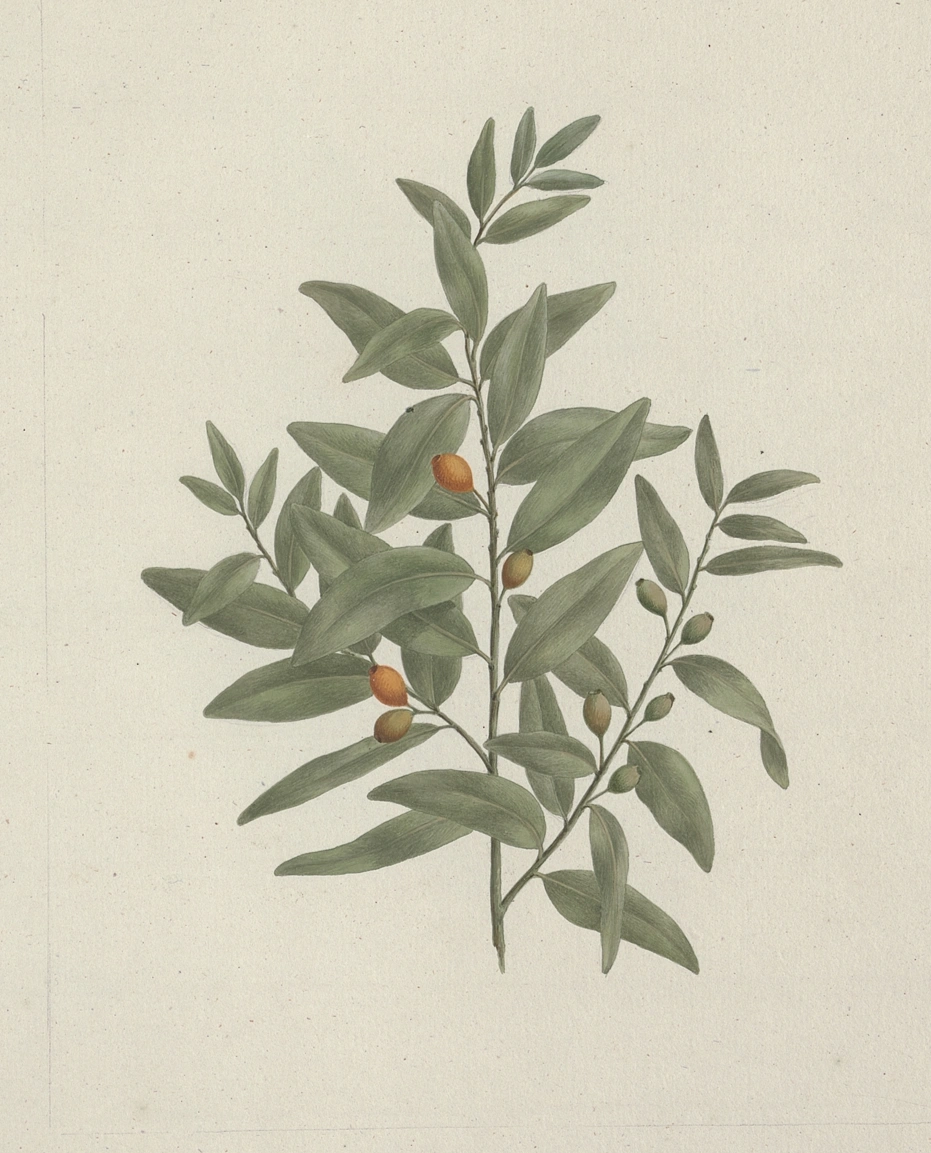
Santalum album
Also known as White Sandalwood, True Sandalwood
The sacred wood of Indian and Tibetan meditation, carved into temples and ground into the paste worn upon the foreheads of devotees. Sandalwood smoke is the breath of the contemplative tradition: a calm, fragrant deepening of any working that aims toward the inner.
Correspondences
Element
Water/Air
Planet
Moon
Zodiac
Cancer
Chakra
Crown, Third Eye
Parts Used
Heartwood, oil
Harvest
Year-round
Origin
India
Moon Phases
Full
Practice
Magical Properties
Purification, protection, healing, meditation, wishes, spiritual contact
Sandalwood is the meditation and devotion resin: it quiets the mind, consecrates the space, and opens the practitioner to higher perception and spiritual contact. Where frankincense elevates and myrrh deepens, sandalwood stills. It is appropriate for almost any working where a settled, receptive state is required, and is particularly useful in deity work, meditation, and dreamwork. As a base note in incense blends it anchors the lighter components and gives them staying power. In protection workings it creates a specifically spiritual protection: guarding the practitioner's psychic space rather than their physical threshold.
Mundane
Mundane Uses
Sandalwood (Santalum album) essential oil is used extensively in perfumery, cosmetics, and aromatherapy. Clinically it has demonstrated anti-inflammatory, antibacterial, and antifungal properties in laboratory studies. It has been used in Ayurvedic medicine for urinary tract infections, skin conditions, and as a cooling herb. In traditional Chinese medicine it is used for chest pain and digestive complaints. The heartwood oil has been studied for potential applications in anxiety and sleep disturbance. Sandalwood trees require decades to mature; the species is threatened by overharvesting and must be sourced responsibly.
Devotion
Deity Associations
Vishnu, Lakshmi, Saraswati
History
Folklore & History
The sacred wood of Indian and Tibetan meditation, sandalwood has been burned in temples for at least four thousand years. In Hindu tradition it is used in the paste worn on the foreheads of devotees in puja ceremonies and applied to the body in death rites. Buddhist monasteries have burned it for centuries in meditation and as an offering to the divine. It reached the West through trade routes and became absorbed into the Egyptian and later the Greco-Roman incense tradition. In Ayurvedic medicine it has a history of continuous use that is among the longest of any plant material in the world. The trees are critically endangered from overharvesting; plantation-grown sandalwood should be the only source used.
Safety
Safety Notes
Generally safe for external use. Avoid essential oil internally. Endangered species: source sustainably.
This information is provided for educational and magical reference only. Always consult a qualified practitioner before using herbs medicinally.
FAQ
Frequently Asked Questions
What is Sandalwood used for in witchcraft?
The sacred wood of Indian and Tibetan meditation, carved into temples and ground into the paste worn upon the foreheads of devotees. Sandalwood smoke is the breath of the contemplative tradition: a calm, fragrant deepening of any working that aims toward the inner. Its primary magical uses are purification, protection, healing, meditation, wishes, and spiritual contact.
What element is Sandalwood associated with?
Sandalwood is associated with the Water/Air element, the sign of Cancer, and resonates with the Crown and Third Eye chakras.
What planet rules Sandalwood?
Sandalwood is ruled by Moon. In the classical planetary system, this gives the herb its characteristic energetic signature and indicates which workings it most readily amplifies and which planetary hours best suit it.
Is Sandalwood safe to use?
Some care is required when working with Sandalwood. Generally safe for external use. Avoid essential oil internally. Endangered species: source sustainably. The information here is provided for educational and magical reference only: always consult a qualified practitioner before using any herb medicinally.
In Your Practice
Track your work with Sandalwood.
Record spells, rituals, and observations in your private digital grimoire.
Related
Related Herbs
Myrrh
Moon
The dark sister of frankincense: gift of the Magi, breath of the embalming chambers of Egypt. Myrrh smoke deepens any wo…
Bay Laurel
Sun
The leaf the Pythia chewed before she spoke at Delphi still holds the breath of prophecy. Write a wish upon a bay leaf a…
Cedar
Sun
Ancient, evergreen, and fragrant of both temple and forest. Cedar smoke is the breath of the old gods of Lebanon and the…
Fennel
Mercury
The hollow stalk in which Prometheus hid the fire stolen from the gods, and through which a witch may still hide her own…
Begin your practice
Grimoire is available now on Android and as a web app. Start today.