Herbology
Five Herbs Every Witch Should Have in Their Apothecary
Rowenna
Solitary witch and the founder of Grimoire. Built the app she couldn't find anywhere else. Writes about the craft with primary sources, honest lineage notes, and a low tolerance for vague correspondences. Based in the UK with more herbs than shelf space.
· 6 min read
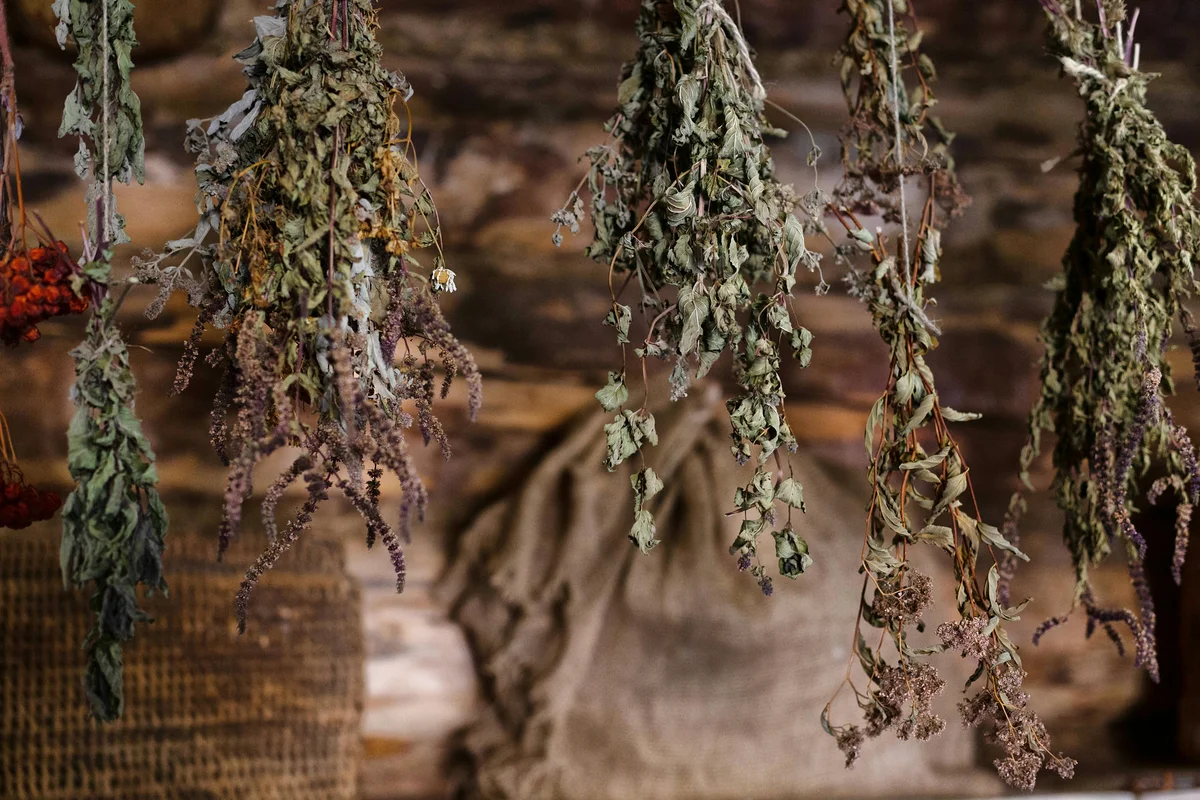
There is a particular kind of overwhelm that hits when you first start building a magical herb collection. Every compendium lists hundreds of plants. Every tradition has its favourites. Every online forum has a different opinion about what is essential.
The truth is simpler: a small collection of versatile herbs, well understood, is more useful than a large collection of plants you cannot confidently work with.
Here are five herbs that earn their place in any apothecary: chosen for their magical range, their accessibility, and the depth of tradition behind them.
1. Lavender (Lavandula angustifolia)
If you can only have one herb, make it lavender. Its magical range is unusually broad: peace, purification, sleep, love, clarity, protection. Ruled by Mercury and associated with the element of air, it carries a quality of gentle, communicative energy.
The name tells you something about its history. Both the common name "lavender" and the genus name Lavandula derive from the Latin lavare, to wash, because Romans added the herb to bathing water, a use documented by the Royal Botanic Gardens, Kew. Dioscorides recorded its medicinal applications in De Materia Medica (77 CE), noting it could relieve headaches and sore throats. The herb has been in continuous use, magical and practical, for over two thousand years.
Lavender is forgiving to work with. Burn it as incense for a calming space. Add it to a sleep sachet. Use it in a bath for ritual cleansing before a working. It blends well with almost everything and rarely overwhelms a blend. Organic lavender is widely available dried, and it grows readily in most temperate gardens.
2. Rosemary (Salvia rosmarinus)
Rosemary has been used for purification and protection since antiquity. Britannica documents its use in ancient Greece and Rome for memory, purification, and the banishing of illness: burned as incense and believed to drive out evil spirits. Dried sprigs have been found in Egyptian tombs dating to 3,000 BCE. The Latin name rosmarinus, "dew of the sea" (ros + marinus), records its origins along the rocky Mediterranean coastline.
The memory association persisted into literature. Shakespeare's Ophelia declares in Hamlet (IV.5): "There's rosemary, that's for remembrance", a line that drew on centuries of genuine folk practice. Students in ancient Greece wore rosemary garlands during examinations for exactly this reason.
In 2017, the plant was reclassified from Rosmarinus officinalis to Salvia rosmarinus after researchers found close genetic similarities with the broader Salvia genus. Its solar, fiery energy makes it useful in any working requiring clarity, focus, or the burning away of what no longer serves. It is also strongly protective and deeply associated with ancestor work and honouring the dead.
One of the few herbs where fresh and dried are equally effective. If you grow nothing else, grow rosemary.
3. Mugwort (Artemisia vulgaris)
Mugwort is the herb of dreams, vision, and the in-between. The genus name Artemisia is given for the goddess Artemis herself (the moon, the hunt, the liminal) which is precisely the domain mugwort occupies in magical practice. It has been used across traditions to enhance dreaming, support divination, and thin the boundary between ordinary and non-ordinary perception.
Burn a small amount before a tarot reading or scrying session. Sleep with a sachet of dried mugwort under your pillow to encourage vivid, memorable dreams. Use it in workings related to intuition, the subconscious, or communication with the unseen.
A note on safety: mugwort should be avoided during pregnancy, as it has historically been used as an emmenagogue. The US National Center for Complementary and Integrative Health (NCCIH) advises caution and recommends consulting a healthcare provider before use. Use with care, in moderation, and with good ventilation.
4. Frankincense (Boswellia spp.)
Technically a resin rather than an herb, frankincense earns its place in any apothecary through sheer magical utility. Solar, purifying, and powerfully protective, it has been used in sacred contexts across cultures for thousands of years: from the kyphi blends of ancient Egyptian temples to the incense of Christian liturgy, documented in use since at least the fourth century CE.
A 2008 study in FASEB Journal by researchers at Johns Hopkins University and the Hebrew University of Jerusalem identified incensole acetate, a compound specific to Boswellia resin, as psychoactive when burned and inhaled: activating TRPV3 ion channels in the brain and producing measurable anxiolytic effects in mice. The ancients knew this without the chemistry.
As incense, it clears and consecrates a space with unusual effectiveness. It blends well with myrrh, sandalwood, and most floral herbs. Look for genuine Boswellia resin rather than synthetic fragrance oils, which lack the aromatic and magical depth of the real thing.
5. Bay Laurel (Laurus nobilis)
Bay is the herb of prophecy, victory, and manifestation. Sacred to Apollo, it was the prize awarded to victors at the Pythian Games at Delphi. The Pythia, the oracle priestess, reportedly chewed laurel leaves before delivering her prophecies: a practice noted by classicists at The Conversation as potentially producing mild hallucinogenic effects. The word "laureate" in Nobel Laureate, poet laureate, and baccalaureate all trace back to Laurus nobilis, so thoroughly did the plant become associated with distinction and inspired achievement.
In modern practice, bay is most commonly used for manifestation workings: write an intention on a dry bay leaf and burn it to release it. It can also be used in protection workings, placed under a pillow for prophetic dreams, or burned as incense for clarity and inspiration.
Bay is also the most practical herb on this list. It is a culinary staple, widely available, and inexpensive. The same leaf you might add to a stew carries genuine magical potency backed by more than two thousand years of documented use.
Building from here
These five herbs cover an impressive range of magical needs: purification, protection, dreams, manifestation, clarity, and love. They are all accessible, affordable, and backed by deep tradition.
From this foundation, you can begin to expand based on your specific practice. If you work heavily with the moon, add white willow and jasmine. If your work tends toward protection, add black salt and dragon's blood. If you are drawn to love and relationship magic, rose petals and damiana.
Start here. Know these five well before you add a sixth. The depth of relationship with a few plants is more useful than a passing acquaintance with many. Find them all in the Herbology compendium.
Sources
- Royal Botanic Gardens, Kew: Lavandula angustifolia etymology from Latin lavare, kew.org
- Britannica, Rosemary: ancient Greek and Roman history of use, britannica.com/plant/rosemary
- JSTOR Daily, "Rosemary: The Herb of Ritual and Remembrance": history and memory associations, daily.jstor.org
- The Conversation, "What's a laureate?": Pythia, laurel, and the laureate etymology, theconversation.com
- US National Center for Complementary and Integrative Health (NCCIH): mugwort safety, nccih.nih.gov
- Moussaieff et al., FASEB Journal 22(8), 2008: incensole acetate psychoactivity, PubMed
More from the Blog
The Witch's Guide to Yarrow
Yarrow has been named in almost every Grimoire herb piece — the wound-herb of Achilles, the I Ching's divinatory stalk, the English love-dream herb. A complete profile: botany, folklore across three distinct traditions, magical correspondences, practical use, and three simple workings.
Herbs of Beltane: Working with the Plants of the Fire Festival
Beltane's herbs are the plants of late spring: flowering, fragrant, and full of the season's expansive energy. Here's how to work with them in your practice.
Begin your practice
Grimoire is available now on Android and as a web app. Start today.