Ancient Occult Texts
The Lemegeton: The Lesser Key of Solomon
Rowenna
Solitary witch and the founder of Grimoire. Built the app she couldn't find anywhere else. Writes about the craft with primary sources, honest lineage notes, and a low tolerance for vague correspondences. Based in the UK with more herbs than shelf space.
· 9 min read

Of all the grimoires that claim King Solomon as their author, the Lemegeton is the most elaborate, and it is also the most honestly a patchwork. The word "Lemegeton" itself is of obscure and uncertain origin, and may rest on faulty or garbled Latin; it is the rest of the full title, Lemegeton Clavicula Salomonis, that carries the meaning, clavicula being Latin for "little key". The text earned that title as a companion to the older, weightier Key of Solomon covered elsewhere on this blog, the lesser key to the greater. What survives under that name is not one text but five, stitched together over more than a century from a range of separate sources, and its most famous section has shaped popular ideas of ceremonial magic and ranked demonology more than almost any other single book.
This is the sixth piece in the Grimoire Ancient Occult Texts series, following Aradia, the Picatrix, the Greek Magical Papyri, Agrippa, and the Key of Solomon, and like the others it is treated as history and bibliography rather than as a working manual. The Lemegeton is a genuinely important text to understand. It is not one this blog will walk through as a set of instructions.
Not by Solomon: the honest authorship story
As with the Key of Solomon before it, the attribution to the biblical king is a literary convention rather than a fact, and one worth being direct about. King Solomon had a long-standing reputation in Jewish, Christian, and Islamic legend as a master of spirits, drawing on scripture that describes his wisdom and his command over the natural world. Grimoires claiming his authorship were a recognised genre by the medieval period, using his name the way a modern book might use a respected expert's endorsement: to lend a compiled and often quite recent text an air of ancient and unimpeachable authority.
The Lemegeton as it exists today was assembled in the seventeenth century, likely in England, from a mixture of older manuscript sources, some genuinely medieval, some Renaissance, combined and edited by an unknown compiler or compilers into the five-book structure now familiar. It draws in part on earlier catalogues of spirits that circulated separately, including material with roots stretching back centuries before the compilation itself. So the honest picture is layered: some source material is genuinely old, the assembly into "the Lemegeton" is seventeenth-century, and the authorial name on the cover is legend rather than fact.
The five books
The Lemegeton is organised into five distinct sections, each with its own character and its own separate manuscript history before being gathered under one title.
Ars Goetia is by far the most famous and most reprinted section, a catalogue of seventy-two named spirits, each given a rank, a described form, and stated powers. It is the source of the popular image of a ranked hierarchy of demons that has echoed through later occult fiction and popular culture far beyond its original readership. This blog will not reproduce the list, the seals, or the conjuration instructions associated with it; readers interested in the primary text can find published scholarly editions.
Ars Theurgia-Goetia catalogues a different set of spirits, described as more neutral or dual-natured than the Goetic list, associated with the cardinal directions and the winds.
Ars Paulina is structured around the hours of the day and the degrees of the zodiac, pairing angelic figures with astrological time in a systematic way that reflects the broader Renaissance interest in astrological magic seen across texts like the Picatrix.
Ars Almadel concerns a specific tool, the almadel, a wax tablet inscribed with symbols, used as a focus for angelic contact.
Ars Notoria is the oldest material in the collection by a wide margin, with roots that likely reach back to the medieval period, consisting of prayers and figures intended to grant swift learning and memory, a notably different aim from the spirit-summoning of the other four books.
Why the Goetia became the famous part
The Ars Goetia's outsized fame, eclipsing the other four books almost entirely in popular awareness, owes a great deal to its later publishing history. Early twentieth-century occult revivalists, working in the ceremonial magic tradition, translated and republished the Goetic material with considerable editorial embellishment, most influentially in the 1904 edition translated by S.L. MacGregor Mathers, a founder of the Hermetic Order of the Golden Dawn, and edited with added material by Aleister Crowley. That publishing moment is largely responsible for the seventy-two spirits becoming a fixture of later occult and pop-culture imagination, appearing across everything from role-playing games to horror fiction, often several steps removed from anything resembling the original manuscript context.
It is worth holding two facts side by side here, because they are both true and often collapsed into one another: the Ars Goetia is a genuine historical document with a real manuscript lineage, and the version most people encounter today, including its popular reputation as a demon-summoning handbook, is substantially a product of the 1904 edition's editorial packaging rather than an unmediated window into the seventeenth century, let alone into Solomon's own age.
Reading the Lemegeton honestly
As with the other grimoires in this series, the value of engaging with the Lemegeton lies in what it shows about the history of magical thought: how spirits were categorised and ranked, how astrological and angelic systems were combined, how a text's authority was built through attribution rather than argument, and how later centuries reshaped and popularised a seventeenth-century compilation into something quite different again. That is a rich subject for study. It is a different thing from treating the text as an operative manual, and this blog draws that line deliberately, here as with the Key of Solomon and the Picatrix before it.
Questions
What is the Lemegeton? The Lemegeton, or Lesser Key of Solomon, is a seventeenth-century grimoire compiled from several older sources into five books covering different systems of spirit and angelic work. It is traditionally attributed to King Solomon, though that attribution is a literary convention rather than a historical fact.
Did Solomon really write the Lemegeton? No. The attribution follows a long-standing legendary tradition of Solomon as a master of spirits, used by grimoire compilers to lend an assembled text ancient authority. The Lemegeton as it survives was put together in the seventeenth century, likely in England, from a mix of earlier manuscript sources by an unknown compiler.
What is the Ars Goetia? The Ars Goetia is the first and most famous of the Lemegeton's five books, a catalogue of seventy-two named spirits with ranks and described powers. Its outsized popular fame comes largely from the 1904 edition translated by S.L. MacGregor Mathers and edited by Aleister Crowley, which republished it with significant editorial embellishment.
What are the five books of the Lemegeton? Ars Goetia (the catalogue of seventy-two spirits), Ars Theurgia-Goetia (spirits linked to the directions and winds), Ars Paulina (angelic figures paired with the hours and zodiac), Ars Almadel (a wax-tablet tool for angelic contact), and Ars Notoria (the oldest section, prayers for learning and memory).
Is the Lemegeton the same as the Key of Solomon? No, though the two are closely related. The Key of Solomon is an earlier and separate grimoire. The Lemegeton, known in full as Lemegeton Clavicula Salomonis (clavicula being Latin for "little key", while the word "Lemegeton" itself is of uncertain origin), was compiled later as a companion text, drawing on some shared legendary attribution to Solomon but consisting of different material.
The Lemegeton's real story, five books of very different age and character, stitched together under a borrowed name and then reshaped again by later revivalists, is more interesting than the demon-summoning reputation that follows it around. For the earlier grimoire it takes its name from, the Key of Solomon sits alongside this piece in the Grimoire series.
Sources
For the standard modern scholarly edition: Joseph H. Peterson, The Lesser Key of Solomon: Lemegeton Clavicula Salomonis (Weiser, 2001). For the wider history of the grimoire tradition this text belongs to: Owen Davies, Grimoires: A History of Magic Books (Oxford University Press, 2009).
Grimoire is a digital practice companion for the solitary witch: a spell builder, sacred calendar, private grimoire journal, herbology compendium, and daily tarot, all in one place. Now available on Android.
More from the Blog
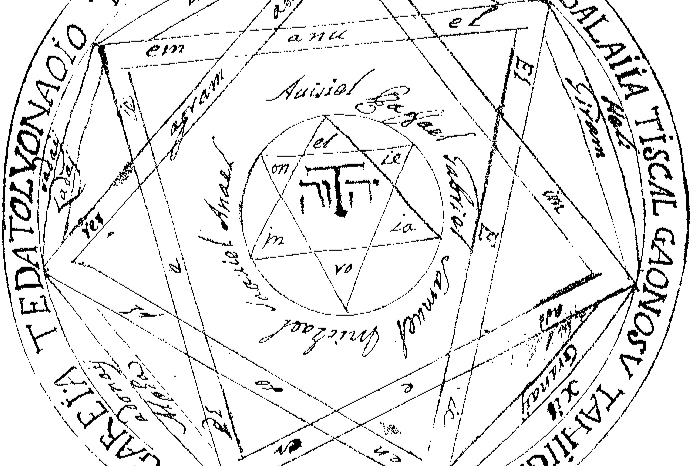
The Key of Solomon
The Key of Solomon is the most famous medieval grimoire, and the source of almost every magical tool in modern Wicca. The athame, the wand, the cup, the pentacle, the cast circle, the planetary hours. A source-critical account of what the text actually contains, where it came from, and how it reached your practice.
Aradia, or the Gospel of the Witches: The Founding Text of Modern Witchcraft
Charles Leland's 1899 Aradia is the most influential and most contested book in modern witchcraft. What the text actually contains, where it came from, and why it still matters.
Begin your practice
Grimoire is available now on Android and as a web app. Start today.