Ancient Occult Texts
Aradia, or the Gospel of the Witches: The Founding Text of Modern Witchcraft
Rowenna
Solitary witch and the founder of Grimoire. Built the app she couldn't find anywhere else. Writes about the craft with primary sources, honest lineage notes, and a low tolerance for vague correspondences. Based in the UK with more herbs than shelf space.
· 12 min read
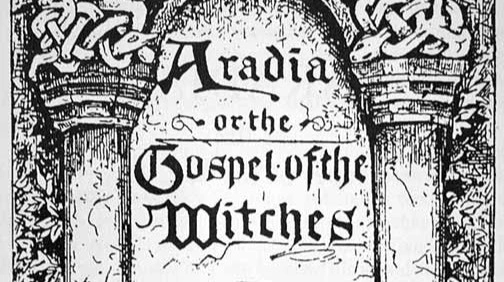
In 1899, a small book appeared in London under an extraordinary claim. Its title was Aradia, or the Gospel of the Witches. Its compiler, the American folklorist Charles Godfrey Leland, said the book was the surviving scripture of an Italian witch religion: a tradition that had gone underground centuries earlier and persisted, in the hills of Tuscany, into his own time. The witches of this tradition, Leland claimed, worshipped the moon goddess Diana and her daughter Aradia, who had been sent to earth to teach the oppressed peasantry the magic they needed to resist their masters.
The book was around a hundred pages long. It contained chants, spells, myths, and a ritual called the Charge of Aradia. It was, on its own terms, the gospel of a goddess religion that had survived the witch trials, the Inquisition, and the rise of modern Christianity by hiding in plain sight.
It was also, almost certainly, partly Leland's invention.
This is a piece about Aradia as a document: what the text actually contains, where it came from, what we know and do not know about its origins, and why, despite (or because of) its contested provenance, it remains the most important single text in the formation of modern witchcraft.
Charles Godfrey Leland and the discovery
Charles Godfrey Leland (1824–1903) was an American journalist and folklorist who spent much of his later life in Florence. He had a particular interest in the surviving folklore of marginal European communities: Romani groups, Tuscan peasants, the rural poor whose pre-Christian beliefs he believed had survived under a thin veneer of Catholic practice. By the 1890s he had published works on Romani magic, on Etruscan-Roman folklore, on English Romani rituals, and on Tuscan witchcraft. Aradia was the culmination of this line of work.
His central claim about the book was specific. In 1886, in Florence, he had been given a manuscript by an Italian fortune-teller called Maddalena, with whom he had been working for years. Maddalena, Leland said, was herself a hereditary witch (a strega) and the manuscript was the Vangelo of her tradition: the gospel handed down through generations of Tuscan witches. Leland translated it, added his own commentary and supplementary chapters drawn from Maddalena's spoken accounts, and published the result in 1899.
What is in the text
Aradia is short. The first English edition runs to about a hundred pages, divided into fifteen chapters. Several of these are framed as Aradia's myth, others are working spells, still others are commentary by Leland on the broader tradition.
The myth at the centre of the text runs roughly as follows. Diana, the moon goddess, was the first creator. She bore a daughter, Aradia, by her brother Lucifer (presented in the text not as the Christian devil but as the bright spirit of the morning, the bringer of light). Aradia was sent to earth to teach the oppressed peasants the magic they would need to resist their oppressors: landlords, priests, men in power. The witches of Italy, in Leland's framing, are the practitioners of the magic Aradia taught.
The Charge of Aradia, the most influential single passage in the book, is the goddess's instruction to her witches before she returns to her mother. It includes the well-known lines:
When I shall have departed from this world,
Whenever ye have need of anything,
Once in the month, and when the moon is full,
Ye shall assemble in some desert place,
Or in a forest all together join
To adore the potent spirit of your queen,
My mother, great Diana...
The remaining chapters contain practical material: spells for love, curses against unjust rulers, charms with stones and pins and lemons, instructions for the cena (a ritual meal of cakes and wine offered to Diana), invocations for protection, blessings on children. The tone alternates between mythic narrative and practical folk magic in a way that has no clean parallel in earlier folkloric collections.
The provenance question
From the moment of publication, the question of Aradia's authenticity was contested. Some early reviewers accepted Leland's claim that the text was a genuine surviving scripture. Others suggested it was a folkloric construction. Still others believed it was Leland's own invention dressed up as discovered manuscript. The debate has continued for more than a century and shows no signs of ending.
What modern scholarship has established, with reasonable confidence, is the following.
Maddalena probably existed. Mario and Dina Pazzaglini's 1998 critical edition of Aradia, drawing on Leland's correspondence and notebooks, found documentary evidence supporting the existence of an Italian fortune-teller working with Leland in Florence in the 1880s and 1890s.¹ Whether her name was actually Maddalena, and whether she fits Leland's description in every detail, is more uncertain.
The text contains genuine Italian folk material. Comparative analysis with other folkloric collections (including Leland's own earlier work, Etruscan Roman Remains in Popular Tradition (1892)) shows that some of Aradia's contents reflect actual Tuscan peasant beliefs and practices: charms, spells, fragments of older mythology, traces of the cult of Diana that survived in some Italian rural areas into the modern period.
Leland edited heavily. The same scholarly comparison shows that other elements of the text (including some of its most distinctive theological claims) appear nowhere in the wider Italian folkloric record. The Lucifer-as-bright-spirit framing, the specific Aradia-as-redeemer narrative, and the structure of a witch gospel itself are without clear precedent in surviving Italian folk tradition. These elements appear to be Leland's own contribution, or else products of the back-and-forth interpretation between Leland and Maddalena over their long working relationship.
There is no evidence of an organised witch religion behind the text. The claim that Aradia represents the scripture of a centuries-old underground tradition with continuous practice across Italy has no support outside Leland's own framing. Anthropologist Sabina Magliocco's work on contemporary Italian streghe finds that modern Italian-American Stregheria draws much of its identity from Aradia, but that the text was a generative source rather than a transmitted inheritance.² The 'old religion' claim is the part of the book most unlikely to be literally true.
What the text actually is, in the most defensible reading, is a creative late-nineteenth-century synthesis. Leland combined genuine Tuscan folk material with his own reading of Italian history (especially the work of the French historian Jules Michelet, whose La Sorcière (1862) had argued that medieval witch trials persecuted a surviving pagan goddess religion), with romantic notions of peasant religion as resistance to Catholic and class oppression, and with whatever Maddalena had actually told him over their years of work. The result is not a hoax in the sense of being fabricated whole. It is a constructed text, in the way most scriptures are constructed texts: assembled, edited, theologically shaped, and then presented as discovery.
The text's influence on modern witchcraft
Whatever its provenance, Aradia's influence on the formation of modern witchcraft is enormous and direct. The lineage is well-documented.
Gerald Gardner, the founder of modern Wicca, drew on Aradia extensively when assembling his early ritual material in the 1940s and 1950s. The 'old religion' framing he used (Wicca as the survival of a pre-Christian goddess tradition) comes substantially from Leland (via Margaret Murray's The Witch-Cult in Western Europe (1921), which made similar claims about a surviving European witch-religion and which has been comprehensively discredited by later historians, but which was hugely influential in mid-twentieth-century witchcraft circles).³
Doreen Valiente, who collaborated with Gardner on the early Wiccan ritual texts, rewrote and adapted Leland's Charge of Aradia in the 1950s into what is now known as the Charge of the Goddess: the most widely used ritual text in modern Wicca. Read alongside Leland's original, Valiente's Charge is recognisably the same document, with the same structure, similar imagery, and direct verbal echoes, particularly in the lines about meeting in some desert place once a month when the moon is full. The line of transmission is unbroken.
Beyond Gardner and Valiente, Aradia has been foundational for contemporary Italian-American Stregheria (especially in the work of Raven Grimassi and others, though scholars including Magliocco have noted that this is constructed tradition rather than continuous folk practice), for various Goddess-traditions of feminist witchcraft, for the Dianic Tradition founded by Z. Budapest in the 1970s, and for the broader cultural assumption (held by most contemporary witches who would not call themselves Wiccan) that witchcraft is, at root, a goddess religion descended from pre-Christian sources.
Modern witchcraft would still exist without Aradia, but it would not look the way it looks. The book is the load-bearing wall of the tradition's self-understanding, regardless of how that wall was built.
Why it still matters
For a contemporary solitary witch reading Aradia now, the question is not whether the text is what Leland claimed. The question is what the text actually does, and what it can offer to a working practice.
What Aradia does, more clearly than any earlier folk-magic collection, is articulate witchcraft as a coherent tradition with a theology, a mythology, a ritual structure, and a political stance. The witches in Leland's text are not isolated workers of folk magic. They are a community with shared symbols, shared seasonal practices, and a shared moral vision: magic as the inheritance of the oppressed, used in service of justice and survival. Whether or not that community ever existed as Leland described, the framing is the framing modern witchcraft has inherited and continues to extend.
The practical material in Aradia (the lemon-and-pin charms, the cena ritual, the Diana invocations, the moon work) has been used continuously by modern witches for over a century. Some of it likely reflects genuine Italian folk practice. Some of it may be Leland's reconstruction. In practical terms, the distinction matters less than the question of whether the workings produce results, and on that score the answer from a century of practitioners is often yes.
Reading Aradia with honest eyes (knowing its uncertainties, knowing its lineage, knowing what it constructed and what it inherited) is part of what it means to take modern witchcraft seriously as a tradition. The book is a primary source, and primary sources are always partial, biased, edited, and shaped by the hands that produced them. Aradia is no exception. Its uncertainties are part of why it matters.
Conclusion
Aradia, or the Gospel of the Witches is a hundred-and-twenty-five-year-old book that almost no modern witch reads in full, and that almost every modern witch has been shaped by. The text is contested, partly invented, partly inherited from genuine Italian folk tradition, partly the product of Leland's late-Victorian reading of class oppression, peasant religion, and Romantic anti-clericalism. It is also, in the most defensible reading, the founding scripture of modern witchcraft as a self-conscious tradition.
Reading it now requires the kind of double vision that any honest engagement with primary sources requires. It is partly true. It is partly constructed. It is the work of a white American folklorist projecting onto Italian peasant religion. It is also the source of the ritual language most modern witches use without knowing the source. Both of these things are simultaneously the case.
This is the launch piece for the Grimoire blog's Ancient Occult Texts series: a category that will examine the foundational texts of Western magical tradition from the perspective of the working practitioner. Future pieces will cover the Greek Magical Papyri, the Key of Solomon, Agrippa's Three Books of Occult Philosophy, the Picatrix, and others. Each piece will follow the same pattern: what the text actually contains, where it came from, what we know and do not know about its origins, and why it matters now.
For the historical context of the witch trials Aradia claimed its tradition had survived, see The Pendle Witches. For the modern witchcraft practice the text helped shape, see Litha for Solitary Witches and Spell Crafting for Beginners.
The discipline of working with old texts honestly is one of the deepest disciplines in witchcraft. Aradia is a good place to start.
Sources
- Charles Godfrey Leland, Aradia, or the Gospel of the Witches (London: David Nutt, 1899): the primary text. Available in the public domain at Sacred Texts Archive.
- Mario Pazzaglini and Dina Pazzaglini, eds., Aradia: Gospel of the Witches: A New Translation (Blaine, WA: Phoenix Publishing, 1998): the standard critical edition, with a corrected translation, scholarly apparatus, and the most thorough investigation to date of Leland's manuscript sources, his correspondence with Maddalena, and the textual history.
- Sabina Magliocco, Witching Culture: Folklore and Neo-Paganism in America (Philadelphia: University of Pennsylvania Press, 2004): the leading anthropological study of contemporary American witchcraft, with substantial discussion of Aradia's reception, its role in the formation of Italian-American Stregheria, and the broader question of constructed versus inherited tradition.
- Ronald Hutton, The Triumph of the Moon: A History of Modern Pagan Witchcraft (Oxford: Oxford University Press, 1999): the definitive scholarly history of modern witchcraft, including a thorough discussion of Leland, Margaret Murray, and the line of textual influence from Aradia through Gardner and Valiente to contemporary Wicca.
- Wikipedia: Aradia, or the Gospel of the Witches, overview of the text's publication history, contents, and reception.
More from the Blog
Agrippa's Three Books of Occult Philosophy
Heinrich Cornelius Agrippa's De Occulta Philosophia (1531–33) is the load-bearing wall of Western magical thought: the book that gathered the entire inheritance of classical, Hermetic, Kabbalistic, and Christian magical knowledge into a single systematic treatment. Every correspondence table in modern witchcraft has its ancestor here.
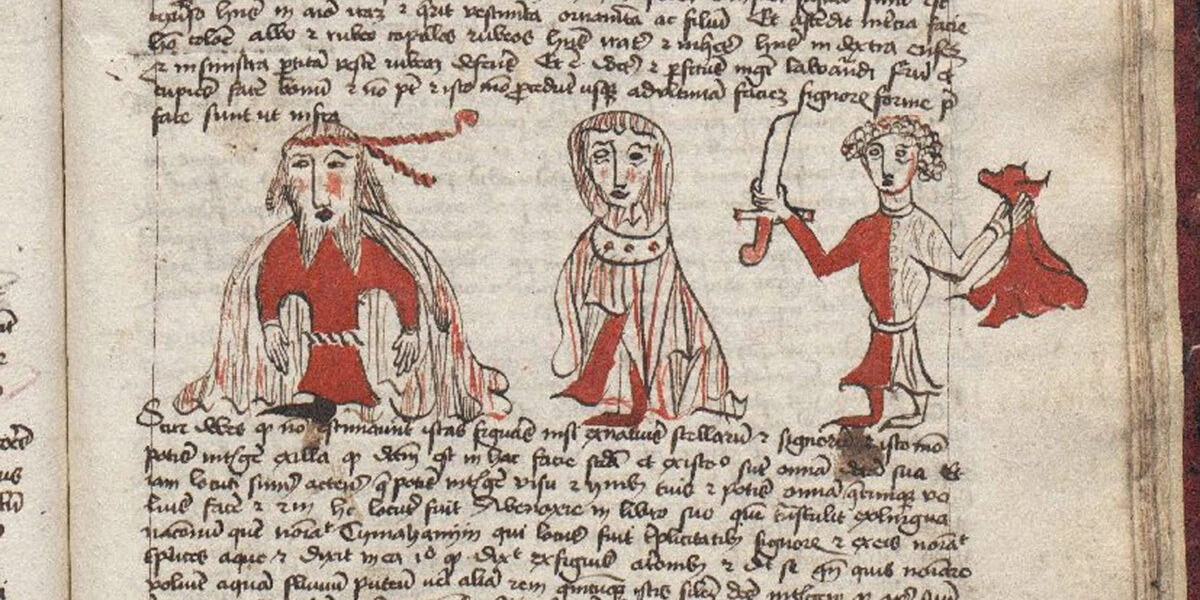
The Picatrix: The Most Influential Book of Magic You Have Never Read
The 11th-century Arabic text Ghāyat al-Hakīm is the foundational handbook of astrological magic in the Western tradition. What it actually contains, where it came from, and why the planetary correspondence systems most witches use daily descend from it.
Begin your practice
Grimoire is available now on Android and as a web app. Start today.