Divination
A Beginner's Guide to Tarot for Solitary Witches
Rowenna
Solitary witch and the founder of Grimoire. Built the app she couldn't find anywhere else. Writes about the craft with primary sources, honest lineage notes, and a low tolerance for vague correspondences. Based in the UK with more herbs than shelf space.
· 5 min read
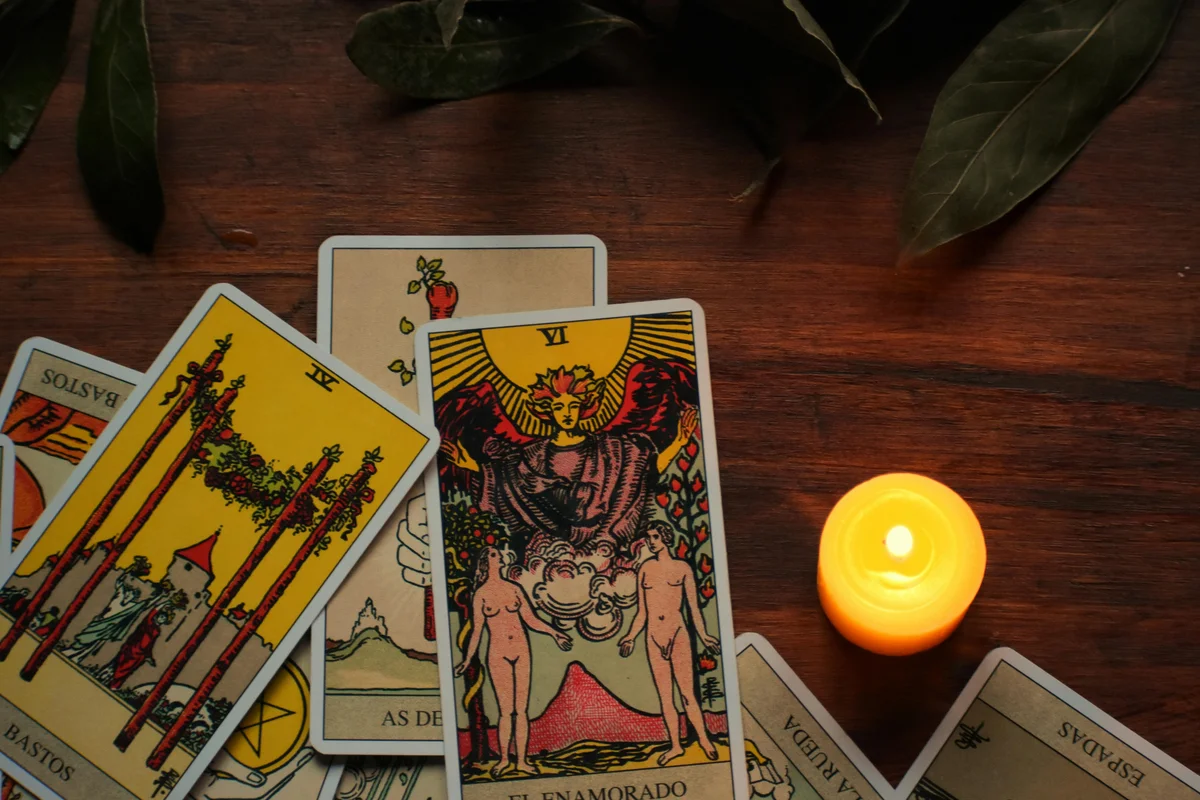
Tarot has an image problem. The popular idea (a woman in a headscarf telling strangers about their future) has almost nothing to do with how a practising witch actually uses the cards. Tarot is not fortune-telling. It is a system of symbolic language that you learn to read, slowly and personally, until the images begin to speak directly.
The history makes this clearer. Tarot began as playing cards: a trick-taking game called tarocchi, invented in northern Italy around 1440. The oldest surviving decks, the Visconti-Sforza cards (c.1450), were commissioned for the rulers of the Duchy of Milan and are now held at the Morgan Library and Yale's Beinecke Library. According to Wikipedia's article on tarot, there is no historical evidence of any significant use of tarot for divination until the late 18th century, when French occultists began to develop its esoteric meanings. The cards were playing cards for 300 years before anyone used them for self-reflection. That context is worth knowing: tarot was always about pattern-reading before it was about prophecy.
The Structure of the Deck
A standard tarot deck has 78 cards divided into two sections.
The Major Arcana, 22 cards, numbered 0 through 21, depicting archetypal figures and forces: The Fool, The Magician, The High Priestess, The Empress, through to The World. These cards deal with major themes and life forces. When they appear, they are asking for attention.
The Minor Arcana, 56 cards divided into four suits: Wands (fire, will, passion), Cups (water, emotion, intuition), Swords (air, mind, conflict), and Pentacles (earth, body, material world). The Minor Arcana deals with the texture of daily life: thoughts, feelings, challenges, practical matters.
You do not need to memorise all 78 meanings before you begin reading. The cards will teach you their meanings over time, through use.
The Daily Single-Card Draw
The most valuable tarot practice for a beginner is the simplest: draw one card each morning, and sit with it.
Don't immediately reach for a guidebook. Look at the image first. What is happening in the card? How does it make you feel? What does it remind you of? Then read the traditional meaning, and notice where your intuitive response and the book meaning converge, and where they diverge. Both are information.
At the end of the day, make a brief note. How did the card's energy or theme show up? Sometimes it's obvious: The Tower on a day of unexpected disruption. Sometimes the connection is subtle and shows itself only in retrospect.
Over time, these notes become a personal lexicon. The way each card speaks to you, specifically, in your particular life.
Building a Relationship With Your Deck
Tarot readers often speak of "getting to know" a deck as though it were a relationship, because in practice, that is what it is. Different decks carry different energies, speak in different registers. The Rider-Waite-Smith deck (1909) is the standard starting point for good reason: it was the first deck to illustrate all 78 cards with fully pictorial narrative scenes: including the Minor Arcana, which in previous decks were simple geometric symbol arrangements. This was the innovation of artist Pamela Colman Smith, who created all 78 illustrations in six months, working alongside occultist Arthur Edward Waite. Her imagery made intuitive reading possible in a way it hadn't been before, and over 100 million copies of the deck now circulate worldwide. Most written resources, lessons, and traditions reference her imagery. But the deck you are drawn to is the right one.
Some suggestions for the early relationship:
- Hold each card one at a time without reading about it: just look, and feel what arises
- Ask the deck to introduce itself: shuffle, draw three cards, read them as "what you are here to teach me / what you want from me / what I should know about working with you"
- Keep the deck somewhere it will be handled, not in a box at the back of a drawer
On Intuitive Reading
There is a tension in tarot study between learning the traditional meanings and trusting intuition. New practitioners often stay rigidly with the book because they don't trust their own interpretation. Experienced readers often trust their intuition entirely.
The truth is in the dialogue between them. Traditional meanings are the accumulated wisdom of more than two centuries of divinatory practice. Your intuitive response is the wisdom of your particular life, right now, applied to this particular question. Neither is sufficient alone. Rachel Pollack's Seventy-Eight Degrees of Wisdom (1980, revised 2019) is the standard reference for anyone wanting to go deeper into the traditional meanings of all 78 cards.
The cards hold the question. You hold the answer. The reading is the conversation between them.
Begin with the book. Read the traditional meaning for every card you draw. Then ask: does this fit? What part of this resonates and what part doesn't? Over months and years, your understanding of each card will become layered, personal, and genuinely useful.
Tarot cannot tell you your future. But asked the right questions, it can show you things about your present that you were not quite seeing. That is more useful, in the end, than prophecy.
Once you've learned the deck, the next step is making it part of daily life, see How to Start a Daily Tarot Practice (And Actually Stick to It). For an adjacent divinatory practice that builds a personal symbolic vocabulary instead of a fixed deck, see The Art of the Personal Oracle: A Guide to Charm Casting.
Sources
- Wikipedia, Tarot: history as 15th-century Italian card game, no evidence of divination use until late 18th century, en.wikipedia.org/wiki/Tarot
- Wikipedia, Visconti-Sforza tarot deck: c.1450 decks commissioned for the rulers of the Duchy of Milan, held at the Morgan Library and Yale's Beinecke Library, en.wikipedia.org/wiki/Visconti-Sforza_tarot_deck
- Wikipedia, Pamela Colman Smith: artist of the Rider-Waite-Smith deck (1909), en.wikipedia.org/wiki/Pamela_Colman_Smith
- Wikipedia, Rider-Waite Tarot: publication history, 100 million copies in circulation, en.wikipedia.org/wiki/Rider-Waite_Tarot
- Wikipedia, Rachel Pollack: author of Seventy-Eight Degrees of Wisdom (Weiser Books, revised 2019; first published 1980), en.wikipedia.org/wiki/Rachel_Pollack
More from the Blog
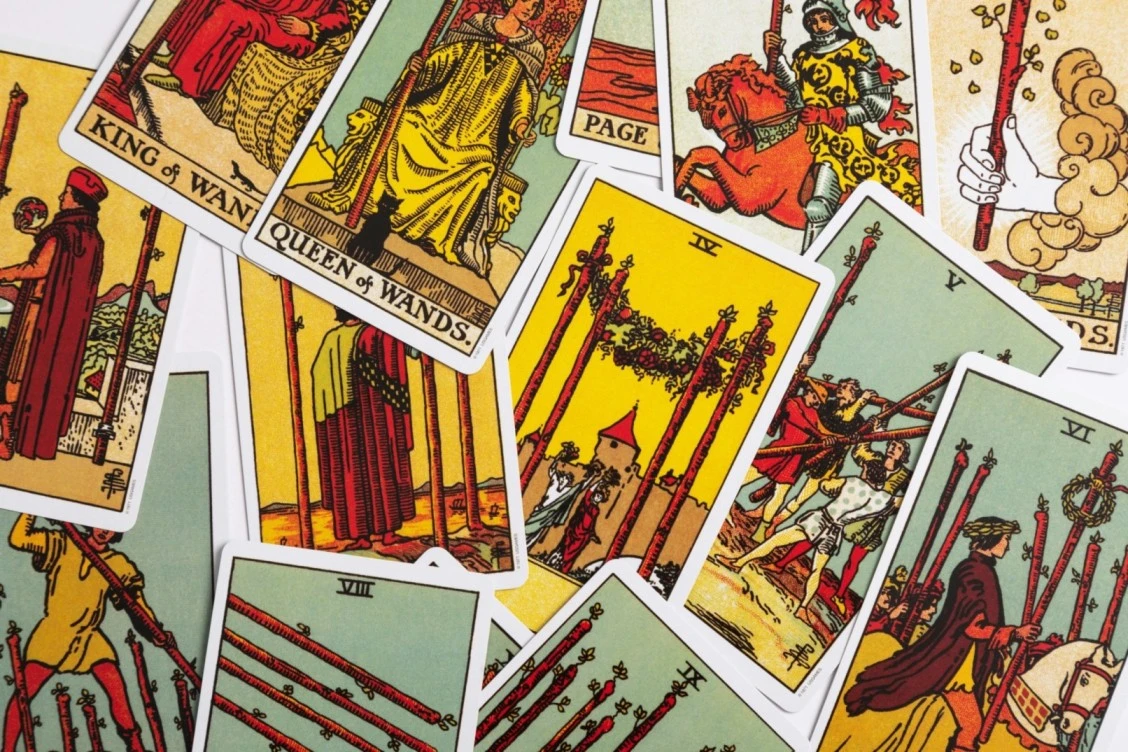
The Minor Arcana for Beginners
The 56 cards of the Minor Arcana are the working core of practical Tarot reading — the suit that tells you not what life-theme is present but how it is showing up this week. A complete beginner's guide: the four suits and their elements, the numerical structure that applies across all 56 cards, the court cards, and how to actually read them.
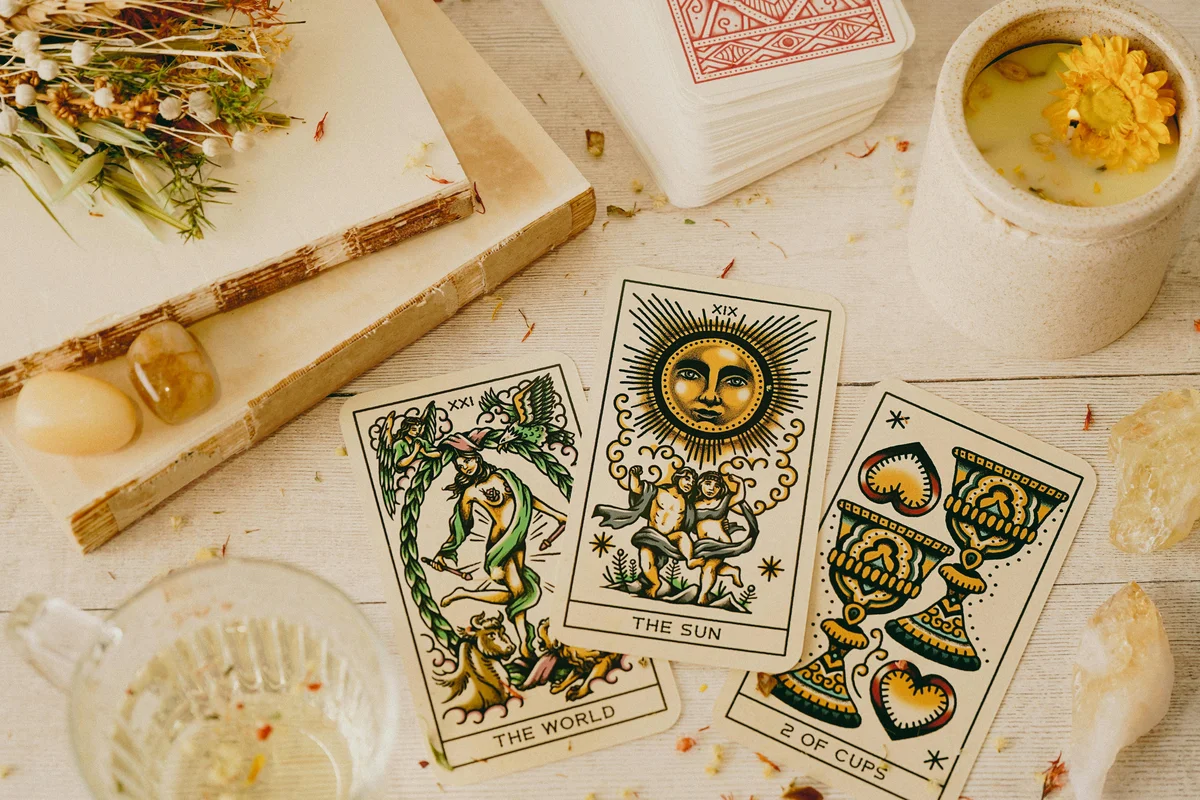
How to Start a Daily Tarot Practice (And Actually Stick to It)
A daily tarot practice doesn't require an hour of quiet and a perfectly set altar. It requires a card, a moment, and a way to remember what you noticed.
Begin your practice
Grimoire is available now on Android and as a web app. Start today.