Apothecary
Angelica: Magical Properties & Uses
Angelica archangelica
Also known as Holy Ghost Root, Archangel Root
Tall and stately as the angel for whom it is named, angelica stands at the threshold between the mortal and the divine. Where evil presses close, a root carried on the body draws down a brightness that hostile spirits cannot endure: guardian alike of the home and the soul venturing into shadowed work.
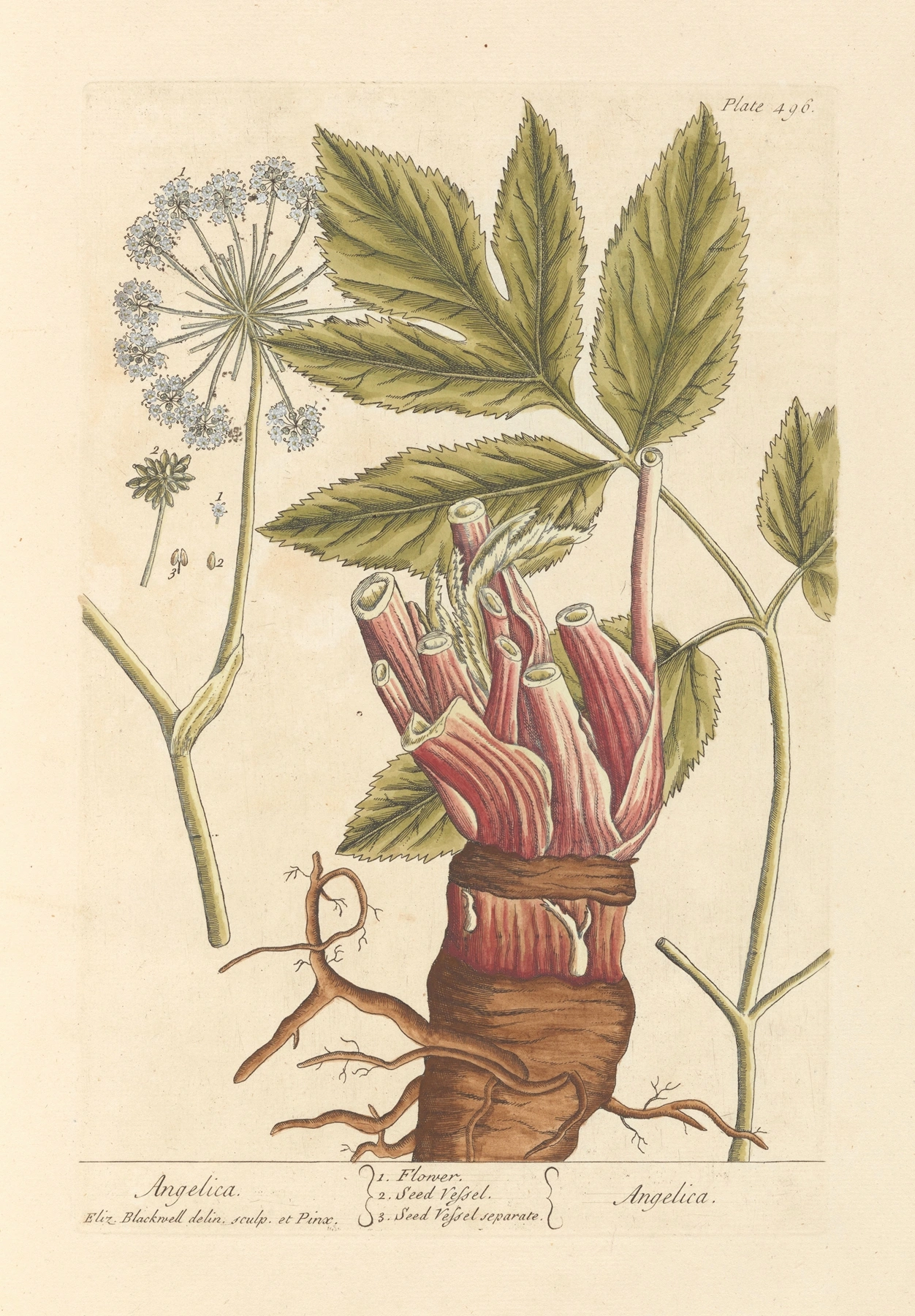
Correspondences
Element
Fire
Planet
Sun
Zodiac
Leo
Chakra
Crown, Root
Parts Used
Root, seeds, leaves
Harvest
Autumn (root)
Origin
Damp woods, Europe
Moon Phases
Full
Practice
Magical Properties
Protection, healing, visions, exorcism, strength
Angelica is one of the most powerful protective herbs in the Western tradition: it stands at the threshold between the mortal and the divine, between what threatens and what defends. Unlike nettle (which actively repels) or rue (which breaks what is sent), angelica calls down divine protection: it aligns the working with solar, angelic, and higher-vibrational forces. It is used for protection against curses, negative spirits, and psychic attack; as a blessing and consecration herb; and in workings requiring connection to protective divine presences. The root is carried as a protective amulet and used to break hexes and remove crossed conditions.
Mundane
Mundane Uses
Angelica (Angelica archangelica) has a long history in European herbal medicine and as a flavouring herb. The stems are crystallised as a confection sold across Europe. The root is a primary botanical in several major gins, absinthe, and liqueurs. Medicinally it has been used for digestive complaints, respiratory infections, and as an expectorant. Culpeper recommended it for plague and all manner of infectious conditions. Caution: it can cause photosensitisation and may interact with anticoagulant medications. Not for use in pregnancy.
Devotion
Deity Associations
Archangel Michael, St Michael
History
Folklore & History
Angelica's very name announces its most important quality: it was named for the angel said to have revealed its medicinal properties to a monk during the plague, or because it bloomed on the feast of the Archangel Michael. Throughout medieval Europe it was considered the most powerful herb against evil, witchcraft, and pestilence. Culpeper calls it an herb of the sun in Leo and therefore friendly to nature. It was used in both Protestant and Catholic ceremony; the root was carried as a protective amulet throughout the Black Death. In Lapland it was considered sacred and eaten as food in times of famine.
Safety
Safety Notes
Avoid in pregnancy. Phototoxic: avoid skin contact with sap in sunlight. Do not confuse with Poison Hemlock.
This information is provided for educational and magical reference only. Always consult a qualified practitioner before using herbs medicinally.
FAQ
Frequently Asked Questions
What is Angelica used for in witchcraft?
Tall and stately as the angel for whom it is named, angelica stands at the threshold between the mortal and the divine. Where evil presses close, a root carried on the body draws down a brightness that hostile spirits cannot endure: guardian alike of the home and the soul venturing into shadowed work. Its primary magical uses are protection, healing, visions, exorcism, and strength.
What element is Angelica associated with?
Angelica is associated with the Fire element, the sign of Leo, and resonates with the Crown and Root chakras.
What planet rules Angelica?
Angelica is ruled by Sun. In the classical planetary system, this gives the herb its characteristic energetic signature and indicates which workings it most readily amplifies and which planetary hours best suit it.
Is Angelica safe to use?
Some care is required when working with Angelica. Avoid in pregnancy. Phototoxic: avoid skin contact with sap in sunlight. Do not confuse with Poison Hemlock. The information here is provided for educational and magical reference only: always consult a qualified practitioner before using any herb medicinally.
In Your Practice
Track your work with Angelica.
Record spells, rituals, and observations in your private digital grimoire.
Related
Related Herbs
Garlic
Mars
The most universal protective herb on earth: known in every culture, named in every grimoire, hung in every kitchen from…
Bay Laurel
Sun
The leaf the Pythia chewed before she spoke at Delphi still holds the breath of prophecy. Write a wish upon a bay leaf a…
Cedar
Sun
Ancient, evergreen, and fragrant of both temple and forest. Cedar smoke is the breath of the old gods of Lebanon and the…
Nettle
Mars
The plant that stings the careless hand and protects the prepared one. Nettle is the herb of fierce healing, of curses u…
Begin your practice
Grimoire is available now on Android and as a web app. Start today.