Apothecary
Mandrake: Magical Properties & Uses
Mandragora officinarum
Also known as Satan's Apple, Man Root, Mandragora
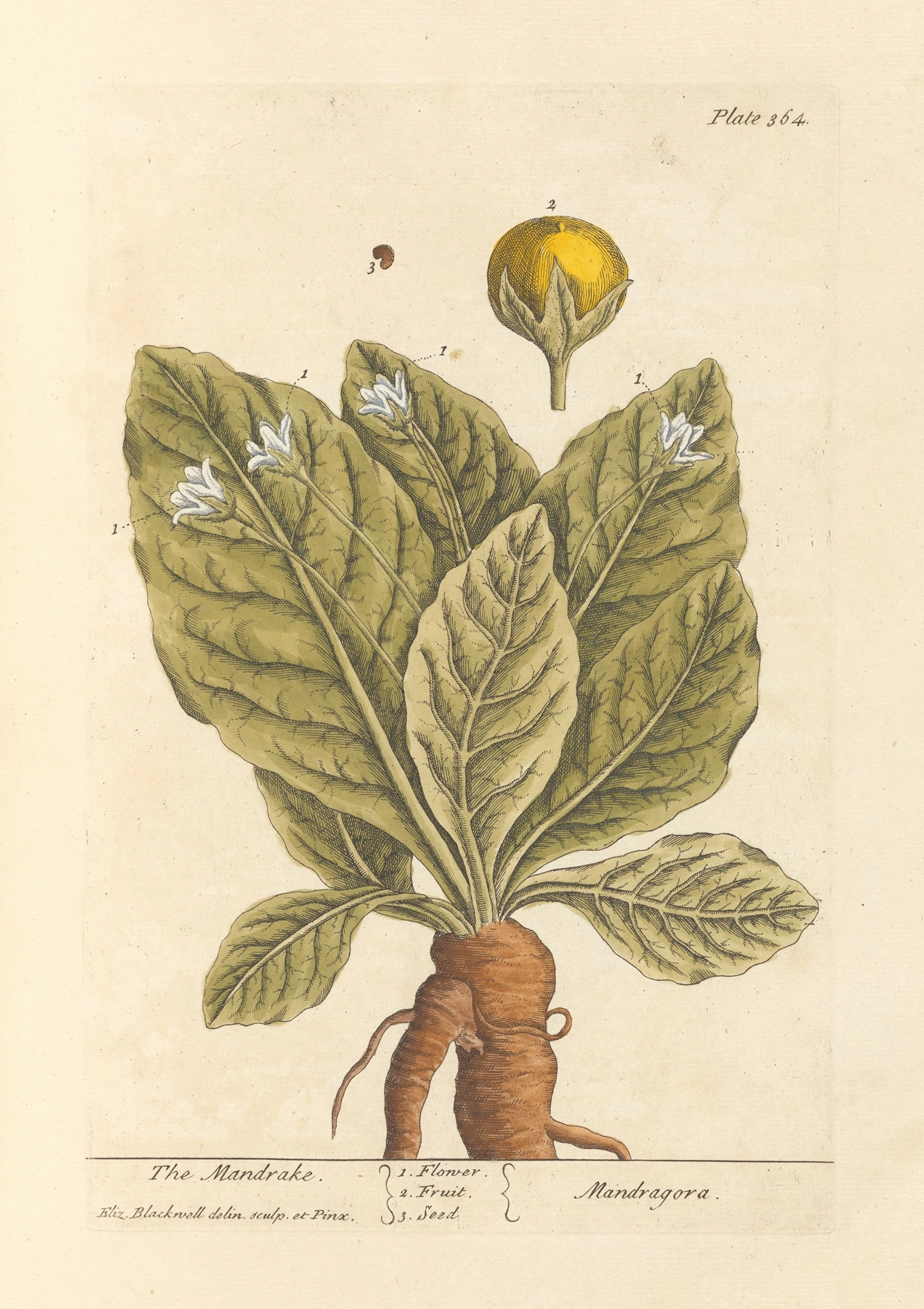
The screaming root, the man-shaped root, the most legendary of all the European witch-plants. Mandrake is power itself: dangerous, ancient, fit only for the experienced hand, and best kept upon the altar as a familiar spirit rather than ever taken into the body.
Correspondences
Element
Earth/Fire
Planet
Mercury
Zodiac
Gemini, Scorpio
Chakra
Root
Parts Used
Root (carefully)
Harvest
Autumn
Practice
Magical Properties
Protection, prosperity, fertility, love, power
Mandrake is the herb of power itself: protection, fertility, divination, love, and the most intense forms of magical working all fall within its scope. It is also one of the most dangerous herbs in the apothecary; the root is genuinely toxic and must never be consumed. In practice, most working uses involve the dried powdered root in incense blends at minimal quantity, or the root kept as a talisman. The figure-root, when found or shaped, is a deeply powerful personal talisman associated with the practitioner's own power and fortunes. Mandrake amplifies whatever working it is added to: use it with precision and clear purpose, never casually.
Mundane
Mundane Uses
Mandrake (Mandragora officinarum) contains significant quantities of tropane alkaloids (atropine, scopolamine, and hyoscyamine) which are genuinely pharmacologically active. In antiquity it was used as a surgical anaesthetic, sedative, and pain reliever; it was among the first anaesthetic plants used in medicine and is described in this role by Dioscorides. The toxicity is real: excess doses cause hallucinations, delirium, coma, and death. Modern medicine continues to use tropane alkaloids derived from related plants: atropine remains in standard medical and surgical use today.
Devotion
Deity Associations
Hecate, Circe, Aphrodite
History
Folklore & History
No plant in the Western magical tradition carries a mythology as extensive as the mandrake. The root (valued for its vaguely human shape) was believed to scream when pulled from the earth, causing madness or death in those who heard it. The recommended harvesting method was to stop one's ears, tie the plant to a dog, and retreat before the dog pulled the root free. The mandrake features in the Old Testament as a plant associated with fertility; Josephus describes the harvesting ritual in the 1st century CE; it appears in Machiavelli's La Mandragola (1518) as a fertility potion; and it features across early modern witch trial records as an ingredient in the flying ointment. No plant was more feared, more desired, or more written about.
Safety
Safety Notes
TOXIC. ALL PARTS DANGEROUS. Can cause hallucinations, delirium, respiratory failure, and death. DO NOT USE INTERNALLY. External/symbolic use only.
This information is provided for educational and magical reference only. Always consult a qualified practitioner before using herbs medicinally.
FAQ
Frequently Asked Questions
What is Mandrake used for in witchcraft?
The screaming root, the man-shaped root, the most legendary of all the European witch-plants. Mandrake is power itself: dangerous, ancient, fit only for the experienced hand, and best kept upon the altar as a familiar spirit rather than ever taken into the body. Its primary magical uses are protection, prosperity, fertility, love, and power.
What element is Mandrake associated with?
Mandrake is associated with the Earth/Fire element, the signs of Gemini and Scorpio, and resonates with the Root chakra.
What planet rules Mandrake?
Mandrake is ruled by Mercury. In the classical planetary system, this gives the herb its characteristic energetic signature and indicates which workings it most readily amplifies and which planetary hours best suit it.
Is Mandrake safe to use?
Some care is required when working with Mandrake. TOXIC. ALL PARTS DANGEROUS. Can cause hallucinations, delirium, respiratory failure, and death. DO NOT USE INTERNALLY. External/symbolic use only. The information here is provided for educational and magical reference only: always consult a qualified practitioner before using any herb medicinally.
In Your Practice
Track your work with Mandrake.
Record spells, rituals, and observations in your private digital grimoire.
Related
Related Herbs
Birch
Venus
The Lady of the Woods: first letter of the Ogham, slender and silver-barked as moonlight itself. Birch is the magic of b…
Cinnamon
Sun
A bark once more valuable than gold: traded in secrecy across centuries, offered to the gods of every great civilisation…
Dragon's Blood
Mars
A scarlet resin that bleeds from a palm tree of the East, said by the old herbalists to be the very gore of dragons slai…
Hawthorn
Mars
The Fairy Tree, the May Tree, the most magically charged tree in the British Isles. A lone hawthorn standing in a field …
Begin your practice
Grimoire is available now on Android and as a web app. Start today.