Apothecary
Solomon's Seal: Magical Properties & Uses
Polygonatum multiflorum
Also known as Lady's Seals, St Mary's Seal
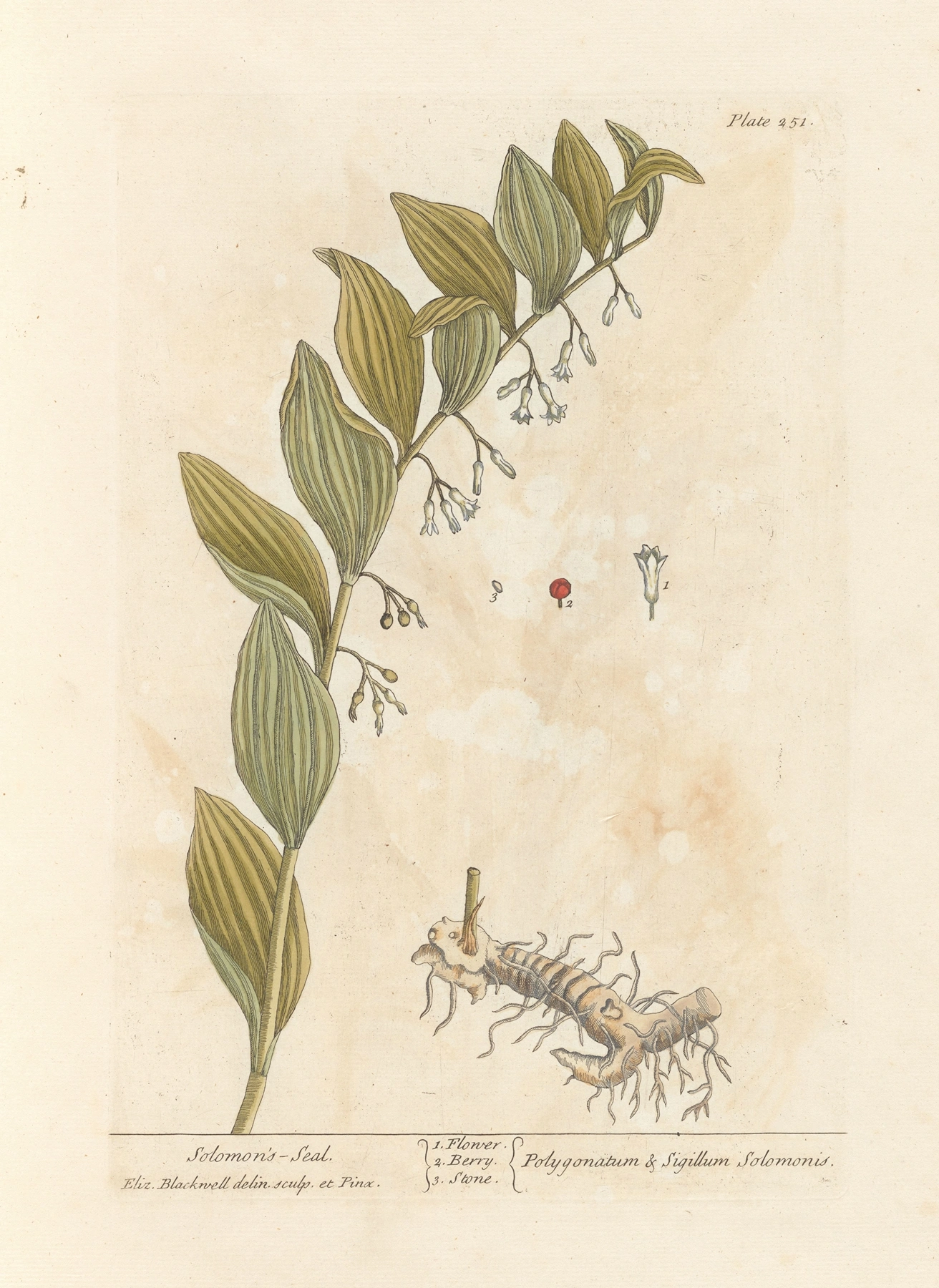
A graceful arching plant whose rhizome bears the scars of past seasons as small wax-seal marks. Used to seal magical workings and to bind oaths, Solomon's Seal carries within it the authority of the wise king for whom it is named.
Correspondences
Element
Water/Air
Planet
Saturn
Zodiac
Capricorn
Chakra
Root, Third Eye
Parts Used
Root (rhizome), leaves
Harvest
Autumn (root)
Practice
Magical Properties
Protection, sealing oaths, wisdom, exorcism
Solomon's Seal is used to seal magical workings and to bind oaths: it is the herb of the completed working, of the promise made final, of the contract that holds. In protection workings it seals a space or a person against intrusion. In love workings it binds the commitment that has been made. In spirit work it is used to bind what has been summoned or encountered: it does not banish but contains and holds. The dried root is carried as a protective talisman and used in sachets for the sealing of intentions. It is a herb of authority and finality rather than of opening and invitation.
Mundane
Mundane Uses
Solomon's Seal root (Polygonatum multiflorum and related species) has been used medicinally in European and Chinese herbal traditions. It contains steroidal saponins and has been used for joint complaints, connective tissue injuries, and as a demulcent. In Traditional Chinese Medicine it is considered a tonic for the lungs and kidneys. Culpeper recommended it for bruises, broken bones, and skin complaints, applications consistent with its known constituents. It has demonstrated anti-inflammatory properties in laboratory studies. The berries are toxic and must not be consumed. The root in moderate doses is considered safe.
Devotion
Deity Associations
Solomon
History
Folklore & History
A graceful arching plant whose rhizome bears the scars of past seasons as small wax-seal marks: from which it takes its name. The seal of Solomon is associated with the legendary ring of King Solomon that gave him power over demons; the plant's marks were read as bearing this seal, giving it authority in workings of binding and exorcism. In medieval European magic it was used in exorcism and in the binding of spirits. Culpeper associated it with Saturn and gave it extensive medicinal coverage for wounds and broken bones. In British folk tradition the root was used to make a wash that removed freckles and blemishes: an early cosmetic application of its genuine skin-healing properties.
Safety
Safety Notes
Avoid large internal doses. Berries are toxic. External use is safe.
This information is provided for educational and magical reference only. Always consult a qualified practitioner before using herbs medicinally.
FAQ
Frequently Asked Questions
What is Solomon's Seal used for in witchcraft?
A graceful arching plant whose rhizome bears the scars of past seasons as small wax-seal marks. Used to seal magical workings and to bind oaths, Solomon's Seal carries within it the authority of the wise king for whom it is named. Its primary magical uses are protection, sealing oaths, wisdom, and exorcism.
What element is Solomon's Seal associated with?
Solomon's Seal is associated with the Water/Air element, the sign of Capricorn, and resonates with the Root and Third Eye chakras.
What planet rules Solomon's Seal?
Solomon's Seal is ruled by Saturn. In the classical planetary system, this gives the herb its characteristic energetic signature and indicates which workings it most readily amplifies and which planetary hours best suit it.
Is Solomon's Seal safe to use?
Some care is required when working with Solomon's Seal. Avoid large internal doses. Berries are toxic. External use is safe. The information here is provided for educational and magical reference only: always consult a qualified practitioner before using any herb medicinally.
In Your Practice
Track your work with Solomon's Seal.
Record spells, rituals, and observations in your private digital grimoire.
Related
Related Herbs
Angelica
Sun
Tall and stately as the angel for whom it is named, angelica stands at the threshold between the mortal and the divine. …
Basil
Mars
Called the Witches' Herb in old Italian kitchens, basil holds within its bright leaves a fierce protectiveness that masq…
Cloves
Jupiter
Once worth their weight in gold along the spice routes of the world, cloves bring with them the heat and shimmer of dist…
Elder
Venus/Saturn
The Elder Mother dwells within the white-flowered tree, and no wise witch will cut a branch without first asking her per…
Begin your practice
Grimoire is available now on Android and as a web app. Start today.