Apothecary
Wormwood: Magical Properties & Uses
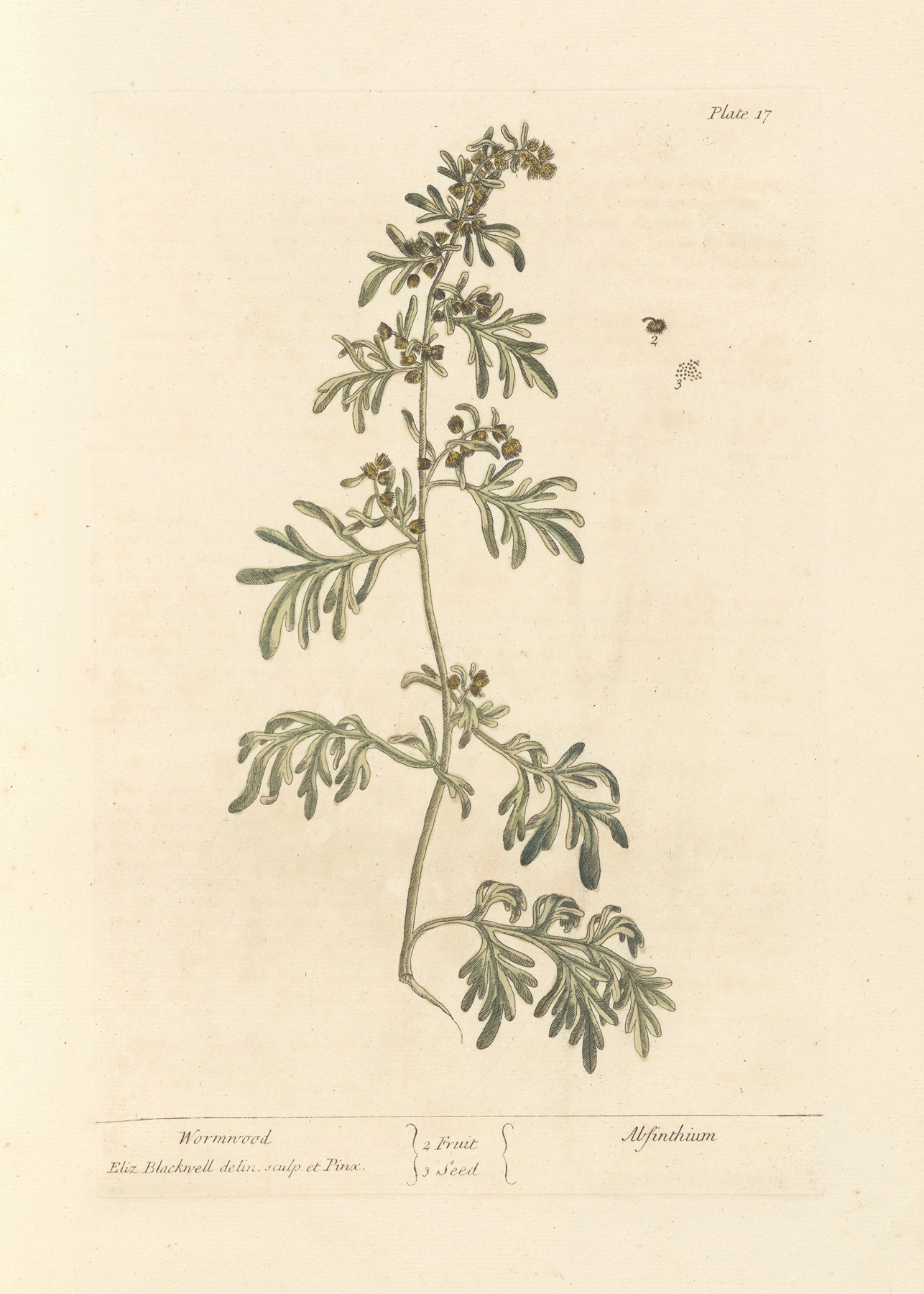
Artemisia absinthium
Also known as Absinthe, Grand Wormwood, Green Ginger
The bitter green herb of absinthe, of the Romantics, of the long European tradition of seeing what cannot be seen. Wormwood smoke summons the spirits and lifts the curtain on the Otherworld: it is the divinatory herb par excellence, and it is never to be taken into the body.
Correspondences
Element
Fire
Planet
Mars
Zodiac
Scorpio
Chakra
Root, Third Eye
Parts Used
Aerial parts
Harvest
Late summer
Practice
Magical Properties
Psychic powers, divination, spirit summoning, protection from evil, Otherworld
Wormwood summons what cannot ordinarily be seen. Its primary magical uses are in divination, spirit contact, and the opening of psychic perception: particularly the kind of vision that surfaces at the edge of sleep or in the altered state of intense ritual. It is burned before scrying, added to incense for spirit communication workings, and used in sachets for prophetic dreams. Like henbane, its historical magical use is inseparable from its pharmacological action: thujone is genuinely psychoactive, which is why it requires careful handling. Small quantities in incense blends are appropriate; ingestion is not.
Mundane
Mundane Uses
Wormwood (Artemisia absinthium) was used medicinally throughout European history as a bitter digestive herb, a treatment for intestinal worms, and an emmenagogue. It is a primary ingredient in vermouth (the name derives from the German Wermut, wormwood) and was the central flavouring in absinthe. Culpeper recommended it for stomach complaints and liver obstruction. The thujone content means it must not be consumed in significant quantities or over extended periods: it is hepatotoxic in excess and neurotoxic at high doses. It should not be used in pregnancy.
Devotion
Deity Associations
Artemis, Diana, Iris
History
Folklore & History
The bitter green herb of absinthe (and of the Romantics who drank it) wormwood carries one of the most dramatic reputations in the Western herbal tradition. It is the Artemisia of the ancient world, named for the goddess Artemis, who was said to have given it to the physician Chiron. It features in the magical papyri of Egypt as a herb of vision and communication with the dead. In Revelation it is the name of the star that falls into the waters and makes them bitter. The bitter compound thujone was long blamed for the madness attributed to absinthe drinkers; this is now understood to be primarily the effect of high alcohol content, though thujone is genuinely neuroactive.
Safety
Safety Notes
Toxic in large doses: thujone is neurotoxic. Do not ingest as a remedy. Avoid in pregnancy. Safe as incense in well-ventilated spaces.
This information is provided for educational and magical reference only. Always consult a qualified practitioner before using herbs medicinally.
FAQ
Frequently Asked Questions
What is Wormwood used for in witchcraft?
The bitter green herb of absinthe, of the Romantics, of the long European tradition of seeing what cannot be seen. Wormwood smoke summons the spirits and lifts the curtain on the Otherworld: it is the divinatory herb par excellence, and it is never to be taken into the body. Its primary magical uses are psychic powers, divination, spirit summoning, protection from evil, and otherworld.
What element is Wormwood associated with?
Wormwood is associated with the Fire element, the sign of Scorpio, and resonates with the Root and Third Eye chakras.
What planet rules Wormwood?
Wormwood is ruled by Mars. In the classical planetary system, this gives the herb its characteristic energetic signature and indicates which workings it most readily amplifies and which planetary hours best suit it.
Is Wormwood safe to use?
Some care is required when working with Wormwood. Toxic in large doses: thujone is neurotoxic. Do not ingest as a remedy. Avoid in pregnancy. Safe as incense in well-ventilated spaces. The information here is provided for educational and magical reference only: always consult a qualified practitioner before using any herb medicinally.
In Your Practice
Track your work with Wormwood.
Record spells, rituals, and observations in your private digital grimoire.
Related
Related Herbs
Rowan
Sun
The little flame tree: Mountain Ash, Quicken Tree, the most powerful protective wood of British and Norse witchcraft. A …
Anise
Mercury
A small, sweet seed in which the veil between the worlds grows thin. Brewed into tea, scattered in a dream pillow, or bu…
Basil
Mars
Called the Witches' Herb in old Italian kitchens, basil holds within its bright leaves a fierce protectiveness that masq…
Coriander
Mars
Found in the tombs of pharaohs and named in the books of the Bible, coriander is among the oldest of the love-and-health…
Begin your practice
Grimoire is available now on Android and as a web app. Start today.