Sabbats
Beltane Energy and Intentions: What to Manifest at the Fire Festival
Rowenna
Solitary witch and the founder of Grimoire. Built the app she couldn't find anywhere else. Writes about the craft with primary sources, honest lineage notes, and a low tolerance for vague correspondences. Based in the UK with more herbs than shelf space.
· 8 min read
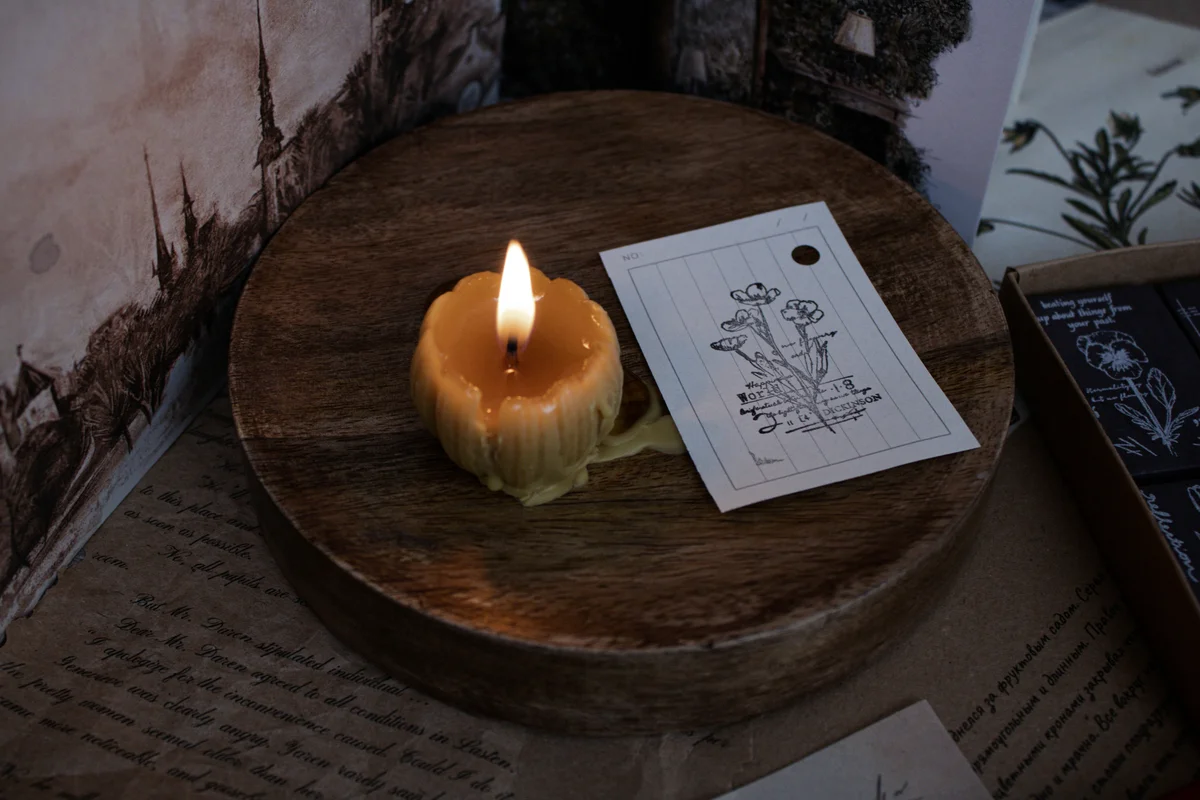
The wheel of the year is a cycle of intention and harvest, of planting and reaping, of going inward and expanding outward. If Samhain is the moment of release and Imbolc the first stirring of new intention, Beltane is the moment of full commitment: the seed is in the ground, the shoots are up, and now you tend what you've chosen to grow.
The name itself points toward fire as its central force. The earliest written record of the festival is in Sanas Cormaic (Cormac's Glossary, c.900 CE), which derives the Old Irish Bealtaine from bil-tene, meaning "lucky fire," with some scholars linking the first element to Belenos, the Gaulish god of light and healing. Fire purifies, illuminates, and commits: you cannot un-light a flame.
This makes Beltane particularly potent for magic and intention work. The energy supports growth, expansion, desire, and the full-throated yes to what you want. It's not a time for careful discernment; that happened at Imbolc. It's a time for commitment, for showing up for what you've already chosen.
What Beltane energy supports
The themes of Beltane (fire, fertility, the full flowering of spring, the union of polarities) point toward certain kinds of intention work:
Love and desire. Beltane is the sabbat most directly associated with romantic and sexual energy, not in a base way, but in the philosophical sense of eros as a life force. In Plato's Symposium, eros is described as a universal force that moves all things toward beauty and the good: a daimon bridging the mortal and the divine, not merely physical attraction. Work for love, for passion, for the deepening of existing relationships, for opening yourself to connection. The energy supports all of it.
Creative expansion. Beltane energy is generative. What are you creating? What wants to come through you? Work at Beltane to clear the blocks between yourself and your creative expression: to commit to the project, the practice, the art form that you've been circling around.
Abundance and growth. The season is about life insisting on itself: the abundance of the natural world at its peak. Work for financial growth, for career expansion, for the flourishing of anything you've been tending. The energy supports material as well as spiritual abundance.
Courage and vitality. Beltane is a fire festival, and fire gives courage. Work for the boldness to do what you've been hesitating about, for the vitality to show up fully for your life, for the willingness to be seen.
Working with candle magic at Beltane
Candle magic is the most direct way to work with Beltane's fire energy as a solitary practitioner. The Candle Magic guide in Grimoire covers colour correspondences, dressing and anointing, timing, and how to structure a working; but the fundamentals for Beltane are simple.
Choose a candle in a colour appropriate to your intention: red for desire and passion, green for growth and abundance, gold for solar energy and success, pink for love and self-worth. These colour correspondences draw on a long tradition of folk magic, codified for modern solitary practice most influentially by Scott Cunningham in Wicca: A Guide for the Solitary Practitioner (1988). Dress it with an oil aligned with your intention. State your intention clearly, not as a wish, but as a commitment. Light the candle and let it burn, feeding the fire with your attention.
The intention as commitment
Beltane intentions work differently from the wishful thinking of the new moon. At Beltane, the energy supports commitment, not "I hope this grows" but "I am committed to growing this." The distinction matters.
The tradition of handfasting (binding vows spoken at Beltane "for a year and a day") speaks directly to this. In parts of Scotland and Ireland, couples would clasp hands bound with cord at the fire festival and pledge themselves to one another for a year's trial, a practice recognised under Scottish civil law until the Marriage (Scotland) Act 1939 abolished irregular marriages. The binding was deliberate, time-bound, and witnessed: a commitment made in the full knowledge that it required tending. Beltane intentions carry the same quality.
Before you set your Beltane intention, ask yourself: am I actually willing to do what this requires? A Beltane intention is a bet on yourself. You're not asking the universe to deliver something to you; you're declaring that you're going to show up for it.
Check in with your Beltane intentions via Daily Pulse as the weeks progress. The energy of the season carries through to Midsummer; you have until the summer solstice before the wheel turns toward harvest. Use that window.
Recording your Beltane workings
Whatever you do at Beltane, record it. Write down your intentions, your ritual, what felt significant. Note the date, the phase of the moon, the herbs and tools you used. Record how you felt: the quality of the energy, whether the working felt potent or flat, what surprised you.
Then, at Lughnasadh (the first harvest), return to those notes. What grew? What didn't? The record becomes a map of your own magical development, built sabbat by sabbat, year by year.
Keep your Beltane record in My Craft alongside your other ritual journals. When you can look back across multiple Beltanes (across multiple years of tending the same intentions or watching them transform) you begin to understand your own magical rhythms in a way that no single working can show you.
Beltane is generous. It wants you to grow. Meet it halfway.
For the wider context of how to celebrate Beltane as a solitary practitioner, see Beltane for Solitary Witches; for the season's plants, Herbs of Beltane; for the divine figures, Beltane Deities.
This piece is part of The Wheel of the Year Intention Practice: an eight-piece series on working with intention across the sabbat cycle. Next: Litha Energy and Intentions.
Sources
- Wikipedia, Beltane (etymology, Sanas Cormaic, and Belenos): en.wikipedia.org/wiki/Beltane
- Britannica, Beltane (historical overview and Bealtaine etymology): britannica.com/topic/Beltane
- Plato, Symposium: eros as universal life force; English translation via MIT Classics
- Wikipedia, Eros (concept) (Platonic and philosophical tradition): en.wikipedia.org/wiki/Eros_(concept)
- Scott Cunningham, Wicca: A Guide for the Solitary Practitioner, Llewellyn Publications (1988): candle colour correspondences
- Celtic Life International, Handfasting (historical tradition and Scottish legal context): celticlifeintl.com/handfasting
More from the Blog
Herbs of Samhain: Plants for the Thinning Veil
Herbs of Samhain, from mugwort and rosemary to the poisonous nightshades of flying-ointment folklore. Their history, their uses, and the safety that matters.
Beltane for Solitary Witches: Celebrating the Fire Festival Alone
Beltane is one of the great fire festivals. Here is how to celebrate it as a solitary witch, simply and meaningfully.
Begin your practice
Grimoire is available now on Android and as a web app. Start today.