Practice
How to Build a Daily Spiritual Practice Without Burning Out
Rowenna
Solitary witch and the founder of Grimoire. Built the app she couldn't find anywhere else. Writes about the craft with primary sources, honest lineage notes, and a low tolerance for vague correspondences. Based in the UK with more herbs than shelf space.
· 7 min read
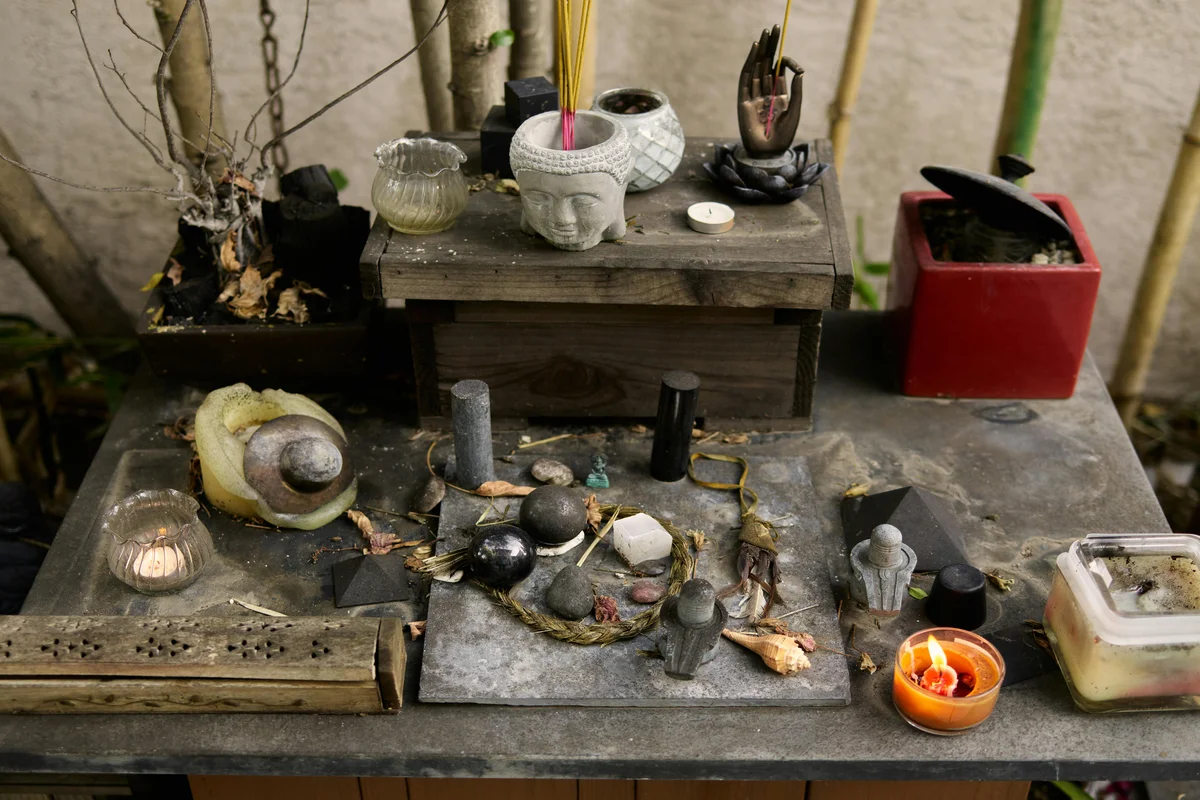
There is a particular flavour of spiritual burnout that affects witches and practitioners specifically. It's not the exhaustion of too much practice. It's the exhaustion of trying to maintain a practice that was designed for someone else's life.
The elaborate morning routine. The hour of meditation. The fully set altar, the perfect ritual, the practice that looks like the ones in the books and the videos and the feeds of practitioners who apparently have unlimited time and a beautifully decorated dedicated practice space.
Most people don't have that. And the gap between the practice you think you should have and the one you can actually sustain is where burnout lives.
Start with what's already there
Before adding anything to your life, look at what's already there. Do you have a cup of tea or coffee every morning? That's a ritual. The kettle boils, the cup is prepared, there's a moment of warmth and pause before the day begins.
That moment (already happening, already recurring) is a foundation for practice. Make it intentional rather than elaborate. A drawn card while the kettle boils. A glance at the moon phase. A moment of noticing what the day feels like before it gets away from you.
The Daily Pulse in Grimoire is designed for exactly this: the moon phase, the planetary hour, a daily tarot draw, all available in a single morning check-in that takes as long as you have.
The minimum viable practice
Define what your practice looks like on the hardest day of the week. Not the best day, the worst. The day when everything is difficult and you're tired and you have fifteen minutes before you need to be somewhere.
What can you do in that fifteen minutes that still counts as practice? That thing is your minimum viable practice. It's the floor, not the ceiling.
On good days, you build on it. On hard days, you do just the floor. And the practice continues, unbroken, because the floor was set at a realistic height.
Seasons of practice
Practice naturally ebbs and flows with the rhythms of a life. There are seasons of deep engagement and seasons of maintenance. Both are legitimate.
The wheel of the year (the eight sabbats, the turning from one season to the next) maps these rhythms beautifully. Some traditions emphasise the inward, quiet work of winter as much as the active magic of summer. A practice that only counts the intense seasons is missing half of what practice is.
Track your practice across the Sacred Calendar and you begin to see your own seasonal rhythms: the times of year when you naturally go deeper, and the times when maintenance is the most that's realistic.
The comparison trap
Other people's practices will always look more impressive than yours from the outside. This is partly selection bias: practitioners share their best moments, their most beautiful altars, their most significant workings. They don't share the weeks when the deck sat untouched or the deity altar went unattended.
Your practice is not in competition with anyone else's. The only relevant question is whether it's serving your actual life: whether it's making you more grounded, more attuned, more yourself.
The role of recording
One of the most underrated aspects of sustainable practice is the record. Not because records make practice legitimate, but because they reveal patterns that you can't see in the moment.
When you can look back across months of entries in your grimoire journal and see that you've been practising consistently (even if inconsistently, even if some weeks were just a single card draw) it changes your relationship to the practice. You're not starting over. You've been doing this.
The record is also where you notice what works. Which practices left you feeling grounded? Which ones felt like going through the motions? What did your practice look like during the periods when life felt most aligned? The answers to these questions are in the record, if you keep one.
Rest is practice
The dark moon is fallow. The quiet of winter is not an absence of practice; it is practice. The tradition that produced the sabbats also produced the understanding that rest and withdrawal are sacred acts.
A practice that never rests is not a sustainable one. Build the fallow periods in deliberately. Give yourself permission to do less. Trust that the practice will be there when you return to it: because you've built it on a foundation that's real.
What practice is actually for
Practice is not for impressing other practitioners. It's not for maintaining a streak or achieving some external standard. It's for making you more yourself: more present, more attuned, more capable of the kind of attention that magic requires.
A practice that accomplishes that, however modest, is a good practice. Build the one that fits your life. That's the one that will last.
For a foundational view of what a solitary daily practice looks like (the structure rather than the sustainability) see A Solitary Witch's Daily Practice: What It Actually Looks Like.
More from the Blog

How to Start a Grimoire (And Why You Should)
A grimoire is not a finished object. It is a living record of your practice. It starts with a single entry.
Why Witches Take a Craft Name (And How a Name Becomes a Ward)
A name is not just a label; in folk magic it is a link. A grounded guide to name magic, craft names, and warding the name you were given.
Begin your practice
Grimoire is available now on Android and as a web app. Start today.