Practice
How to Start a Grimoire: Digital vs Paper, What Works Best?
Rowenna
Solitary witch and the founder of Grimoire. Built the app she couldn't find anywhere else. Writes about the craft with primary sources, honest lineage notes, and a low tolerance for vague correspondences. Based in the UK with more herbs than shelf space.
· 8 min read
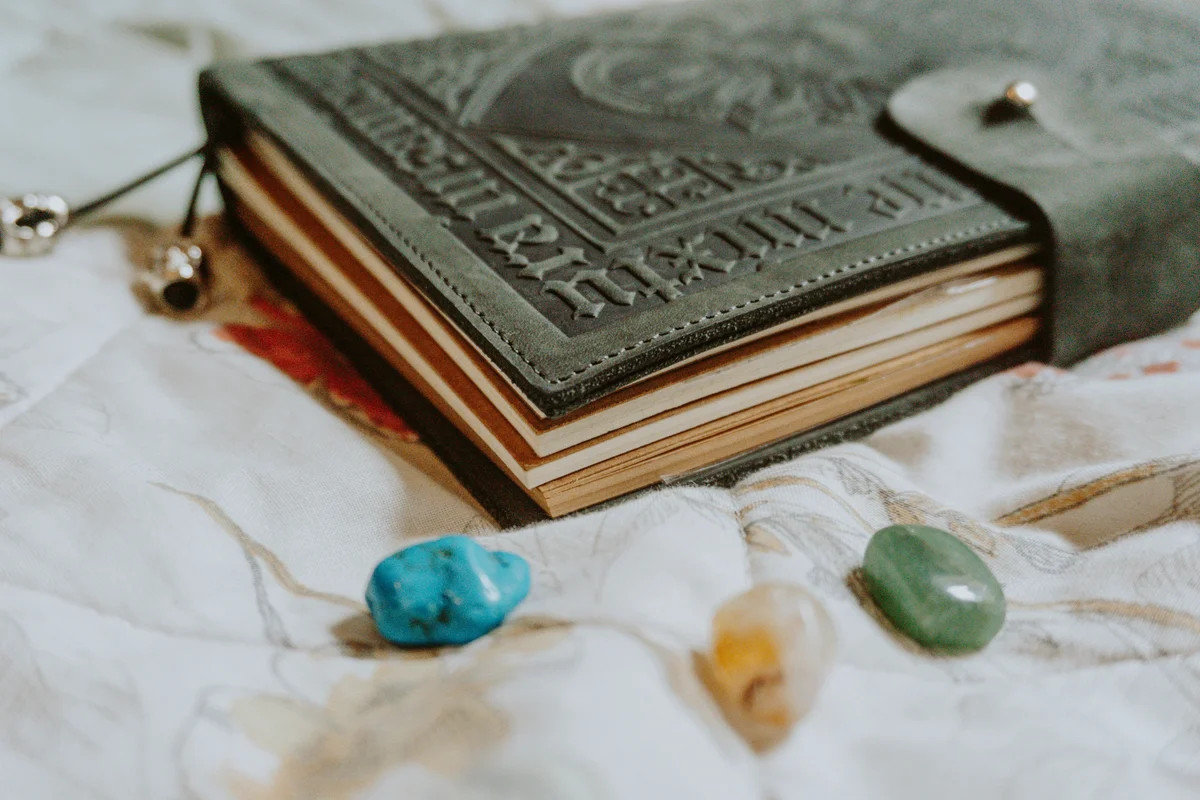
The paper grimoire has a romance to it that's hard to argue with. A handmade book, filled with your own handwriting, illustrated with pressed herbs and sigils, accumulating over years into something genuinely irreplaceable: there's a reason this image persists.
There's also a reason so many paper grimoires get three pages in and then sit on a shelf.
The case for paper
Writing by hand engages the brain differently than typing. A landmark 2014 study by Mueller and Oppenheimer, published in Psychological Science, found that laptop note-takers tended to transcribe information verbatim, while longhand writers were forced to process and reframe material in their own words; and performed significantly better on conceptual questions as a result. The slower pace of handwriting isn't a limitation. It's a feature. It forces you to think, not just record.
The physical act of putting pen to page can also feel like part of the ritual itself: a crossing from the ordinary into the sacred. A paper grimoire is completely private in a way that digital records require deliberate effort to achieve. It can't be hacked, synced accidentally, or accessed by anyone who doesn't physically have it.
And there's the tactile pleasure of it: good paper, good ink, a book that smells like itself and carries the physical evidence of years of practice.
The case for digital
Digital records are searchable. You can find every entry where you worked with mugwort, every ritual you performed at the dark moon, every time you drew the Tower, instantly, across years of entries. A paper grimoire requires you to remember where you wrote something, or to maintain an index.
Digital records are also backed up. A paper grimoire can burn, flood, or simply be lost. A well-backed-up digital practice survives almost anything.
Digital allows for cross-linking in ways paper can't. An entry about a spell can link to the herbs used, which link to their magical properties, which link to previous workings where the same herbs appeared. The My Craft journal in Grimoire is built around exactly this kind of connected practice: entries linked to deities, to spells, to apothecary items, building a web of your practice over time.
Digital also goes with you. Your practice doesn't stop when you're travelling, or commuting, or sitting in a waiting room with ten minutes and the urge to write something down.
The honest problem with paper
Most people who start paper grimoires stop using them. Not because paper is bad: because paper requires a particular kind of dedicated time and space that most lives don't reliably provide.
The grimoire on the shelf, waiting for the right moment, is the most common outcome. And a grimoire that isn't used is just a very expensive notebook.
The honest problem with digital
A notes app or a word document doesn't feel like a grimoire. It feels like work. The problem is what media theorist danah boyd calls context collapse: the flattening of multiple distinct contexts (work, communication, entertainment, practice) onto a single device. When your magical journal lives in the same app as your email and your social media feed, shifting into the ritual headspace that makes practice meaningful becomes genuinely harder. The contexts bleed into one another.
This is why purpose-built tools matter. An app designed specifically for magical practice (with moon phase logging, planetary hour recording, entry types that reflect the actual categories of magical work) creates a different experience than a general notes app. It signals to your brain that this is different from the rest of your phone use.
The hybrid approach
Many experienced practitioners use both, for different purposes; and this is not a compromise. It is a considered allocation of the right tool to the right task.
Paper for the things that benefit from slowness and physicality: initial spell design, long reflections, dream records written immediately on waking. The tactile engagement that paper provides is genuinely useful for certain kinds of inner work: precisely because of the deeper processing that handwriting requires.
Digital for the things that benefit from searchability and accessibility: the ongoing record of practice, herb and crystal references, the deity journal, anything you'll want to find again.
The Shadow Work journal in Grimoire is device-only (stored locally, never uploaded) which gives it something of the privacy quality of paper while remaining accessible and searchable.
What actually matters
The format is less important than the consistency. A grimoire that you actually use (whatever form it takes) is worth infinitely more than the perfect grimoire you're still planning to start.
Start with what you'll actually do. A note on your phone, a voice memo, a quick entry in a purpose-built app at the end of the day. Let the practice establish itself first. The beautiful leather-bound book can come later, once you know you're actually doing this.
The grimoire is a record of a practice. Build the practice first.
For a full guide to what a grimoire contains and its history as a tradition, see How to Start a Grimoire (And Why You Should). If you're going digital and want to compare the apps available, see Grimoire vs Labyrinthos vs Co-Star.
Sources
- Mueller, P.A. & Oppenheimer, D.M., "The Pen Is Mightier Than the Keyboard: Advantages of Longhand Over Laptop Note Taking", Psychological Science 25(6), 2014: journals.sagepub.com
- Marwick, A.E. & boyd, d., "I tweet honestly, I tweet passionately: Twitter users, context collapse, and the imagined audience", New Media & Society 13(1), 2011: context collapse concept, journals.sagepub.com
- Wikipedia, Context collapse: overview and attribution to danah boyd, en.wikipedia.org/wiki/Context_collapse
More from the Blog
Grimoire vs Labyrinthos vs Co-Star: Which App Is Actually Built for Witches?
Three apps, three different ideas of what a spiritual practice needs. An honest comparison of Grimoire, Labyrinthos, and Co-Star for solitary witches.

How to Start a Grimoire (And Why You Should)
A grimoire is not a finished object. It is a living record of your practice. It starts with a single entry.
Begin your practice
Grimoire is available now on Android and as a web app. Start today.