Practice
A Beginner's Guide to Incense Magic for the Solitary Witch
Rowenna
Solitary witch and the founder of Grimoire. Built the app she couldn't find anywhere else. Writes about the craft with primary sources, honest lineage notes, and a low tolerance for vague correspondences. Based in the UK with more herbs than shelf space.
· 8 min read
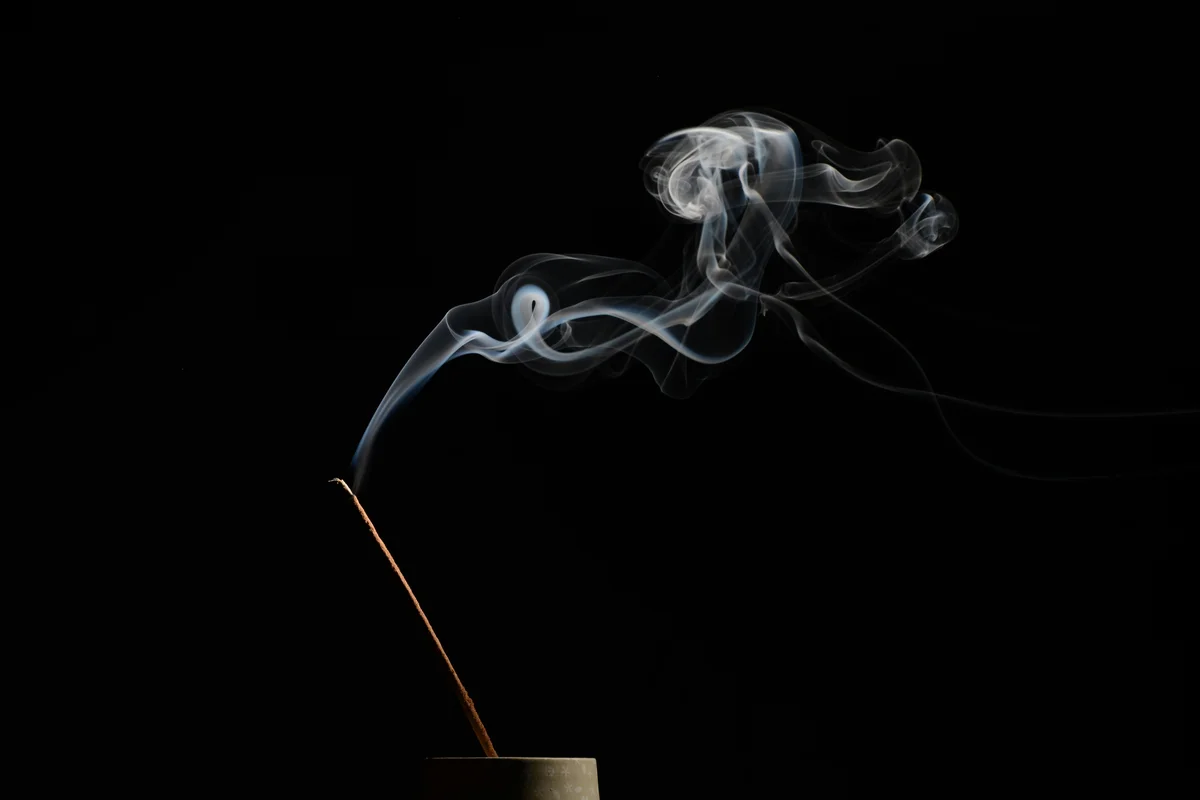
Smoke has carried prayers, intentions, and offerings upward since the earliest recorded human ritual. Archaeological evidence places incense burning in Mesopotamia as far back as the third millennium BCE, where priests burned cedar and juniper before temple altars. In ancient Egypt, the compound incense kyphi (a blend of resins, honey, wine, and aromatic herbs) is documented in the Pyramid Texts of the fifth and sixth dynasties (c.2400 BCE). Plutarch later recorded that Egyptian temple priests burned frankincense at dawn, myrrh at midday, and kyphi at dusk: a liturgical rhythm built entirely around fragrant smoke. Before written language and elaborate ceremonial systems, there was fire and fragrance: the simplest and most universal form of communication between the human and the divine.
Incense magic does not require a complex system. It requires an understanding of why it works and how to use it with intention rather than atmosphere alone.
Why incense works magically
Incense operates through several mechanisms simultaneously. Practically, it alters the sensory environment, shifting smell, sight, and the quality of air in a space in ways that signal to the body and mind that something different is happening. This is not trivial. The ritual shift from ordinary to sacred space is one of the most important things any magical practice can achieve, and incense accomplishes it efficiently.
Symbolically, smoke rising is universally associated with intention carried upward: to the divine, to the ancestors, to whatever unseen presences you work with. The act of burning is itself an offering and a release.
Botanically, many traditional incense herbs contain compounds that affect the nervous system, enhance concentration, or alter perception in subtle ways. A 2008 study published in FASEB Journal by researchers from Johns Hopkins University and the Hebrew University of Jerusalem identified incensole acetate, a compound specific to Boswellia resin (frankincense), as the active agent: burned and inhaled, it activates TRPV3 ion channels in the brain, producing measurable anxiolytic and antidepressive effects in mice. The ancients knew this empirically, even without the chemistry.
Types of incense
Stick and cone incense is the most accessible entry point. It is convenient, consistent, and widely available. The limitation is that most commercial stick incense contains synthetic fragrance rather than actual botanical material, which limits its magical potency. Look for brands that specify natural ingredients, or Japanese-style incense which tends to use higher quality materials.
Loose incense burned on charcoal is more traditional and more versatile. You control exactly what goes into it: which herbs, resins, and woods, in what proportions. It produces more smoke and requires a heatproof vessel, but it allows for true bespoke magical working.
Smudge bundles (most commonly white sage, but also cedar, mugwort, rosemary, and others) are burned and moved through a space for cleansing. White sage (Salvia apiana) bundles in particular come from specific Indigenous North American spiritual traditions and should be used with awareness of that context.
The magical properties of common incense ingredients
Frankincense: purification, consecration, solar energy, connection to the divine. Burns slowly and powerfully. The foundational resin of Western magical practice.
Myrrh: shadow work, the underworld, healing, protection. Often paired with frankincense. Has a heavier, darker quality appropriate for workings with death, grief, or deep transformation.
Sandalwood: meditation, spiritual connection, peace. Gentler than the resins and more suitable for quiet, inward workings.
Dragon's blood: protection, power, banishing. One of the strongest protective resins in the western tradition. Use it when you need serious energetic shielding.
Lavender: peace, clarity, sleep, love. Excellent as a base note in loose blends, or burned alone for simple calming.
Mugwort: dreaming, psychic work, divination. Burn before tarot, scrying, or any working involving the subconscious or prophetic vision.
Rosemary: purification, memory, protection. A workhorse herb for clearing a space before ritual.
Building a loose incense blend
The traditional structure for a loose incense blend uses three layers: a base, a heart, and a top note, borrowed from perfumery but directly applicable to magical blending. The Scent Magic tool in Grimoire is built around exactly this structure.
The base is what burns slowly and carries the blend: resins like frankincense, myrrh, or benzoin. It is also the energetic anchor of the working.
The heart is the main magical intention: the herb or combination of herbs that carries the primary purpose of the blend.
The top note is what you smell first and what rises most readily in the smoke: lighter herbs and woods, florals, citrus peel.
A simple protection blend might use: frankincense and dragon's blood as base, rosemary and black pepper as heart, and a touch of bay and cedar as top note. Grind coarsely, mix well, and burn a small amount at a time on a lit charcoal disc.
Using incense with intention
The difference between burning incense as atmosphere and burning it as magic is intention. State clearly (aloud or in writing) what the incense is for before you light it. What are you releasing? What are you inviting? What space are you creating or clearing?
Watch the smoke. The direction it moves, the way it behaves, can be read as information: a practice called libanomancy, documented in Old Babylonian cuneiform tablets dating to 2000–1600 BCE, where it was among the standard divinatory practices of Mesopotamian temple priests. Smoke that rises cleanly and directly is generally read as a positive sign. Smoke that moves erratically or refuses to rise may indicate resistance or obstruction in the working.
When you are finished, extinguish cleanly and acknowledge the close of the working. The ritual frame (opening and closing) matters even for small, everyday acts of incense magic. Record what you burned and what you observed in your Grimoire journal.
Safety
Burn incense in a well-ventilated space. Keep it away from flammable materials. Use a proper heatproof vessel for charcoal work; the charcoal gets significantly hotter than most people expect. Never leave burning incense unattended.
Some herbs are not safe to burn in enclosed spaces or by people with respiratory conditions. Mugwort and some other herbs should be used sparingly and with good ventilation. When in doubt, research before you burn.
Sources
- Moussaieff, A. et al., "Incensole acetate, an incense component, elicits psychoactivity by activating TRPV3 channels in the brain", FASEB Journal 22(8), 2008: Johns Hopkins University and Hebrew University of Jerusalem, PubMed
- Wikipedia, Kyphi: ancient Egyptian compound incense, Pyramid Texts, and Plutarch's account, en.wikipedia.org/wiki/Kyphi
- Wikipedia, Capnomancy: first recorded use in ancient Babylonia, history of libanomancy, en.wikipedia.org/wiki/Capnomancy
- ScienceDaily, "Burning incense is psychoactive: New class of antidepressants might be right under our noses" (2008): accessible summary of the FASEB study, sciencedaily.com
More from the Blog

What Is Shadow Work (And Why Does It Matter in Practice)?
Shadow work isn't about darkness for its own sake; it's about wholeness. A gentle, grounded guide for solitary witches: what it is, and safe ways to begin.
Grimoire vs Labyrinthos vs Co-Star: Which App Is Actually Built for Witches?
Three apps, three different ideas of what a spiritual practice needs. An honest comparison of Grimoire, Labyrinthos, and Co-Star for solitary witches.
Begin your practice
Grimoire is available now on Android and as a web app. Start today.