Divination
How to Start a Daily Tarot Practice (And Actually Stick to It)
Rowenna
Solitary witch and the founder of Grimoire. Built the app she couldn't find anywhere else. Writes about the craft with primary sources, honest lineage notes, and a low tolerance for vague correspondences. Based in the UK with more herbs than shelf space.
· 7 min read
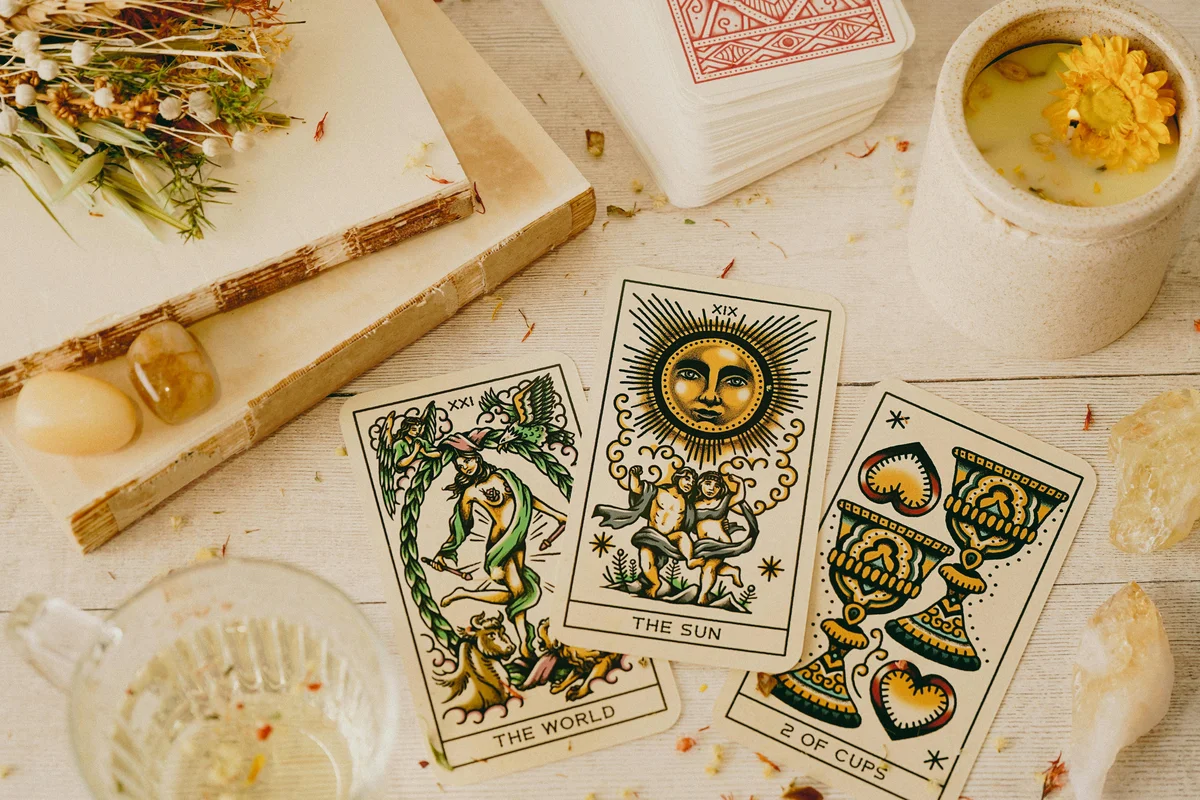
Most people who want a daily tarot practice already own a deck. The deck sits on a shelf, or on the nightstand, or in a drawer somewhere, waiting for the right moment that never quite arrives.
The secret to a daily tarot practice isn't discipline. It's friction reduction. Behavioral scientist BJ Fogg, founder of Stanford's Behavior Design Lab, spent two decades researching exactly this: lasting habits form not by demanding more willpower, but by making the behavior small enough and easy enough that it survives the days when motivation is low. His work in Tiny Habits (2019) names it directly. The practice that sticks is the one that's easy enough to do on the days when everything is difficult.
Start with one card
One card, drawn in the morning, before the day has decided what it is. That's the whole practice. Not a three-card spread. Not a Celtic Cross. One card.
Hold it for a moment. Notice what you feel before you consult any meaning. Does the image unsettle you? Reassure you? Bore you? That first response (before the interpretive brain kicks in) is worth more than any keyword in a guidebook.
Then look up the meaning if you want to. Or don't. Both are valid.
The problem with doing it perfectly
A daily practice dies when it requires perfection. If you need a cleared altar, a lit candle, a clean mind, and twenty minutes, you'll manage it three times before life intervenes and the streak breaks and the deck goes back in the drawer.
The alternative: draw a card while the kettle boils. Draw it in bed before you check your phone. Draw it in the car park before you go into work. The quality of the space matters less than the consistency of the act.
Ritual is built from repetition. The space becomes sacred because you keep returning to it, not because you prepared it correctly.
How to actually remember what you drew
This is where most daily practices collapse. You draw the card, feel something, go about your day, and by evening you can't remember what it was or why it mattered.
Three ways to fix this:
Write one sentence. Not a journal entry: one sentence. "Drew the Tower. Feeling like something is about to shift." That's enough. Done in thirty seconds. Brief reflective writing of this kind (even a single sentence) has been shown by psychologist James Pennebaker's research to meaningfully improve how we process and retain experience.
Take a photo. If you keep your tarot journal in a notes app, photograph the card alongside your one-sentence observation. The image jogs the memory later.
Check in at the end of the day. Did the card show up anywhere? Not literally, symbolically. The energy of the Five of Cups has a way of making itself known.
What to do with reversed cards
Some readers work with reversals. Some don't. Neither approach is wrong.
If you're new to tarot, consider leaving reversals out of your daily practice until the upright meanings feel settled. There's value in simplicity. One clear message is more useful than a nuanced one you're not yet equipped to interpret.
When you're ready to incorporate reversals, the most useful frame isn't "the opposite meaning"; it's "the energy blocked, internalised, or resisted." Rachel Pollack develops this approach in Seventy-Eight Degrees of Wisdom (1980, revised 2019), widely regarded as the most authoritative text on modern tarot interpretation. The reversed Three of Cups isn't the absence of community; it's community that feels inaccessible, or the part of you that's holding it at arm's length.
The lunar layer
Once a daily draw feels settled, you can start to notice its relationship to the moon. Cards drawn in the days around a new moon often carry a quieter, more inward quality. Full moon draws tend toward intensity, illumination, the thing you've been avoiding seeing clearly.
This isn't superstition. It's a practice of paying attention. The moon marks rhythms, and rhythms are what practice is built from. Tracking your daily draws alongside the lunar phase over several months reveals patterns that no guidebook can give you.
When you miss a day
You will miss days. This is not failure. A daily practice is a relationship, not a streak. Relationships survive missed days. What kills them is the decision that a missed day means the whole thing is over.
Miss a day. Draw the next one. Continue.
The long game
A year of daily draws, recorded, tells you something no single reading can. You'll start to notice which cards appear when you're under stress. Which ones show up at turning points. Which ones you dread, and whether the dread is warranted.
The Tarot Gallery becomes a record of your inner life: a private archive of the year as you actually lived it, in symbols.
That's worth a card a day.
If you're still learning the deck, start with A Beginner's Guide to Tarot for Solitary Witches: meaning before practice. For an adjacent divinatory practice that builds a personal symbolic vocabulary, see The Art of the Personal Oracle: A Guide to Charm Casting.
Sources
- BJ Fogg, Tiny Habits: The Small Changes That Change Everything, Houghton Mifflin Harcourt (2019): founder of the Stanford Behavior Design Lab, en.wikipedia.org/wiki/B._J._Fogg
- James W. Pennebaker, Opening Up: The Healing Power of Expressing Emotions, Guilford Press (1997 revised edition): expressive writing and psychological processing, Wikipedia: Expressive Writing
- Rachel Pollack, Seventy-Eight Degrees of Wisdom: A Tarot Journey to Self-Awareness, Weiser Books (revised edition 2019; first published 1980): the standard text on tarot reversals and card interpretation, en.wikipedia.org/wiki/Rachel_Pollack
More from the Blog
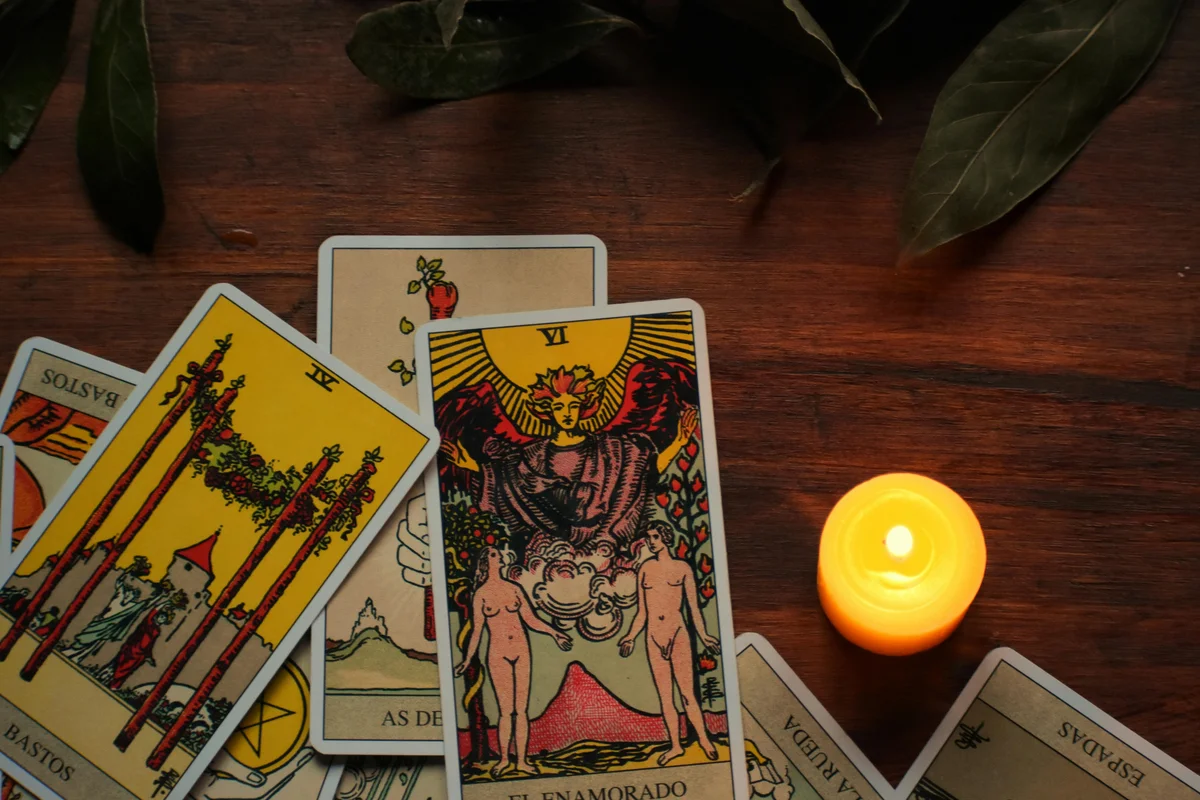
A Beginner's Guide to Tarot for Solitary Witches
Tarot is not fortune telling. It is a mirror, a way of asking better questions.

Charm Casting: A Guide to Building Your Own Divination Set
Charm casting is divination without a rulebook: a practice built from objects you choose and meanings you write yourself. A guide to building your set.
Begin your practice
Grimoire is available now on Android and as a web app. Start today.