Sacred Sites
Gogottes: The Fairy Stones of Fontainebleau Forest
Rowenna
Solitary witch and the founder of Grimoire. Built the app she couldn't find anywhere else. Writes about the craft with primary sources, honest lineage notes, and a low tolerance for vague correspondences. Based in the UK with more herbs than shelf space.
· 6 min read
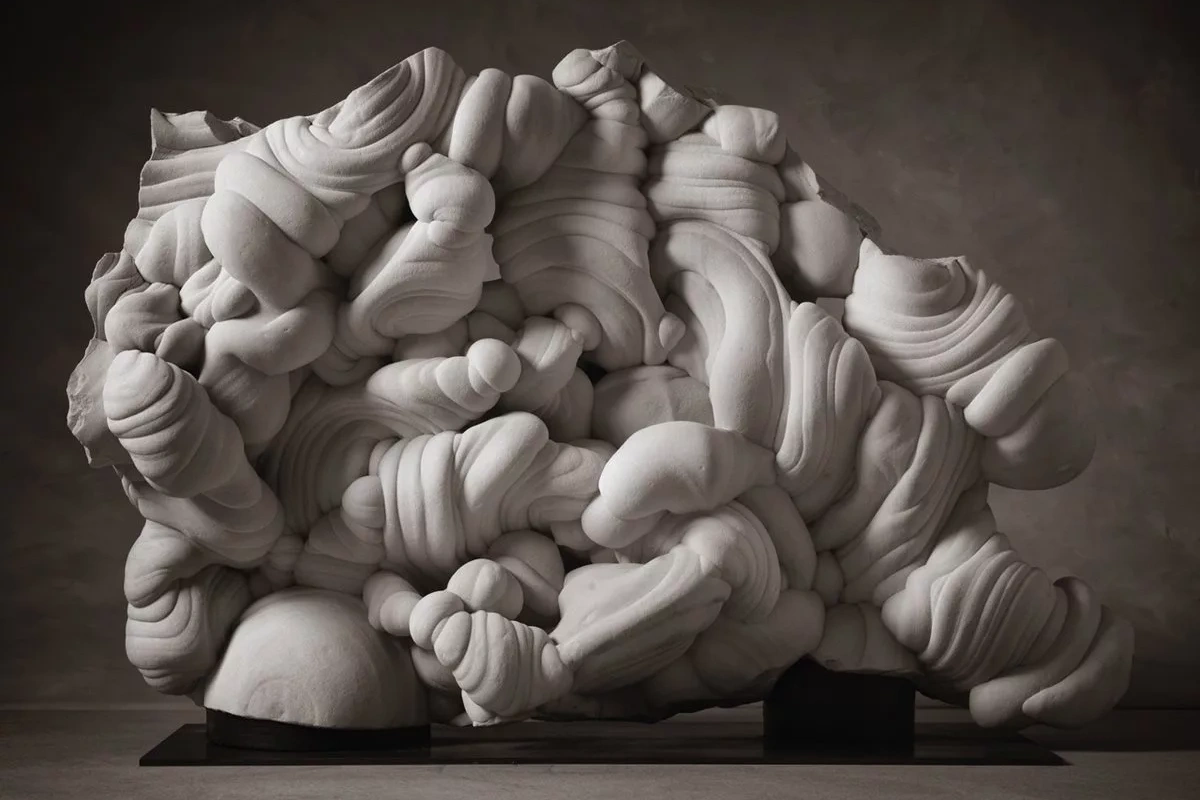
A gogotte is not a carving. It is a stone that grew into a sculpture on its own, deep in the sands beneath one of the oldest sacred forests in France.
For centuries, no one quite believed the rocks of Fontainebleau had formed by accident. The forest above them had its own reputation: Mesolithic carvings on the cave walls, fairy ponds that never dried, boulders the locals said had been shaped by something other than weather. Gogottes belong to that landscape. They have been picked up out of the sand, kept in studios, and placed on altars for as long as anyone has paid attention to them.
They do not appear in old grimoires. The forest that produced them has been considered enchanted for thousands of years, and that is the lineage the solitary witch is really stepping into when she keeps one.
What is a gogotte?
A gogotte is a sandstone concretion. It forms when mineral-rich water moves slowly through fine quartz sand, binding the grains together over millions of years. The gogottes of Fontainebleau date to the Oligocene epoch, around thirty million years ago.¹
The shapes they take are not ordinary. No two are alike. Some look like clouds, some like animals, some like ghosts.² The forms are natural, but they rarely feel that way to the person holding one.
The name itself is recent. The French geologist Claude Guillemin coined the word gogotte in the twentieth century, after the rock-creatures in a Babar story he was reading to his grandchildren.³ Before that, the stones had no shared name at all. They simply belonged to the forest.
The forest that made them
The Forest of Fontainebleau sits sixty kilometres south-east of Paris and covers more than 17,000 hectares. It is one of the most heavily mythologised landscapes in France, and one of the oldest sacred sites in continuous use.
More than two thousand engraved rock shelters are hidden among its boulders. Some date to the Cro-Magnon period; most are Mesolithic, made by the last hunter-gatherers of Europe before farming arrived.⁴ Most of the carvings have not been deciphered.
Within the forest is La Mare aux Fées, the Fairy Pool: a small, persistent pond that has never dried, even in drought. Local tradition holds that the fairies scratched the surrounding rocks with their fingers, and shelter in a nearby grotto by day.⁵ The pond has drawn painters, pilgrims and witches for centuries.
To walk the Fontainebleau is to walk a forest where the stones remember things humans no longer do.
Folklore: stones made by other hands
Local people long believed the forest's strangest boulders could not have been shaped by wind and water. The work was attributed to fairies, to giants, or to a vanished people who knew how to do things we no longer can.
The French esoteric writer Robert Charroux took the idea further in the twentieth century. He called the Fontainebleau formations a petrimundo, meaning stone world, and read them as a sign of intelligent matter; the legacy of a forgotten civilisation.⁶ The theory is fringe, but it sits inside a long French tradition of seeing the forest as a place where geology and the unseen overlap. Even Sotheby's catalogue describes one large gogotte as evoking "supernatural or perhaps extraterrestrial forms."⁷
Across Western Europe, naturally formed stones (fairy stones, hag stones, witch stones) have always been treated with this respect. The rule is old and simple. A stone shaped by no human tool is a stone that belongs to something else.⁸
The Surrealists found them first
I first came across gogottes in a Sotheby's catalogue, one of those browsing sessions that becomes two hours of reading. The Surrealist connection is what stopped me: that Henry Moore and Louise Bourgeois, both kept them in their studios as working references.⁹ Two of the most formally rigorous sculptors of the twentieth century, drawn to an object with no maker. That tells you something.
In the twentieth century, gogottes were rediscovered by people who took the unconscious seriously. The Surrealists, who used tarot, dreams, and automatism in their work, were drawn to them for the same reason.
The reason is not difficult to see. A gogotte is a Rorschach in stone. It rewards attention, and it shows different forms to different eyes.
This is the lineage worth knowing. Long before the modern witchcraft revival, gogottes were already being treated as objects that invite looking, and looking again.
Working with a gogotte
Gogottes have no fixed correspondence in the witchcraft canon, which is part of what makes them useful in personal practice. A solitary witch might use one as:
- A scrying object. Sit with the stone in low light. Let your eyes follow its curves until figures begin to surface. This is lithomancy: divination through stone, and a close cousin of charm casting.
- An altar piece for nature, fae and earth work. Few objects sit more naturally on an altar dedicated to the wild.
- A meditation focus. The stone's geometry is slow and irregular. The mind quietens into it. It pairs well with a daily meditation practice.
- A threshold guardian. The older fairy-stone tradition placed naturally formed stones at doorways and bedsides as protection. A gogotte takes the role without translation.
A gogotte does not need to be charged. It is already old and shaped by the forces that made the forest above it.
Sourcing a gogotte ethically
The Forest of Fontainebleau is a protected nature reserve. No specimen on the market should ever come from the forest itself. Reputable mineral dealers source gogottes from licensed sand-mining operations and from documented historical collections. Both are legitimate.
A small piece is enough. The forest's signature is in the form, not the size.
The lineage
Gogottes are not stones with a long written tradition in witchcraft. They are stones from a place that has one. The Forest of Fontainebleau has been sacred for ten thousand years, fairy-haunted for as long as anyone has written about it, and quietly fascinating to occultists, artists and witches throughout the modern period. A gogotte on the altar of a solitary practitioner is a piece of that forest, working as it always has.
Frequently asked questions
Are gogottes used in traditional witchcraft?
Not in any specific historical tradition. Gogottes were only named in the twentieth century. They belong, however, to the broader European tradition of naturally formed stones (fairy stones, hag stones, witch stones) that have always been treated as sacred and protective. The forest that produced them is one of the oldest pagan landscapes in France.
What is a gogotte good for in practice?
Scrying, meditation, altar work, and threshold protection. The flowing forms invite looking, which is why they pair well with intuitive divination.
Where do gogottes come from?
Almost all genuine gogottes come from the Fontainebleau region of France, where they formed in the fine sands of the Parisian basin around 30 million years ago.
Do I need to cleanse or charge a gogotte?
Most practitioners feel they do not. The stone is already old, and the forest does the consecration. A welcome ritual, a smoke cleanse, or a moonlight bath is plenty if you want to mark its arrival on your altar.
Are gogottes connected to the fae?
Indirectly, yes. The Forest of Fontainebleau is home to La Mare aux Fées, the Fairy Pool, where local tradition says fairies scratched the surrounding rocks. Gogottes themselves are not named in that legend, but many modern practitioners treat them as fairy stones of the same landscape.
Sources
- Sotheby's: Gogotte Formation, Natural History.
- Sands of Time Gallery: Gogotte Formation, Oligocene.
- 1stDibs: Gogotte Formation: Natural Sandstone Concretion ("Misunderstanding"), on Claude Guillemin and the Babar etymology.
- CNRS News: The forest of Fontainebleau is home to rock art treasures, on the Mesolithic engraved shelters.
- Musée d'Orsay: Rosa Bonheur, La mare aux fées (The Fairy Pond), Fontainebleau, on the legend of fairies scratching the surrounding rocks.
- Eden-Saga: Strange Rocks at Fontainebleau, citing Robert Charroux's Le livre du mystérieux passé on the petrimundo theory.
- Sotheby's / lot-art listing: "Alien" Gogotte Formation, Fontainebleau, describing the stones as evoking supernatural forms.
- Wikipedia: Adder stone (also known as fairy stones, witch stones, hag stones), on the broader European folk tradition of naturally formed magical stones.
- Sands of Time Gallery: note on Surrealist inspiration and the influence on Henry Moore and Louise Bourgeois.
Further reading: the Forest of Fontainebleau on Wikipedia for the full geological and cultural history of the landscape that produces these stones.
More from the Blog
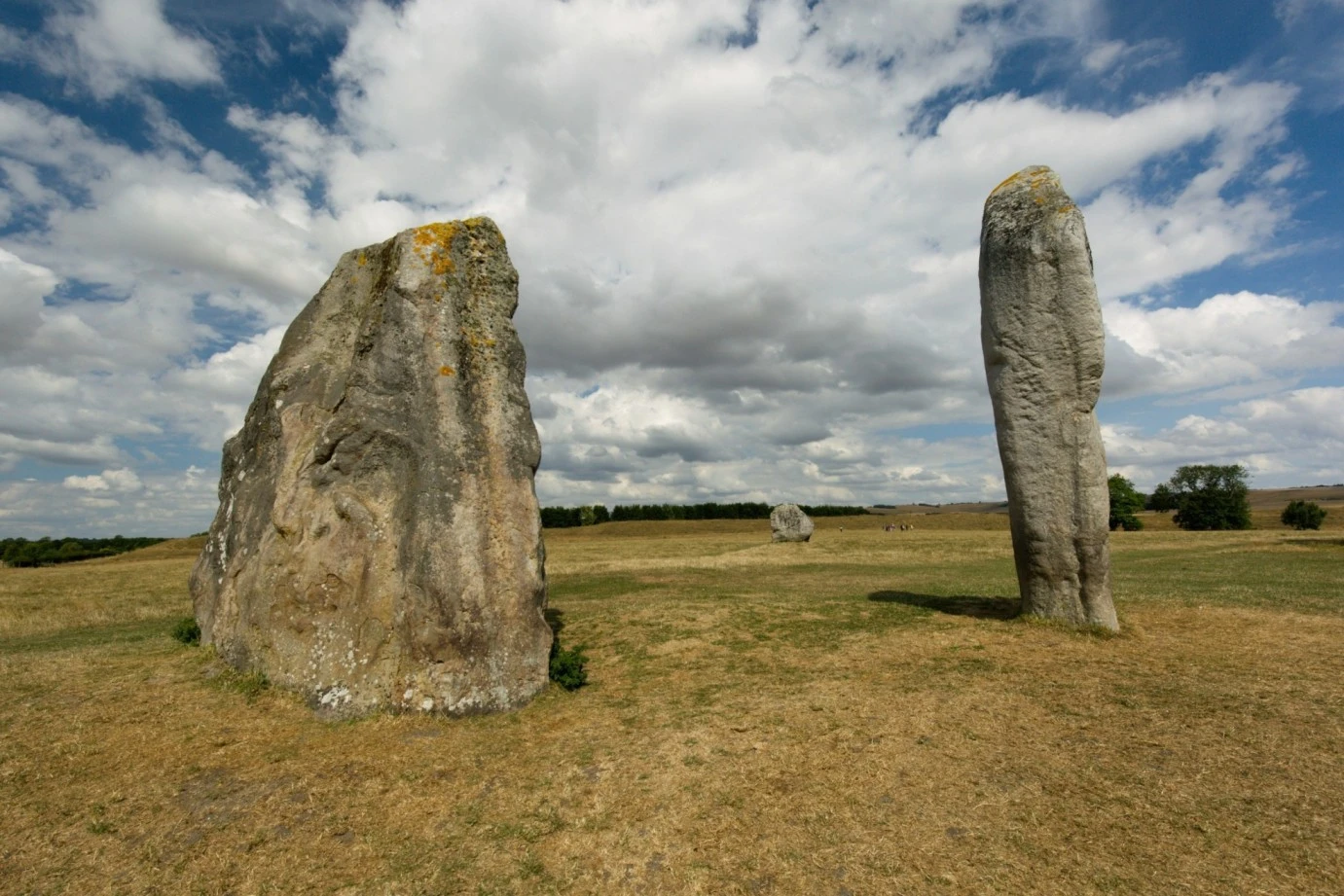
Avebury
Larger than Stonehenge, older in parts, and almost entirely unknown outside Wiltshire; Avebury is Britain's most substantial Neolithic sacred landscape. A layered account of the henge, the wider monument complex, the medieval village inside the ancient circle, and how to work with the site.
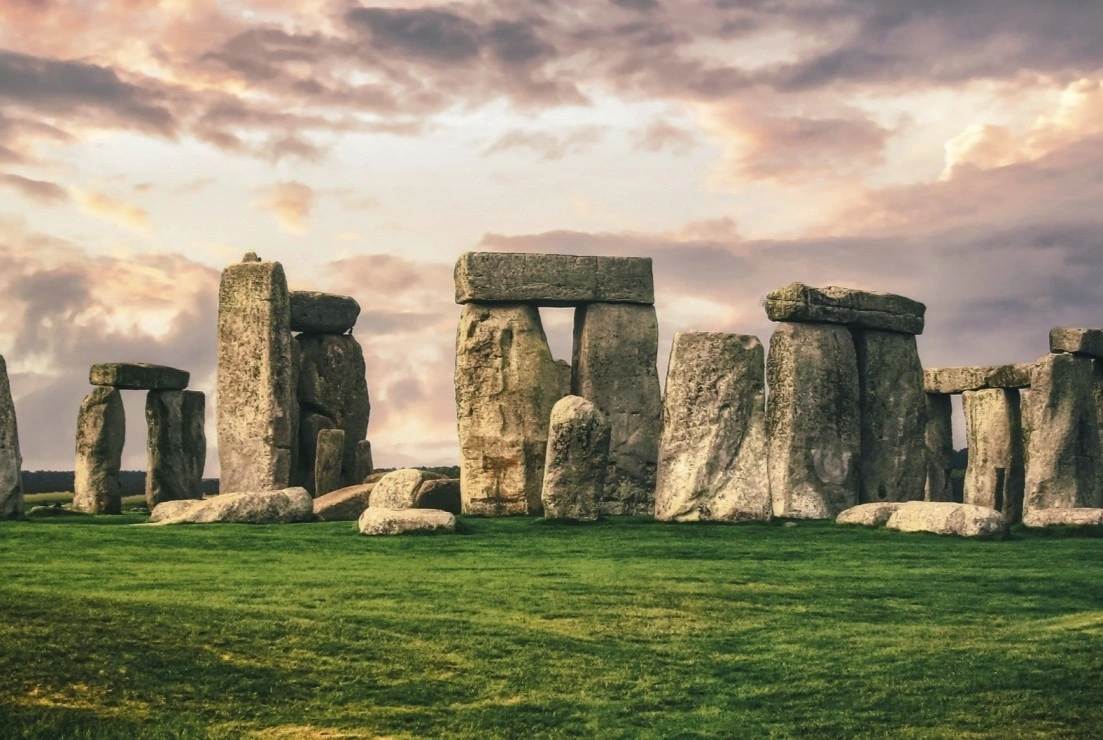
Stonehenge: Stones of the Solstice
What the archaeological record actually tells us about Stonehenge, and what it does not. The solstice alignment, the builders who were not Druids, the 18th-century invention of the Druid-Stonehenge myth, and how to work with the site from a distance.
Begin your practice
Grimoire is available now on Android and as a web app. Start today.