History
The Pendle Witches: A History of the Lancashire Witch Trials of 1612
Rowenna
Solitary witch and the founder of Grimoire. Built the app she couldn't find anywhere else. Writes about the craft with primary sources, honest lineage notes, and a low tolerance for vague correspondences. Based in the UK with more herbs than shelf space.
· 11 min read
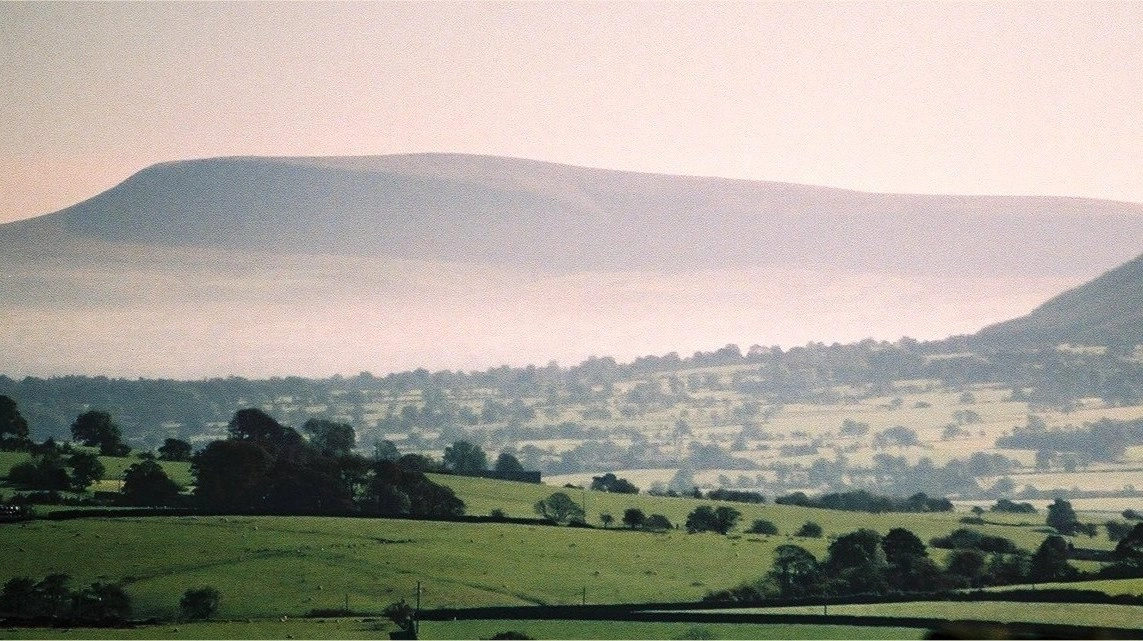
On 21 March 1612, a young woman named Alizon Device met a peddler called John Law on the road near Colne, in Lancashire. She asked him for pins. He refused. She cursed him.
Within minutes (depending on which version of the story you read) Law collapsed in the road. He survived, but was left partially paralysed down one side, almost certainly from a stroke. He believed Alizon had bewitched him. So did everyone who heard the story afterwards. So, eventually, did Alizon herself.
That moment on the road set in motion the most documented witch trials in English history. By the end of August 1612, ten people had been hanged at Gallows Hill in Lancaster, an old woman known as Demdike had died in the castle's dungeons, and a woman called Jennet Preston had been hanged at York. Twelve dead in all. The youngest of those who would testify against them was nine years old.
This is the history of the Pendle witch trials. Who the accused actually were. What actually happened. And what these dead Lancashire women and men mean to a modern solitary practitioner four hundred years later.
The Pendle accused
Twelve people from the area around Pendle Hill in Lancashire were charged with witchcraft in the summer of 1612. Most were poor. Most were women. Several were elderly. Two of the accused (Elizabeth Southerns, known as Old Demdike, and Anne Whittle, known as Old Chattox) were both blind and in their eighties, and had been known as witches in their communities for decades.¹
The accusations clustered around two rival families.
The Demdikes were headed by Elizabeth Southerns ("Old Demdike"), who had a reputation as a witch in the Pendle area for fifty years. Her daughter Elizabeth Device, granddaughter Alizon Device, and grandson James Device were also accused. Demdike confessed under questioning that she had sold her soul to the Devil. The confession is unreliable (extracted from an ill, blind, eighty-year-old woman in custody) but it implicated her entire family.
The Chattoxes were headed by Anne Whittle ("Old Chattox"), Demdike's contemporary and bitter rival. Whittle's daughter Anne Redferne was also accused. The two old women had been feuding for years, possibly over a robbery in which Whittle's family had stolen from Demdike's, and the feud structured much of the testimony each side gave against the other.
Six of the twelve accused came from these two families. The remaining six were named at the trials of relatives or in the testimony that emerged from a meeting at Malkin Tower (more on that shortly): Alice Nutter of Roughlee, the only one of the accused with any wealth; Katherine Hewitt of Colne; John Bulcock and his mother Jane Bulcock; Isobel Robey of Windle, near St Helens; and Margaret Pearson, who was eventually convicted of a lesser charge and pilloried rather than hanged. Two further women (Alice Grey of Colne and Jennet Preston of Yorkshire) were also caught up in the wider proceedings.
The first thing to know about the Pendle accused is that almost all of them were poor, marginal, and known in their villages as cunning folk: practitioners of folk magic for hire. They sold charms. They cured cattle. They were paid in food and small coin to undo curses or place them. This was a real economy, and it had been a feature of English village life for centuries before 1612. What had changed was the law.
The political and religious context
The Pendle trials did not happen in a vacuum. Three pressures shaped them.
King James I and the witchcraft obsession. James VI of Scotland (later James I of England) had been deeply preoccupied with witchcraft since before he took the English throne in 1603. He had personally interrogated suspected witches in the North Berwick trials of 1590, and had written a treatise on the subject (Daemonologie, published in 1597) arguing that witchcraft was real, widespread, and required harsh punishment.² By the time of the Pendle trials, he was the head of the English judiciary, and judges hoping for advancement knew that his attitude on witchcraft mattered.
The Witchcraft Act of 1604. James's first parliament passed an act making witchcraft a capital offence. This was the legal apparatus under which the Pendle accused were tried. Charges that had previously been local, ecclesiastical, or settled by community shaming had become matters for the assize courts and the gallows.
Lancashire's Catholic recusancy. Lancashire in 1612 was one of the most Catholic counties in England, and the authorities knew it. Many old families had quietly continued to practise the old faith after the Reformation, and the Gunpowder Plot of 1605 (only seven years before the trials) had heightened official paranoia about Catholic conspiracy. Some of the prayers and charms used by the Pendle accused were partly Latin, partly remnants of pre-Reformation Catholic devotional practice. To Roger Nowell, the Justice of the Peace investigating them, this was further evidence of subversion.
These three pressures combined to make the Pendle trials more than a folk-magic prosecution. They were a political event, a religious event, and a personal vendetta wrapped together.
The investigation and the trials
The peddler incident on 21 March came to the attention of Roger Nowell of Read Hall, the local Justice of the Peace, in the days that followed. Nowell summoned Demdike, Chattox, and Chattox's daughter Anne Redferne to his hall on 2 April 1612 to answer for the accusations. Both old women confessed, claiming to have made pacts with the Devil. Anne Redferne refused. All four were committed to Lancaster Gaol to await trial at the next assizes.
That might have been the end of the matter (four cunning women rounded up in a remote Lancashire parish) except for what happened next.
On Good Friday, 10 April 1612, Elizabeth Device organised a meeting at Malkin Tower, the family home, ostensibly to plan how to feed the imprisoned relatives. James Device stole a sheep from a neighbour for the meal. Friends and sympathisers attended. When Roger Nowell heard about the meeting, he interpreted it as a witches' sabbath and convened a second inquiry. Eight more people were accused. Most were sent to join the others in Lancaster Castle.
The trials began at the Lancaster Summer Assizes on 17 August 1612 and ran for three days. The presiding judges were Sir Edward Bromley and Sir James Altham. The chief prosecutor was Roger Nowell. The accused had no defence counsel and could not call witnesses on their own behalf. The chief witness for the prosecution was nine-year-old Jennet Device (Elizabeth's youngest daughter, granddaughter of Demdike, sister of Alizon and James) who gave evidence against her own mother, sister, and brother.
When Jennet first walked into the courtroom and was placed on a table to be seen, her mother Elizabeth had to be removed from the court for her screaming. Jennet's testimony was the centrepiece of the prosecution. Under the relaxed evidence rules permitted in witchcraft trials, the testimony of a nine-year-old was admissible where it would not have been in any other capital case. The legal precedent set at Pendle would later be used in the Salem witch trials in colonial Massachusetts in 1692, where the accusations of young girls would send nineteen people to the gallows.
Old Demdike never reached trial. She died in the dungeons of Lancaster Castle, of cold, illness, or both, before the assizes opened. Of those who did stand trial, ten were found guilty and one (Alice Grey) acquitted. Margaret Pearson was found guilty of a lesser charge and sentenced to be pilloried for four market days and serve a year in prison. The remaining ten were hanged on Gallows Hill on the moor above Lancaster on 20 August 1612.
The official account of the trials was written by the clerk of the court, Thomas Potts, on the personal instructions of the judges. The Wonderfull Discoverie of Witches in the Countie of Lancaster was completed by November 1612, revised by Judge Bromley, and published in 1613.³ It is the primary historical source for everything we know about the trials. It is also a piece of crown propaganda. Potts dedicated it to Lord Knyvet, the man who had helped uncover the Gunpowder Plot. The political framing was not subtle.
The named dead
The ten people hanged at Gallows Hill, Lancaster, on 20 August 1612:
- Anne Whittle ("Old Chattox"), of Pendle Forest, in her eighties
- Anne Redferne, daughter of Anne Whittle
- Alizon Device, of Pendle Forest
- Elizabeth Device, mother of Alizon, daughter of Demdike
- James Device, brother of Alizon
- Alice Nutter, of Roughlee Hall, the only wealthy member of the group
- Katherine Hewitt, of Colne
- John Bulcock
- Jane Bulcock, mother of John
- Isobel Robey, of Windle
And:
- Elizabeth Southerns ("Old Demdike"), of Pendle Forest, in her eighties, died in Lancaster Castle dungeon before trial
- Jennet Preston, of Yorkshire, hanged at York Assizes on 29 July 1612
Twelve people in all. They are named here because much of what is written about the Pendle trials focuses on the apparatus that killed them: the judges, the investigator, the king's witchcraft policy. The dead deserve their own naming.
What the Pendle accused actually practised
It is important to be honest about what the Pendle accused actually did. They were not Wiccans. They were not pagans in any modern sense. They were not the secret keepers of an ancient goddess religion. The folk-religious framework most of them operated in was Christian: specifically, a residual Catholicism mixed with practical folk magic.
What they did was sell charms. Curses too. Healing prayers, often in Latin, almost certainly carrying remnants of pre-Reformation prayer-book traditions. Cures for cattle. Spells to find lost objects. Counter-magic to undo other people's curses. This was what English cunning folk had done for centuries, and the practice was widely understood. People paid them. People also feared them.
Demdike herself confessed to having a familiar spirit named Tibb (described as appearing in the form of a black cat or a brown dog) who had instructed her in the craft. Whether this is what Demdike actually believed, what she said under interrogation to make the questioning stop, or what Roger Nowell and Thomas Potts shaped her testimony into is impossible to know. The records we have are filtered through the men who killed her.
Some of the accused likely did believe themselves to have magical powers. Alizon Device, after John Law collapsed, believed she had cursed him. Demdike's confession, however coerced, contained details consistent with a woman who had spent fifty years in the cunning-folk economy. Others, like Alice Nutter, almost certainly did not. Nutter maintained her innocence to her death.
The honest picture is a community of poor practitioners working in a folk-magic economy that had been criminalised by a recent statute, killed by a legal system that turned local feuds, religious tension, and crown paranoia into capital trials.
What the Pendle witches mean to modern witchcraft
The relationship between the Pendle accused and modern solitary witchcraft is real, but it is more complicated than the standard narrative.
The standard narrative is: they were killed for being witches, and we are witches, and they are our spiritual ancestors. Each part of that sentence is partly true and partly not.
They were killed for being witches in the legal sense: under a 1604 statute that made witchcraft a capital crime. They were not witches in the modern Wiccan sense, because Wicca did not exist in 1612. The modern witchcraft revival began in the 1940s and 50s with Gerald Gardner. The continuity between sixteenth-century cunning folk and modern witches is partial, mediated by centuries of folk practice that never disappeared but was driven underground.
What is genuinely continuous: the folk-magic economy these women operated in (charms, healing, cursing, divination for hire) is the deep ancestor of modern solitary practice. The herbs they used, the prayers they whispered, the relationships they had with animals and weather and disease: these are the soil from which modern witchcraft grew. Not the Pendle accused themselves as proto-Wiccans, but the wider tradition they were part of.
The honest claim modern witches can make is this. We are not the spiritual descendants of the Pendle accused in any direct sense. But we are the inheritors of the world they were killed for inhabiting, and we owe them the work of remembering that.
There are practical ways to honour them. Pendle Hill itself is a pilgrimage site for many modern witches; walking it, especially in August, has become a small tradition. The Alice Nutter statue in Roughlee, commissioned for the 400th anniversary in 2012, is a place to leave flowers. Lancaster Castle holds a small exhibition. On 20 August each year (the anniversary of the Lancaster hangings) many witches light candles and read the names aloud. This is a practice that costs nothing and asks for nothing, and has outlasted four centuries of forgetting.
Conclusion
The Pendle witch trials of 1612 are among the best-documented events in English witchcraft history, but the documentation is in the hands of the men who carried out the killings. What we have is an account written by Thomas Potts, on the orders of the judges who hanged the accused, dedicated to a nobleman who had served the king in suppressing Catholic plots. It is a piece of history filtered through its perpetrators.
What survives despite that filtering is twelve names. Twelve people who lived in a remote Lancashire parish in the early seventeenth century, who practised an old folk-magic economy that had recently been criminalised, who were caught in a political and religious moment they did not understand, and who were killed for it.
Modern witchcraft owes them attention. Not because they were our ancestors in faith (they were not) but because they were practitioners in a tradition that survives, in altered form, in the candle on the altar tonight.
Sources
- Wikipedia: Pendle witches, comprehensive cross-referenced summary of the trials, the accused, the political context, and the legal proceedings, drawing on contemporary primary sources and modern scholarship.
- King James VI and I, Daemonologie (1597): the king's anti-witchcraft treatise, which shaped the legal and intellectual context of the trials. Public-domain text via Project Gutenberg.
- Thomas Potts, The Wonderfull Discoverie of Witches in the Countie of Lancaster (1613): the primary historical source for the trials, written by the clerk of the court at the judges' instruction. The work is available in modern scholarly editions and via Early English Books Online.
- Robert Poole, ed., The Lancashire Witches: Histories and Stories, Manchester University Press (2002): the major modern academic treatment, with chapters by leading historians of witchcraft including Stephen Pumfrey and Marion Gibson. manchesteruniversitypress.co.uk.
- Lancaster Castle: The Pendle Witches, official history page from the site of the Lancaster Assizes, including details of the imprisonment and trial.
More from the Blog
Familiars: Folkloric Companions of Witches
When a witch was accused at trial, one of the first questions asked was about her familiar. The English trial records are dense with named animal companions — Pyewacket, Vinegar Tom, Grizzell Greedygut. A source-critical account of what familiars actually were in the historical record, and what modern witches mean when they use the word.
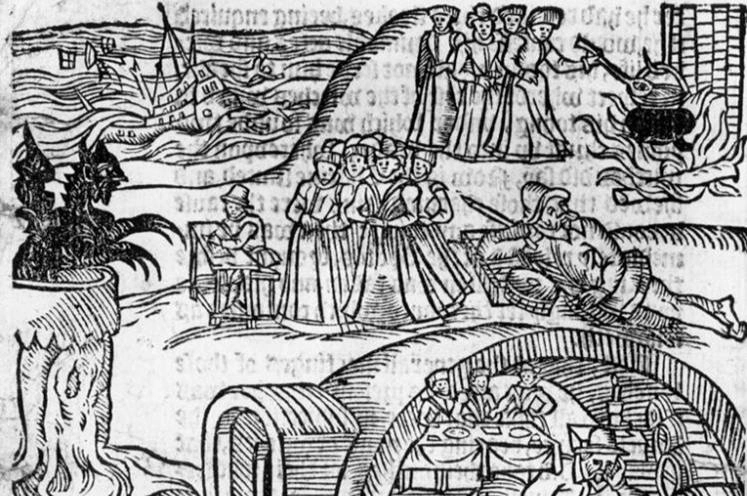
The North Berwick Witch Trials
In 1590, James VI of Scotland personally interrogated accused witches at North Berwick, convinced they had raised storms to sink his ships. What the trial record actually shows, why James wrote Daemonologie in response, and how North Berwick set the template for Scotland's far deadlier witch-hunting tradition.
Begin your practice
Grimoire is available now on Android and as a web app. Start today.