Sabbats
Lughnasadh for Solitary Witches
Rowenna
Solitary witch and the founder of Grimoire. Built the app she couldn't find anywhere else. Writes about the craft with primary sources, honest lineage notes, and a low tolerance for vague correspondences. Based in the UK with more herbs than shelf space.
· 8 min read
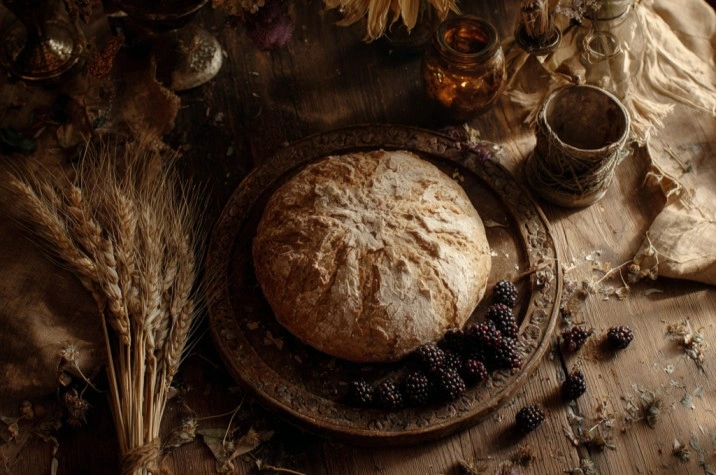
On 1 August, the wheel of the year reaches its first harvest. The grain that has stood through the summer is cut. The longest days are behind you; the light is still generous but the mornings have begun to change quality in a way that is hard to name and unmistakable once you notice it. This is Lughnasadh: the first of three harvest sabbats, the feast of the skilled hand and the grateful heart, the day when everything the year has grown is finally, formally, cut.
Lughnasadh is one of the most personally resonant sabbats for a solitary practitioner. Where some sabbats call for fire and community (the shared bonfire, the maypole, the collective reckoning) Lughnasadh asks primarily for honest accounting: what have you grown this year, what skill have you earned, and what are you grateful for? That is interior work, and it does not require anyone else to do it well.
What Lughnasadh is
Lughnasadh takes its name from the Irish festival of Lúnasa, itself named for the god Lugh, or more precisely for the funeral games Lugh established to honour his foster-mother Tailtiu, who died clearing the plains of Ireland for agriculture. The name carries both the grief of that death and the celebration of what her labour made possible: the harvest. The parallel English name, Lammas, comes from the Anglo-Saxon hlaf-mæsse (loaf-mass) and remembers the same threshold from the other side: not the games and the grief but the loaf baked from the first grain and brought to be blessed. Both names are honest. Both feed modern practice.
The deities of Lughnasadh, the herbs of the season, and the energy and intentions of this point in the year are each covered in their own pieces. For the spell work (the bread ritual, the grain charm, the harvest accounting, the John Barleycorn release) see Bread and Grain Magic: Spells for Lughnasadh. This piece is for the observance itself: how to mark the day when you are working alone.
What makes Lughnasadh well suited to solitary practice
The Irish tradition at the heart of the festival is the nasad of Lugh: the games held in his foster-mother's honour. These were not games of chance but games of skill: athletic contests, feats of craft, the public demonstration of what a person had learned. The question Lughnasadh asks is precisely the question that is easiest to answer honestly when you are working alone: what have I actually earned this year?
Skill, craft, and personal harvest are interior matters before they are anything else. A coven can witness your answer, but only you can give it. The solitary practitioner at Lughnasadh is in exactly the right position to do the thing the festival asks: to sit with what has grown in your life and your practice since Imbolc, name it honestly, celebrate what is genuinely there, and acknowledge what is not.
The window for Lughnasadh runs from roughly 29 July through 4 August. The exact date varies; most practitioners observe it on 1 August itself or on the nearest weekend. You do not need to work on a specific hour or at a specific moment; the energy of the season holds across the week.
Rituals and practices
The sunrise practice. On or near 1 August, go outside as close to sunrise as you can manage. The Lughnasadh sun is still strong, but if you are paying attention there is already a quality to the early morning light that is subtly different from July's: a slightly lower angle, a warmth that has to work a little harder. Stand in it for a few minutes. Name aloud one thing that has grown in your life since the beginning of the year. Not a hope or a plan: something that has actually happened, actually changed, actually arrived. The practice is short. The naming is the whole of it.
The skill acknowledgment. The games of Lugh celebrated what people had made themselves capable of. In solitary practice this becomes a private ceremony: sit with your journal and name, specifically, a skill or capacity you have developed, deepened, or earned in the past year. Not a vague sense of having grown: a specific thing. A practice that has become more consistent. A craft that has improved. A difficult conversation you learned to have. Knowledge you pursued and now hold. Write it down. Then do one thing with that skill (however small) as a conscious act on the day. The Lughnasadh offering is the exercise of what you have earned, not just the acknowledgement of it.
The first-fruits offering. Take the first or best of something outside and leave it. The first blackberry from the bramble at the end of your road. A portion of whatever you have cooked or baked. A flower from your garden or a pot on the windowsill. The offering does not need to be elaborate or expensive; it needs to be genuinely the first or the best, given without keeping the better portion for yourself. Set it down somewhere outside your home, say simply what you are grateful for, and walk away without looking back. This is the oldest harvest practice there is, and it has not changed because it did not need to.
The Beltane arc review. Lughnasadh is the place where the intention arc planted at Beltane is supposed to bear fruit. Go back (to your journal, your notes, or your memory) and find the intentions you held at the beginning of May. What were you growing? What has come through? Be specific and be fair: a practitioner who only ever records the failures is not keeping honest accounts. The harvest is what actually grew, not what you wished had grown. Both the successes and the shortfalls belong to the accounting. The full harvest accounting working, with written lists and a candle, is in Bread and Grain Magic; this version is simply the quiet review before the more formal working.
The bread moment. If you bake the Lughnasadh loaf (the full ritual is in Bread and Grain Magic) eat the first slice in silence, slowly, with attention. This is the harvest consumed: the intention of the year taken into the body, the solar energy of the summer concentrated in the grain and now in you. It is a communion in the oldest sense of the word, and it asks nothing more than your full attention for the length of a first slice of bread.
A lunar Lughnasadh pull. If the sabbat falls near a full or new moon, a single Tarot or oracle card drawn at sunset on 1 August can anchor the season's themes with unexpected precision. The question to hold as you draw: what is ready to be harvested? For lunar practice in the context of the sabbat calendar, see Working with the Moon.
The Lughnasadh altar
Build the Lughnasadh altar in the colours of the late-summer harvest: golden yellow, warm amber, deep orange, forest green, and the first hints of rust. It is not yet autumn, but the autumn is beginning to arrive at the edges.
Items to include: A loaf of bread, baked or bought, the loaf is the central object of the altar. Ears of wheat or dried corn, if you can find them. Sunflowers; they are Lughnasadh's flower, peak solar energy held in a plant that follows the sun. Late summer berries: blackberries, bilberries, elderberries beginning to darken. A small bowl of grain: oats, barley, or wheat berries. Beeswax candle in gold or amber; the colour of the grain at harvest.
Crystals: Citrine for the concentrated solar energy of the season; carnelian for the warmth of the harvest and the first approach of autumn; golden tiger's eye for discernment and skill; peridot for the green that is still present in the late-summer land; sunstone for Lugh's solar light.
Deities: Lugh, the many-skilled god for whom the festival is held; Tailtiu, his foster-mother whose sacrifice made the harvest possible; John Barleycorn, the grain personified, cut and transformed. Full profiles in Lughnasadh Deities. Invite the presence whose mythology fits your year.
Journal prompts for the season
Work through these slowly across the Lughnasadh week, one per day, rather than all at once.
What has actually grown in my life since Imbolc, specifically, concretely, in my own words?
What skill have I earned this year? What am I genuinely more capable of than I was twelve months ago?
What am I grateful for at this first harvest?
What planted intentions came through, and which did not, and what does the difference tell me?
What does the first harvest ask me to release before I can carry what remains forward into the dark half?
What is the work of the next season: the harvest that still needs to be brought in before Samhain?
Lughnasadh in the wider sabbat pattern
Lughnasadh sits at the midpoint of the harvest arc: after Litha's peak and before Mabon's balance point and Beltane's planting. It is the first cutting, not the last; the harvest has begun but it is not yet complete. What is not ready to be cut yet can still be tended. Lughnasadh asks you to receive what has grown, not to close what is still growing.
Common questions
When exactly is Lughnasadh? Traditionally 1 August, fixed to the calendar date rather than an astronomical event. Most practitioners observe it on 1 August or the nearest convenient day within the surrounding week.
Is Lughnasadh the same as Lammas? The two names refer to the same point in the year and are used interchangeably by most modern practitioners. Lammas comes from the Anglo-Saxon Christian loaf-mass tradition; Lughnasadh from the older Irish festival. Both feed what we practise today. The distinction matters for historical accuracy; it does not change what you do on the day.
Do I need to bake bread to celebrate Lughnasadh? No, though baking is the most direct expression of the season's central material. The first-fruits offering, the skill acknowledgment, and the sunrise practice are complete Lughnasadh workings that ask nothing of the kitchen. If you do want the bread working in full, Bread and Grain Magic covers it with exact instructions.
What if I cannot find wheat or grain for the altar? A bought loaf of bread, a packet of oats from the kitchen cupboard, or dried pasta (anything made of grain) stands in without loss. The correspondence is with the substance, not with any specific form of it.
Sources
Ronald Hutton, The Stations of the Sun: A History of the Ritual Year in Britain (Oxford University Press, 1996): the standard scholarly account of Lammas and Lughnasadh in the British ritual year, including the Irish Tailtiu tradition and the Anglo-Saxon loaf-mass. For the festival's modern pagan reception: Ronald Hutton, The Triumph of the Moon (Oxford University Press, 1999).
Grimoire is a digital practice companion for the solitary witch: a sacred calendar, private grimoire journal, daily tarot, herbology compendium, deity work, and spell builder, all in one place. Now available on Android.
More from the Blog
Lughnasadh Deities: Lugh, Tailtiu and the Spirit of the First Harvest
The deities of Lughnasadh: Lugh the long-handed, Tailtiu who cleared the plains of Ireland and died of it, Demeter who guards the grain, and John Barleycorn who dies to become the bread. A guide to the divine figures of the first harvest sabbat.
Herbs of Lughnasadh: The Plants of the First Harvest
The herbs of early August: meadowsweet in the damp meadows, heather coming into bloom, the first blackberries in the hedgerows. A guide to the plants of Lughnasadh and how to work with them.
Begin your practice
Grimoire is available now on Android and as a web app. Start today.