Ancient Occult Texts
The Picatrix: The Most Influential Book of Magic You Have Never Read
Rowenna
Solitary witch and the founder of Grimoire. Built the app she couldn't find anywhere else. Writes about the craft with primary sources, honest lineage notes, and a low tolerance for vague correspondences. Based in the UK with more herbs than shelf space.
· 10 min read
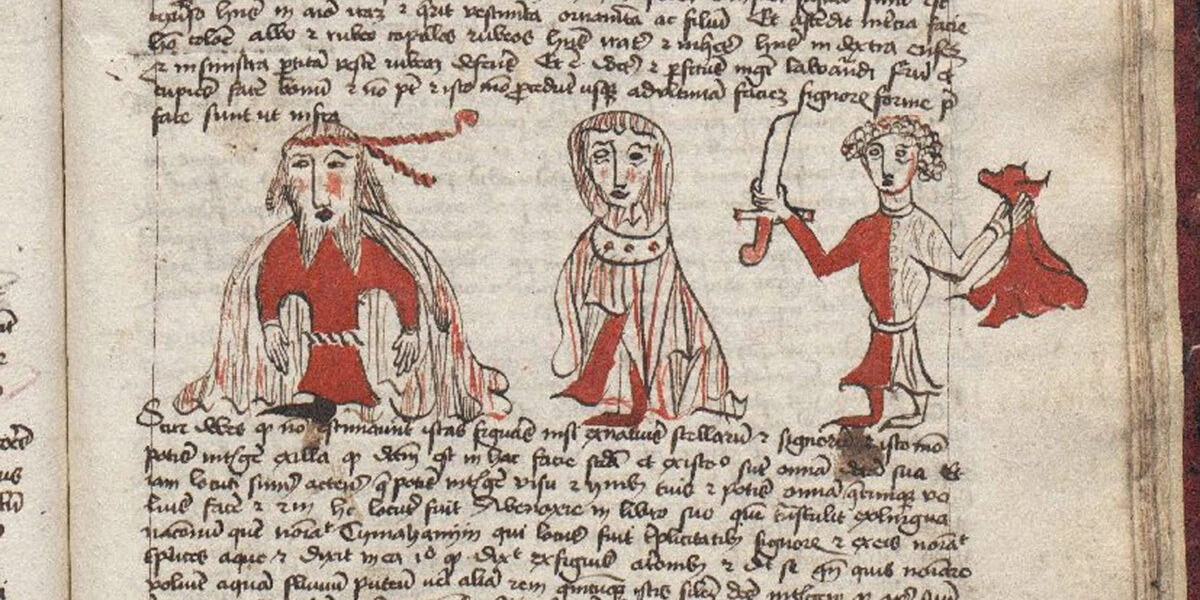
Every time a modern witch works with planetary correspondences (choosing copper for a Venus working, iron for Mars, timing a ritual to Thursday for Jupiter's expansive energy) they are drawing on a system whose most coherent surviving ancestor is an eleventh-century Arabic text written in Andalusia. The text is called Ghāyat al-Hakīm, "The Goal of the Wise." In Europe it became known as the Picatrix. Most modern witches have never heard of it.
This is a piece about the Picatrix as a document: what the text actually contains, where it came from, what we know about its complex origins, and why its influence, unrecognised by most of the practitioners working within it, reaches into almost every corner of contemporary witchcraft.
This piece is part of the Grimoire blog's Ancient Occult Texts series: a category that examines the foundational texts of Western magical tradition from the perspective of the working practitioner. Each piece follows the same pattern: what the text actually contains, where it came from, what we know and do not know about its origins, and why it matters now.
What is in the text
Ghāyat al-Hakīm is a compendium of magical practice and magical philosophy in four books, compiled probably in Andalusia in the mid-eleventh century CE. It is primarily a handbook of astrological magic: the practice of working with the seven classical planets (Sun, Moon, Mercury, Venus, Mars, Jupiter, Saturn) to achieve material results in the practitioner's life and environment.
Book One establishes the theoretical foundations: the nature of magic as the skilled use of natural sympathies, the properties of numbers, the structure of the celestial spheres, and the principles by which planetary influence can be captured and directed in physical materials.
Book Two is the heart of the practical work: the construction of talismans: physical objects made from the right materials, at the right planetary hour, under the right celestial conditions, inscribed with the right image or character. The Picatrix's talisman system is highly specific. A Jupiter talisman, for example, should be made on a Thursday at Jupiter's planetary hour, from tin or purple-dyed cloth, with Jupiter well-placed in the current sky (in Pisces or Sagittarius ideally, or at minimum in a favourable position). A specific image of Jupiter is carved or cast into the metal. Frankincense is burned. An invocation to Jupiter's spirit is spoken.
Book Three elaborates the planetary spirits and their invocations: extended prayers or addresses to each planet's governing intelligence, combined with the relevant suffumigations (incense preparations) for each. The Picatrix's incense system is one of the most detailed in medieval magical literature, specifying exactly which materials should be burned when working with each planet.
Book Four turns toward spiritual development and the deeper philosophical aims of magic: the pursuit of wisdom, the cultivation of the soul, and the correct ethical orientation of the practitioner toward magical work.
Running through all four books is a system of correspondence tables: each planet is matched to a day of the week, a metal, a set of herbs and plants, a stone, a colour, a direction, an incense, a number, and a particular kind of working. These tables are not incidental to the Picatrix; they are its most lasting contribution to Western magical practice.
Where the Picatrix came from
The text was compiled in Andalusia (medieval Spain under Islamic rule) probably between 1000 and 1050 CE. Its author or compiler is unknown; the work presents itself as a synthesis of earlier sources rather than an original work.
Those sources were themselves diverse. The Picatrix draws extensively on the Rasā'il Ikhwān al-Safā' (Epistles of the Brethren of Purity): a tenth-century philosophical encyclopaedia produced by a scholarly brotherhood based in Basra, drawing on Greek, Persian, and Indian thought.¹ It incorporates Hermetic magical texts (the tradition associated with the legendary Hermes Trismegistus, which had been transmitted through Arabic scholarship from Greek originals). It draws on Hellenistic astrologers, particularly Ptolemy and Dorotheus of Sidon. It includes elements of Indian astrology (nakshatra system references and certain planetary magic structures) that had reached Andalusia through the Islamic world's extensive contact with South Asian scholarship.
The Picatrix is, in other words, a synthesis of Islamic, Greek, Persian, and Indian magical-philosophical traditions, compiled in a linguistically and culturally hybrid Andalusia that had been under Islamic rule for several centuries and was in the process of being recovered by Christian kingdoms from the north.
The Latin transmission began around 1256, when Alfonso X of Castile (Alfonso the Wise, who sponsored one of the most ambitious translation projects of the medieval period) had the Ghāyat al-Hakīm translated first into Castilian and then into Latin.² The Latin text, under the title Picatrix (a corruption of uncertain origin, possibly from a proper name or perhaps from the Arabic), circulated in manuscript among European scholars, natural philosophers, and magical practitioners from the late thirteenth century onward.
What we know about its origins and transmission
The authorship of Ghāyat al-Hakīm is genuinely uncertain. The text presents itself as drawing on older sources, and Islamic attribution traditions are complex. The mid-eleventh-century Andalusian compilation date is the scholarly consensus; the Arabic scholar Maslama al-Majriti (died c. 1007) was once proposed as the author, but this attribution has been substantially challenged.³
What is clear is that the Latin Picatrix became one of the most important magical manuscripts in circulation in Renaissance Europe. Evidence of its influence appears in the work of Marsilio Ficino (whose De vita libri tres, 1489, draws on very similar planetary-talisman structures), in the De Occulta Philosophia of Heinrich Cornelius Agrippa (1531-33), and in the work of later Renaissance magical writers who shaped the tradition that eventually reached modern Wicca and ceremonial witchcraft.
The first modern critical edition of the Latin text was published by the scholar David Pingree in 1986.⁴ The first complete English translation (by John Michael Greer and Christopher Warnock) appeared in 2010-2011, meaning that the Picatrix has been accessible to English-language readers for less than two decades.
Why the Picatrix matters now
The most direct answer is the one that most practitioners of modern witchcraft have never been given: the planetary correspondence tables that structure a significant portion of contemporary magical practice (what day to work, what metals and herbs and incenses to use, what planetary energy to invoke) descend substantially from the Picatrix.
The route is not direct but it is traceable. The Picatrix's planetary system was absorbed by Agrippa, whose De Occulta Philosophia became the foundational synthesis of Renaissance magic. Agrippa's correspondence tables were absorbed into the Golden Dawn's systematisation of Western magic in the late nineteenth century. The Golden Dawn's system influenced Gerald Gardner and the formation of Wicca in the 1950s. Wicca's planetary-day and planetary-correspondence framework became the basis for the popularised magic of the late twentieth century.
When a witch on a Thursday evening lights a blue candle and works with tin and frankincense for a Jupiter working, they are working in a structure whose most coherent ancestor is an eleventh-century Arabic text compiled in Islamic Andalusia from Greek, Persian, and Indian sources.
This matters for two reasons. First, it corrects the popular mythology that Western magical correspondence systems are ancient European pagan wisdom. They are something more interesting: a multi-cultural synthesis produced by the Islamic scholarly tradition, transmitted through medieval Christian scholarship, and absorbed into modern witchcraft over several centuries without its origins being generally known.
Second, it opens the Picatrix itself as a resource. The text is not inaccessible; the Greer-Warnock English translation is in print, and the text is a practical handbook. Working witches with an interest in astrological magic will find in the Picatrix a more coherent and detailed version of the planetary-hour and talisman-magic systems than most modern books on the subject provide.
What the Picatrix is not
A brief counterbalance: the Picatrix is a medieval text operating within a specific cosmological and philosophical framework that has not survived intact. It assumes a geocentric cosmos, a specific theory of planetary intelligences as real entities, and an understanding of the relationship between celestial and terrestrial that differs from both modern science and most modern spiritual frameworks.
Modern witches who work with planetary correspondences are not working within the Picatrix's full cosmological system; they are working with fragments of it, adapted and reinterpreted across several centuries of transmission. This is not a problem. Every living tradition adapts its inherited material. But it is worth knowing: what most modern practitioners use as "planetary magic" is not the Picatrix system in its original form. It is a substantially simplified and recontextualised derivative.
The Picatrix in its full form is a more demanding text (and a more rewarding one) than the planetary-correspondence tables it is known for.
Conclusion
Ghāyat al-Hakīm (the Picatrix) is an eleventh-century Arabic astrological magic compendium that is among the most influential texts in the history of Western magic and among the least-known by the practitioners whose work it has shaped. Its planetary correspondence system, transmitted through Agrippa and the Renaissance, is the ancestor of the systems most contemporary witches use for timing, materials, and planetary invocation.
The text is now in English translation and available to working practitioners. For those interested in the astrological magic tradition in more depth, it is the foundational primary source.
The next Ancient Occult Texts piece covers the Greek Magical Papyri: the oldest surviving corpus of practical magic from the ancient Mediterranean world, and the text that demonstrates most clearly that the "Western" magical tradition was never monocultural. For the cluster's first piece, see Aradia, or the Gospel of the Witches.
Sources
- Wikipedia: Ikhwān al-Ṣafāʾ (Brethren of Purity), the tenth-century Islamic philosophical brotherhood whose encyclopaedic Rasāʾil was one of the primary sources for the Ghāyat al-Hakīm.
- Wikipedia: Alfonso X of Castile, the sponsoring monarch of the mid-thirteenth-century translation project that produced the Castilian and Latin versions of the Picatrix.
- Wikipedia: Picatrix, overview of the text, its disputed authorship, the scholarly consensus on its composition date, and its transmission history.
- David Pingree, ed., Picatrix: The Latin Version of the Ghāyat al-Ḥakīm (London: Warburg Institute, 1986): the foundational modern critical edition of the Latin text, on which subsequent translations and scholarship are based.
- John Michael Greer and Christopher Warnock, trans., Picatrix: Liber Atratus Edition, 4 vols. (Iowa City: Adocentyn Press, 2010–2011): the first complete English-language translation, the edition most accessible to contemporary practitioners.
More from the Blog
Aradia, or the Gospel of the Witches: The Founding Text of Modern Witchcraft
Charles Leland's 1899 Aradia is the most influential and most contested book in modern witchcraft. What the text actually contains, where it came from, and why it still matters.
The Greek Magical Papyri
The most important corpus of magical texts you have probably never heard of: practical spells from Greco-Roman Egypt, written across seven centuries. Where they came from, what they contain, and why they are the root of the whole Western grimoire tradition.
Begin your practice
Grimoire is available now on Android and as a web app. Start today.