Ancient Occult Texts
The Greek Magical Papyri
Rowenna
Solitary witch and the founder of Grimoire. Built the app she couldn't find anywhere else. Writes about the craft with primary sources, honest lineage notes, and a low tolerance for vague correspondences. Based in the UK with more herbs than shelf space.
· 10 min read
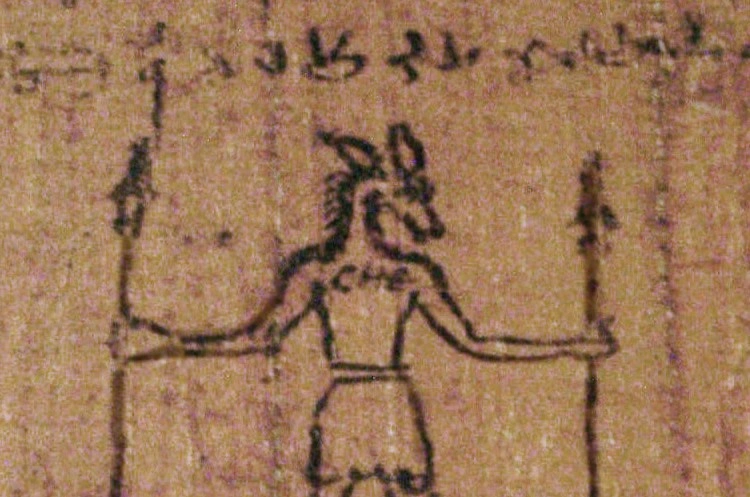
This is the most important corpus of magical texts you have probably never heard of. The medieval grimoires carry a certain fame: the Key of Solomon, the Picatrix, the Renaissance occult philosophers are all names that surface even in casual conversation about magic. But beneath every one of them, older by more than a thousand years, lie the Greek Magical Papyri. They are the closest thing we will ever have to standing in the room while an ancient magician works.
This is the third piece in the Ancient Occult Texts cluster. Aradia took us to the nineteenth century; the Picatrix to the medieval world. The Greek Magical Papyri take us to the foundation: to antiquity, and to the genuine question of where the Western magical tradition actually begins.
What the Greek Magical Papyri actually are
The Greek Magical Papyri (Papyri Graecae Magicae in the Latin, abbreviated PGM) are a body of practical magical texts from Greco-Roman Egypt, written across roughly seven centuries, from the second century BCE to the fifth century CE. The word "papyri" is the key to understanding them. These are not a book. They are a collection of physical documents (some mere fragments, some substantial scrolls running to thousands of lines) gathered and numbered by modern scholars into a single corpus.
That assembly is itself recent. The German scholar Karl Preisendanz drew the scattered papyri together into a numbered edition between 1928 and 1931, which is why a magician's handbook from Roman Egypt is now cited by a number like PGM IV. The standard English translation, Hans Dieter Betz's The Greek Magical Papyri in Translation, did not appear until 1986. For most of their existence the texts were not a tradition anyone could read. They were a pile of brittle, dispersed papyrus, and only in the last century has scholarship made them a corpus at all.
What matters most about them is what kind of document they are. The PGM are not theology, and they are not philosophy. They are handbooks. Working documents. The papyri were made to be used; and that is exactly what makes them so rare and so valuable.
What the texts contain
The range of the PGM is wide, and it is unsentimental. The corpus contains love spells, protective charms and amulets, divination procedures, exorcisms, healing formulas, curses and binding spells, and long, elaborate invocations to gods. It records the working magic of a real society; and a real society's needs are not always comfortable ones.
The love magic is a case in point. A good deal of it is frankly coercive by any modern standard: spells to compel a specific named person, to deprive them of sleep until they yield, to bind their will. Read honestly, this material is a useful corrective to any romantic picture of ancient magic as gentle nature-worship. The divination procedures are subtler: lamp divination, bowl divination, rituals to send or to request a prophetic dream. The protective texts describe phylacteries, amulets carried to shield the operator. And running through all of it are the voces magicae: strings of words and names that carry no ordinary meaning: the long palindromes, the famous sequences of vowels, names of power meant to be spoken precisely rather than understood.
One set-piece deserves singling out. Among the invocations is a powerful rite that scholars call the Stele of Jeu the hieroglyphist. Under a different name it is one of the most-used ritual texts in modern Western occultism; but that part of the story belongs further down the page.
Where they came from
The PGM survive because of Egypt. Papyrus rots in a damp climate; in the dry sand of Egypt it can last for two thousand years. Almost everything we have of ancient practical magic, we have because it was written in the one place where the writing material could endure.
Much of the corpus appears to derive from a single ancient find. Scholars call it the Theban Magical Library: a cache of papyri that seems to have been kept, and then buried or hidden, together: plausibly the working library of one magician, or one family, or a group connected to a temple. It was not a museum collection in antiquity. It was someone's actual tools.
How that library reached modern scholarship is its own strange chapter. In the early nineteenth century, much of it passed through the hands of Giovanni Anastasi, a merchant and diplomat based in Alexandria, who sold collections of Egyptian papyri to the great museums of Europe. The Theban material was dispersed (to Paris, London, Leiden, Berlin) and so the corpus we now read as a unity spent the better part of a century scattered across a continent before anyone reassembled it on paper.
A working magician's library, and whose library it really was
This is the part of the story most worth slowing down for, because it overturns something most people half-believe about magic without ever examining it.
The PGM are written mainly in Greek, but not only in Greek: passages appear in Demotic, the late stage of the Egyptian language, and in Coptic. And the gods invoked in their pages come from everywhere the eastern Mediterranean reached. Egyptian deities are constant: Osiris, Isis, Thoth, Seth. Greek gods stand beside them: Helios, Hekate, Hermes, Apollo. The God of Israel appears throughout, under the name Iao (a Greek rendering of the Hebrew divine name) alongside Sabaoth, Adonai, and figures such as the patriarchs and Solomon, an unmistakable mark of Jewish contribution to the corpus. There are Persian and Mesopotamian elements. In the later layers, early Christian language enters too, and the name of Jesus is used as a word of power. Some figures (Abrasax is the clearest example) belong to no single tradition at all, having been assembled inside this very world of practice.
Here is the honest point. The popular story of "Western magic" likes to draw a clean line from Greece and Rome: a tidy classical inheritance. The Greek Magical Papyri make that story impossible to maintain. The single most important body of evidence we have for ancient practical magic is overwhelmingly Egyptian, Greek, and Jewish in its raw material. It is a genuine synthesis: not a borrowing with the credit quietly withheld, but a tradition that was multicultural in its very bones. The corpus is called "Greek" only because Greek was the working language of literate Roman Egypt (the language a magician would naturally write in) not because its contents are Hellenic. Western esotericism did not start pure and later absorb outside influence. It was a meeting of cultures from the first surviving page.
Why the Greek Magical Papyri matter now
For a practitioner today, the PGM are worth knowing for three reasons, and they build on one another.
The first is evidential. The papyri are the most direct record we possess of how practical magic was actually done in the ancient world, not theorised, not moralised about by hostile outsiders, but done, by the people who did it. Materials, words, timing, gesture, the protective measures the magician took for their own safety: the PGM show the craft from the inside, which almost no other ancient source does.
The second is genealogical. The PGM are the direct structural ancestor of the medieval grimoire. The basic shape (an invocation, a sequence of divine names, prescribed materia, the operator petitioning or compelling a spirit, a phylactery to guard the magician) is the shape that the Key of Solomon and the whole grimoire tradition inherit. The Picatrix sits squarely on that line of descent. So, at a further remove, does every modern spell-crafting framework that organises a working into intention, words, materials, and timing.
The third is that the line is not broken. It reaches the present day, and by a route that can be named precisely. The Stele of Jeu (that powerful invocation from PGM V) was published in fragment by the scholar Charles Wycliffe Goodwin in 1852. It entered the curriculum of the Hermetic Order of the Golden Dawn as the Bornless Ritual, and through the Golden Dawn it reached Aleister Crowley, who made it central to his own system of magic. A witch performing protective or invocatory work today is very often, and usually without knowing it, standing downstream of a papyrus written in Roman Egypt nearly two thousand years ago. The Greek Magical Papyri are not a dead end. They are a root that is still feeding the tree.
Common questions
Are the Greek Magical Papyri actually Greek? Written in Greek, mostly, with passages in Demotic Egyptian and Coptic. But their content is a synthesis of Egyptian, Greek, Jewish, and other traditions. "Greek" describes the language of the corpus, not the origin of its magic.
Can you still read the spells? Yes. The standard English edition is Hans Dieter Betz's The Greek Magical Papyri in Translation (1986). It is a dense scholarly volume and reads as a historical document rather than a modern how-to manual.
Should I cast spells straight from them? The PGM are best approached as a historical corpus and a context for practice, not as a working manual. Some of the magic (the coercive love spells in particular) sits very badly with modern ethics. Their real value to a practitioner is as a root and a record: read with a historian's eye, they show you where your craft comes from.
Are they connected to the medieval grimoires? Directly. The PGM are the structural ancestor of the grimoire tradition; the Picatrix and the Key of Solomon both inherit their basic form.
Where this sits
With this piece, the Ancient Occult Texts cluster spans its full chronological range: antiquity in the Greek Magical Papyri, the medieval world in the Picatrix, and the modern era in Aradia. Read together, the three trace a single tradition across two thousand years.
Sources
Hans Dieter Betz, ed., The Greek Magical Papyri in Translation, Including the Demotic Spells (University of Chicago Press, 1986; 2nd ed. 1992): the standard English critical edition. Karl Preisendanz, Papyri Graecae Magicae (1928–1931): the foundational scholarly compilation that established the numbered corpus. For accessible modern context on Greek and Egyptian magic, the work of Christopher Faraone and Sarah Iles Johnston is the recommended starting point.
Grimoire is a digital practice companion for the solitary witch: a sacred-text library, a private grimoire journal, daily tarot, the sacred calendar, herbology, and deity work, all in one place. Now available on Android.
More from the Blog
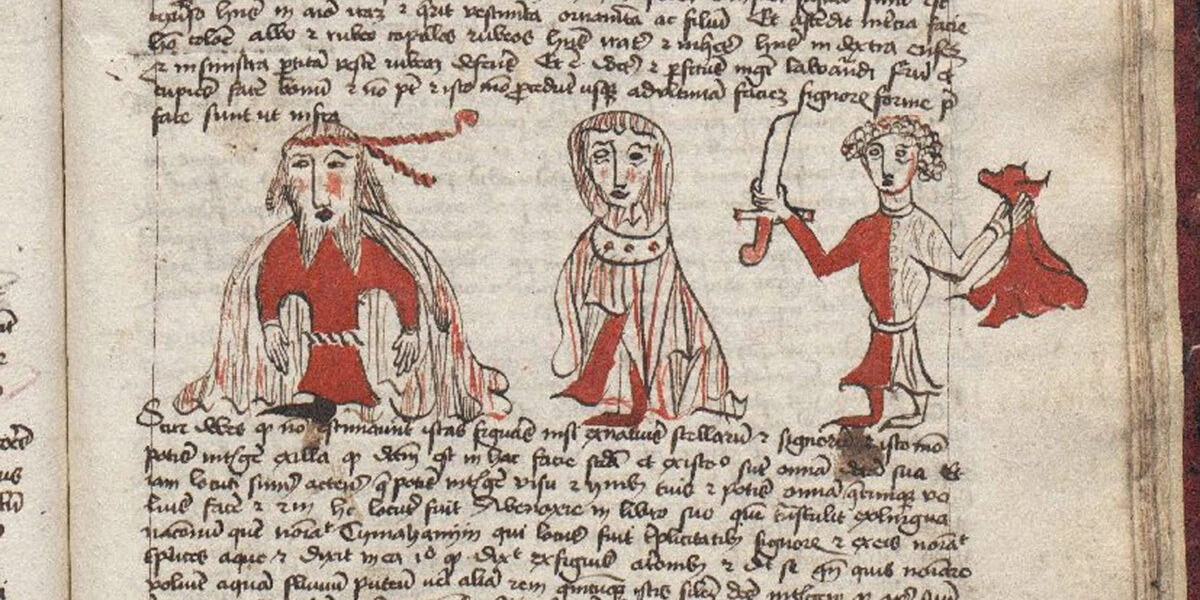
The Picatrix: The Most Influential Book of Magic You Have Never Read
The 11th-century Arabic text Ghāyat al-Hakīm is the foundational handbook of astrological magic in the Western tradition. What it actually contains, where it came from, and why the planetary correspondence systems most witches use daily descend from it.
Agrippa's Three Books of Occult Philosophy
Heinrich Cornelius Agrippa's De Occulta Philosophia (1531–33) is the load-bearing wall of Western magical thought: the book that gathered the entire inheritance of classical, Hermetic, Kabbalistic, and Christian magical knowledge into a single systematic treatment. Every correspondence table in modern witchcraft has its ancestor here.
Begin your practice
Grimoire is available now on Android and as a web app. Start today.