History
The Basque Witch Trials: Two Judges, Two Outcomes
Rowenna
Solitary witch and the founder of Grimoire. Built the app she couldn't find anywhere else. Writes about the craft with primary sources, honest lineage notes, and a low tolerance for vague correspondences. Based in the UK with more herbs than shelf space.
· 9 min read
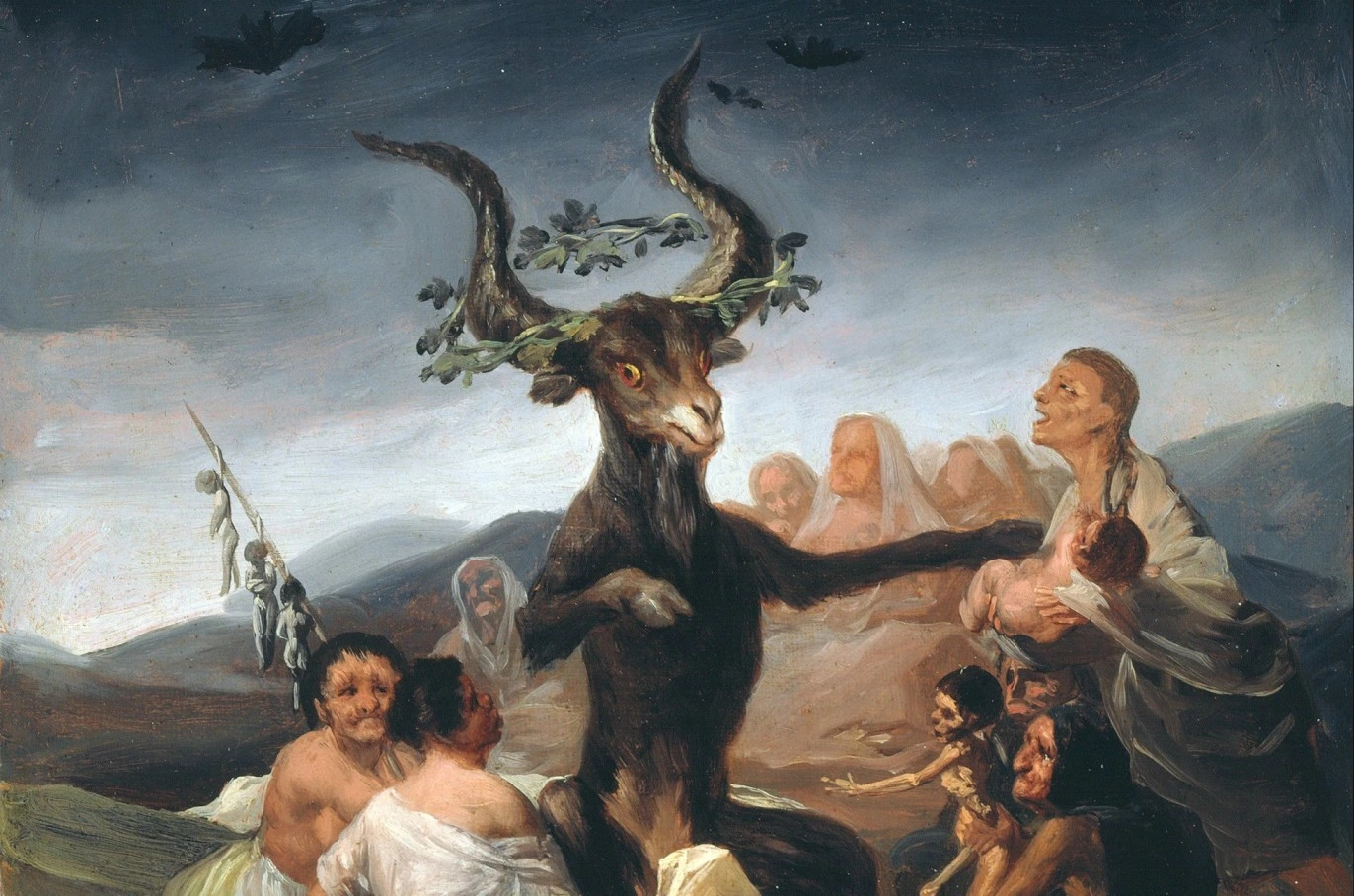
Most accounts of the European witch trials are studies in escalation: an accusation, a confession under duress, a widening net, a rising body count. The Basque trials of 1609 to 1614 are that story too, on the French side of the border. But they are also something rarer in this history, a case where the panic met a sceptic with real power, and largely stopped. Telling both halves together is the point of this piece.
This joins the Grimoire witch-trial series alongside Pendle, North Berwick, Salem, and Matthew Hopkins, the Witch-Finder General, and it is the odd one out in a useful way: it is the trial where the machinery of persecution ran into a brake.
The Basque Country and the panic of 1609
The Basque Country straddles the western end of the Pyrenees, split between France and Spain, with its own language and its own long-standing folk beliefs. It also gave the witch trials a word, akelarre, that would become deeply entangled with their confessions. In 1609 a wave of accusations broke out on the French side, in the Labourd region, fed by fear, rumour, and the arrival of a royal commission sent specifically to root out witchcraft.
That commission was led by Pierre de Lancre, a judge of the Bordeaux parlement, sent by King Henri IV to investigate witchcraft across the Labourd. De Lancre took the assignment as a personal crusade. Over a few months in 1609 he interrogated, by his own later account, thousands of people, extracted confessions of sabbats, pacts with the devil, and infant sacrifice, and sent roughly eighty people to their deaths, many of them burned. Children were questioned. Entire villages were implicated. It was one of the most severe witch panics of the entire European period, concentrated into a startlingly short span.
De Lancre's book, and its legacy
Pierre de Lancre later wrote up his findings in a lengthy treatise, published in 1612, describing the sabbat in vivid and frequently fantastical detail: the devil appearing as a great black goat, dancing, feasting, and a landscape of the Labourd he portrayed as uniquely saturated with witchcraft. The book became one of the influential witch-hunting texts of the period, shaping later ideas of what a "sabbat" supposedly looked like, and De Lancre himself is remembered by historians less as an impartial judge than as a zealot whose confirmation bias and taste for lurid detail drove the death toll as much as any genuine threat did.
It is worth being plain about this, because the craft has an interest in accurate history rather than flattering myth: the "witches' sabbat" imagery so familiar from later folklore and fiction, the goat, the dancing, the infernal feast, owes an enormous debt to interrogators like De Lancre extracting a story they already expected to hear, under torture and threat, from frightened and often very young people. It is confession theatre, not surviving pagan practice.
Across the border: Salazar Frías, the Witches' Advocate
The panic did not stay confined to France. It spread across the border into Navarre, on the Spanish side, where accusations centred on the village of Zugarramurdi and the caves beside it, and reached the Spanish Inquisition, which convened its own tribunal at Logroño. An auto-da-fé in 1610 condemned a number of the accused, several of whom were burned. It looked, at first, like the same story repeating.
Then the case passed to Alonso de Salazar Frías, one of the three inquisitors assigned to the tribunal, and the story changes. Salazar was unconvinced. Rather than accept the confessions at face value, he investigated methodically: he travelled the region interviewing the accused and the confessed at length, cross-checked their accounts against each other and against physical evidence, and found the stories collapsing under scrutiny, riddled with contradiction, coerced detail, and claims that did not survive basic verification. He carried an edict of grace, issued by the Inquisitor General, through the region, offering leniency to anyone who confessed and recanted rather than faced trial, and used the resulting testimony to build a genuinely investigative case rather than a prosecutorial one.
His conclusion, delivered to the Supreme Council of the Spanish Inquisition, was blunt: he found no solid evidence that any actual witchcraft had taken place at all. His now-famous line, that there were "neither witches nor bewitched until they were talked and written about", stands as one of the earliest and most consequential statements of judicial scepticism in the whole history of the European witch trials. The Spanish Inquisition, to its own later credit on this narrow point, largely accepted his findings. New instructions followed that made witchcraft prosecutions in Spain far harder to bring, and large-scale trials effectively ceased there for the rest of the period, a striking contrast to the French side of the very same panic, worked by the very same border community, in the very same years.
Two judges, two outcomes
The value of telling the Basque trials as one story rather than two is exactly this contrast. Pierre de Lancre and Alonso de Salazar Frías investigated, essentially, the same panic, the same regional folk beliefs, the same kind of coerced confession, within a few years of one another. One took the confessions as proof and built a body count. The other treated the confessions as evidence to be tested, found them wanting, and stopped the machine.
The lesson the craft can honestly draw from this is not really about magic at all. It is about method. Confession extracted under duress and threat is not evidence of anything except duress and threat, and the entire architecture of the "witches' sabbat", so vivid in later folklore, was substantially built by men like De Lancre asking leading questions of terrified people and writing down what fear supplied. Salazar's scepticism, applied at the right moment to the right court, saved lives that De Lancre's credulity, applied a few years earlier just across a border, had already taken.
Questions
What were the Basque witch trials? A witch panic that struck the Basque Country, straddling France and Spain, between 1609 and 1614. On the French side, in the Labourd, judge Pierre de Lancre sent roughly eighty people to their deaths. On the Spanish side, where accusations centred on the village of Zugarramurdi in Navarre, the same panic reached the Inquisition but was largely halted by the sceptical investigation of Alonso de Salazar Frías.
Who was Pierre de Lancre? A judge of the Bordeaux parlement sent by King Henri IV in 1609 to investigate witchcraft in the Labourd region of the French Basque Country. He extracted mass confessions of sabbats and devil-worship and oversaw roughly eighty executions, later publishing an influential and highly embellished treatise on what he claimed to have found.
Who was Alonso de Salazar Frías? A Spanish inquisitor who investigated the same witch panic on the Spanish side of the border in 1611. Unlike De Lancre, he tested the confessions methodically, found them contradictory and coerced, and concluded there was no solid evidence of actual witchcraft. His findings led Spain to make witchcraft prosecutions far harder to bring, effectively ending large-scale trials there.
What is an akelarre? Akelarre is usually explained as a Basque compound meaning "the goat's field" (aker, billy goat, and larre, meadow). In the trial records it names the place near Zugarramurdi where the alleged sabbat gatherings were said to take place, though historians debate whether it was a genuine local place name or a term that took shape through the interrogations themselves. Through these trials it passed into Spanish as aquelarre and became the general term for a witches' sabbath.
Was the witches' sabbat real? The vivid sabbat imagery from trials like these, the devil as a black goat, the dancing, the infernal feast, is now understood by historians as confession theatre rather than a surviving pagan practice. Much of it was shaped by interrogators asking leading questions of frightened, often very young, people under torture or threat, who supplied the story the questioners already expected.
The Basque trials are a hard piece of history, and an instructive one. They show, in one panic, both how far persecution can run and what a single sceptical mind, given the standing to act on it, can stop. For more of this history, the Pendle, North Berwick, and Salem trials, and the story of Matthew Hopkins, the Witch-Finder General, sit alongside this one in the Grimoire series.
Sources
For the fullest recent accounts of Salazar's investigation and its consequences: Emma Wilby, Invoking the Akelarre: Voices of the Accused in the Basque Witch-Craze 1609-1614 (Sussex Academic Press, 2019) and Lu Ann Homza, Village Infernos and Witches' Advocates: Witch-Hunting in Navarre, 1608-1614 (Pennsylvania State University Press, 2022). For the foundational study of the case: Gustav Henningsen, The Witches' Advocate: Basque Witchcraft and the Spanish Inquisition (University of Nevada Press, 1980).
Grimoire is a digital practice companion for the solitary witch: a spell builder, sacred calendar, private grimoire journal, herbology compendium, and daily tarot, all in one place. Now available on Android.
More from the Blog
Familiars: Folkloric Companions of Witches
When a witch was accused at trial, one of the first questions asked was about her familiar. The English trial records are dense with named animal companions: Pyewacket, Vinegar Tom, Grizzell Greedygut. A source-critical account of what familiars actually were in the historical record, and what modern witches mean when they use the word.
The Pendle Witches: A History of the Lancashire Witch Trials of 1612
The Pendle witch trials of 1612 are among the most documented witch trials in English history. Who the accused were, what actually happened, and how they are remembered by modern witches.
Begin your practice
Grimoire is available now on Android and as a web app. Start today.