History
Familiars: Folkloric Companions of Witches
Rowenna
Solitary witch and the founder of Grimoire. Built the app she couldn't find anywhere else. Writes about the craft with primary sources, honest lineage notes, and a low tolerance for vague correspondences. Based in the UK with more herbs than shelf space.
· 10 min read
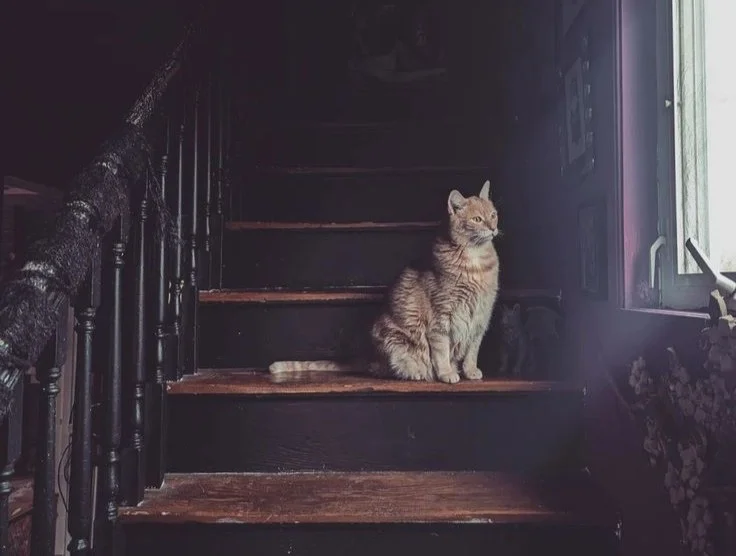
When an accused witch was brought before a justice of the peace in early modern England, one of the first questions put to her was about her familiar. Did she keep a cat? A toad? A small dog? A hare? Did it have a name? Where did she feed it from? The English trial records from the 16th through the 18th centuries are dense with these animals — named, described, fed at little teats found on the witch's body during intimate examination. The familiar is so embedded in the iconography of witchcraft that most practitioners today own at least one cat, and many will describe it as their familiar without pausing to consider what that word meant historically — or what it means now.
The history is stranger, more specific, and more uncomfortable than the cliché. This piece covers both sides: what the familiar actually was in the historical record, and what modern witches mean when they claim one.
The English familiar tradition
The familiar as a specific legal and folkloric category is primarily an English phenomenon. On the Continent, witch prosecution focused heavily on the demonic pact — the formal agreement between the witch and the Devil, signed in blood at the sabbat. In England, the prosecution of witches more often hinged on the familiar: the small animal spirit that served the witch in her malevolent operations, feeding from her body, running her errands, and doing her bidding against her neighbours.
The theological framework was provided by the demonological literature. Kings and ministers wrote treatises arguing that the familiar was a minor demon inhabiting an animal body, provided by the Devil as part of the witchcraft compact. The folk belief was somewhat different and considerably more earthy: the familiar was a spirit that arrived at a witch's door, or was inherited from another witch, or simply appeared — and it needed to be fed. The feeding was the contractual element: blood from a supernumerary teat found somewhere on the witch's body, usually in the intimate areas a searcher would examine. This "witch's mark" — any unusual skin variation, mole, or extra nipple — was the physical evidence of the compact.
The regional pattern of familiar animals varies. Cats appear throughout the record, but they are not the most common animal — toads appear more frequently, along with rats, small dogs, weasels, and birds. Hares appear particularly in Scottish and northern English tradition, where the witch transforming into a hare is a persistent folk belief. In the south, the toad's association with poison and secrecy made it a particularly resonant familiar animal. Hedgehogs appear in several trial records. Almost no exotic animals appear — familiars are consistently domestic, local, and small. They fit the world the accused inhabited.
Named and known — the record's strangest feature
The detail that distinguishes the English familiar tradition most sharply from Continental demonological frameworks is the names. The accused did not confess to keeping an unnamed demon. They confessed to keeping Pyewacket, Newes, Jarmara, Grizzell Greedygut, Vinegar Tom. These names appear in the trial records compiled under Matthew Hopkins's investigations in the 1640s, and they are not standard demonic names from the grimoire tradition. They are the kinds of names you give a household animal — fond, specific, slightly odd, the names of things that live with you rather than things summoned from a hierarchy.
James Sharpe, in Instruments of Darkness: Witchcraft in England 1550–1750 (1996), notes that the familiar names appear to have been the accused's own — either the names of actual animals they kept, or names produced under the pressure of extended questioning. The named familiar was simultaneously a piece of legal evidence and a deeply personal detail. That an old woman in Manningtree kept a toad she called Vinegar Tom tells us something real about the texture of her domestic life, even if the legal framing placed it in a demonic framework she would not have chosen for herself.
The Hopkins trials — covered in the September Matthew Hopkins piece — made the most systematic use of familiar evidence in English legal history. His watching method, which kept suspects awake for days, was specifically designed to observe the familiar's nightly visit. The logic: the familiar would come to feed from the teat while the witch slept or was otherwise unobserved. A watchers' relay would prevent sleep and catch the visitation. Several of his accused confessed, under this pressure, to named familiars visiting them in their cells. Whether any familiar ever appeared is a question the record cannot answer; what the watching method produced is well-documented.
The searchers and the teat
Proving the existence of a familiar required physical evidence, and physical evidence required examination. Professional female searchers were hired to conduct intimate body searches of accused witches — looking for the supernumerary teat, the extra nipple or unusual mark from which the familiar was believed to feed. This examination was invasive, deliberate, and conducted with the specific purpose of finding something that could be presented to a court as corroborating physical evidence of the compact.
Any unusual skin variation qualified: a mole, a skin tag, a cyst, a darkened patch of skin, anything that could be interpreted as a feeding point. The aged bodies of elderly women — who formed the majority of the accused — provided plenty of material for a determined searcher. Diane Purkiss, in The Witch in History (1996), examines the gendered logic of this procedure in detail: the examination was a form of bodily surveillance that produced its own evidence, finding the marks it was looking for precisely because it was looking for them.
At Pendle, at North Berwick, at Salem (where the familiar tradition was present though less prominent than in England), and throughout the Hopkins investigations, the familiar served as the legal hinge between accusation and conviction. Without it, the case rested on spectral evidence and local testimony. With it, there was something that looked like physical proof.
The grimoire tradition — a different kind of spirit-companion
Alongside the folk-trial tradition, the ceremonial magic tradition maintained a very different concept of the familiar. Medieval and Renaissance grimoires in the Solomonic tradition — the Key of Solomon, The Lemegeton, and related texts — described procedures for acquiring spirit-companions through ritual. These were not household animals fed at teats. They were named entities from demonic or angelic hierarchies, summoned through elaborate ceremonial processes, bound to serve specific magical purposes.
Agrippa's Three Books of Occult Philosophy describes the theory of spirit-companions in its third book — the intellectual-divine level of magic that operates through angelic and demonic intermediaries. This is a highly literate, ceremonial, and theologically sophisticated concept with almost no relationship to the folk familiar of the trial records. The cunning folk — whose practice is covered in the Cunning Folk piece — sometimes described working with spirit-companions or guide-figures, but again in terms quite distinct from either the grimoire or the trial-record familiar.
Three separate traditions, using overlapping vocabulary, describing fundamentally different things: the trial-record familiar (an imp in animal form, feeding from a teat, sent by the Devil), the grimoire familiar (a bound entity from a spirit hierarchy, obtained through ritual), and the cunning-folk companion (a guide or helper figure, often described in more personal and less systematised terms). Modern witchcraft has collapsed all three into a single romantic image.
The honest position — what the familiar actually was
The familiar of the English witch trial record was not a practice the accused reported about themselves in any systematic or voluntary way. It was a legal-theological construct that witch-hunters, demonological writers, and prosecutors applied to the domestic animals and folk beliefs of the accused. The confessions that named familiars were mostly produced under duress — the watching, the isolation, the extended interrogation — and named animals the accused actually kept, interpreted through a framework the accused had not chosen.
This is the same conclusion the History cluster has reached at every point where modern witchcraft claims continuity with the trial victims: those victims were not practitioners of anything the modern tradition would recognise. The familiar was not something they were doing. It was something done to them — a framework imposed on their ordinary domestic lives to make those lives legible as diabolism.
The modern reception and what to do with it
The witch's cat is one of the most enduring images in Western popular culture, and most of that endurance comes not from the trial records but from 19th and 20th-century literary and visual representations that sentimentalised the relationship — transforming the imp-in-animal-form into the beloved magical companion. Modern witchcraft absorbed this softened version and built practice around it.
A modern witch who describes a beloved cat as their familiar is doing something real, even if it has minimal historical continuity with the trial records. The practice they are describing — a deep, attentive relationship with an animal that participates in their magical life — is closer in spirit to the grimoire spirit-companion tradition than to the folk familiar, and closer still to the very old human practice of working with animal guides and companions in various spiritual traditions worldwide.
What this means practically: work with the animal you actually have, on the animal's actual terms. A cat who sits with you during ritual is a cat who likes warmth, proximity, and the smell of incense; that is a real relationship worth honouring without over-spiritualising it. The spiritual dimension of a relationship with an animal deepens through attention and time, not through claiming a lineage that isn't there. The honest naming — "this is my cat and I work magic with them" — is more accurate and ultimately more useful than reaching for a historical tradition that, on examination, was never what the romantic image claimed.
Common questions
Were familiars ever real — did witches actually keep spirit-animals? The cunning folk did describe working with spirit-companions or guide-figures in some documented cases, and these feel closer to the older shamanistic tradition of animal helpers than to the demonological familiar. Whether these were experienced as real spiritual presences or were a way of describing a practitioner's intuitive and divinatory capacities is not recoverable from the record. What is clear is that the trial-record familiar — the imp in animal form, feeding from a teat — was a legal construct more than a spiritual practice.
Is having a familiar the same as totemism or animal guides? Related but not identical. Animal guides, totem animals, and spirit animals in various Indigenous and shamanic traditions are specific to those traditions and should not be casually borrowed as a generic framework. The modern witch's familiar occupies its own space — a relationship with a specific, actual animal or with a spirit-companion figure — that need not claim lineage from any particular tradition to be meaningful.
Do familiars have to be cats? The historical record had toads more prominently than cats. Modern practice tends toward cats because the romantic tradition did. Any animal can function as a familiar in the modern practice sense — and an animal you actually have, know, and work with is more appropriate than one chosen for aesthetic reasons.
Sources
James Sharpe, Instruments of Darkness: Witchcraft in England 1550–1750 (Hamish Hamilton, 1996) — the standard modern scholarly history with substantial treatment of familiar evidence in English trials. Diane Purkiss, The Witch in History: Early Modern and Twentieth-Century Representations (Routledge, 1996) — particularly valuable for the gendered analysis of the body-searching and familiar-naming process. Owen Davies, Popular Magic: Cunning-Folk in English History (Hambledon Continuum, 2003) — for the cunning-folk spirit-companion tradition as distinct from the trial familiar. The Hopkins familiar names (Pyewacket, Vinegar Tom, etc.) are recorded in the trial documents collected and discussed in Gaskill's Witchfinders (2005).
Grimoire is a digital practice companion for the solitary witch — a sacred calendar, private grimoire journal, deity work, daily tarot, and herbology compendium, all in one place. Now available on Android.
More from the Blog
Witch Bottles: Archaeology and Practice
Beneath the floors of old English houses, archaeologists have been finding sealed bottles of iron pins, urine, hair, and protective herbs for two centuries. These are witch bottles — the most archaeologically attested form of folk magic in English history. A source-critical account of the evidence, the cunning-folk tradition behind it, and how to make one.

The Pendle Witches: A History of the Lancashire Witch Trials of 1612
The Pendle witch trials of 1612 are among the most documented witch trials in English history. Who the accused were, what actually happened, and how they are remembered by modern witches.
Begin your practice
Grimoire is available now on Android and as a web app. Start today.