Practice
Working with Grief: Practice for the Dark Half
Rowenna
Solitary witch and the founder of Grimoire. Built the app she couldn't find anywhere else. Writes about the craft with primary sources, honest lineage notes, and a low tolerance for vague correspondences. Based in the UK with more herbs than shelf space.
· 8 min read
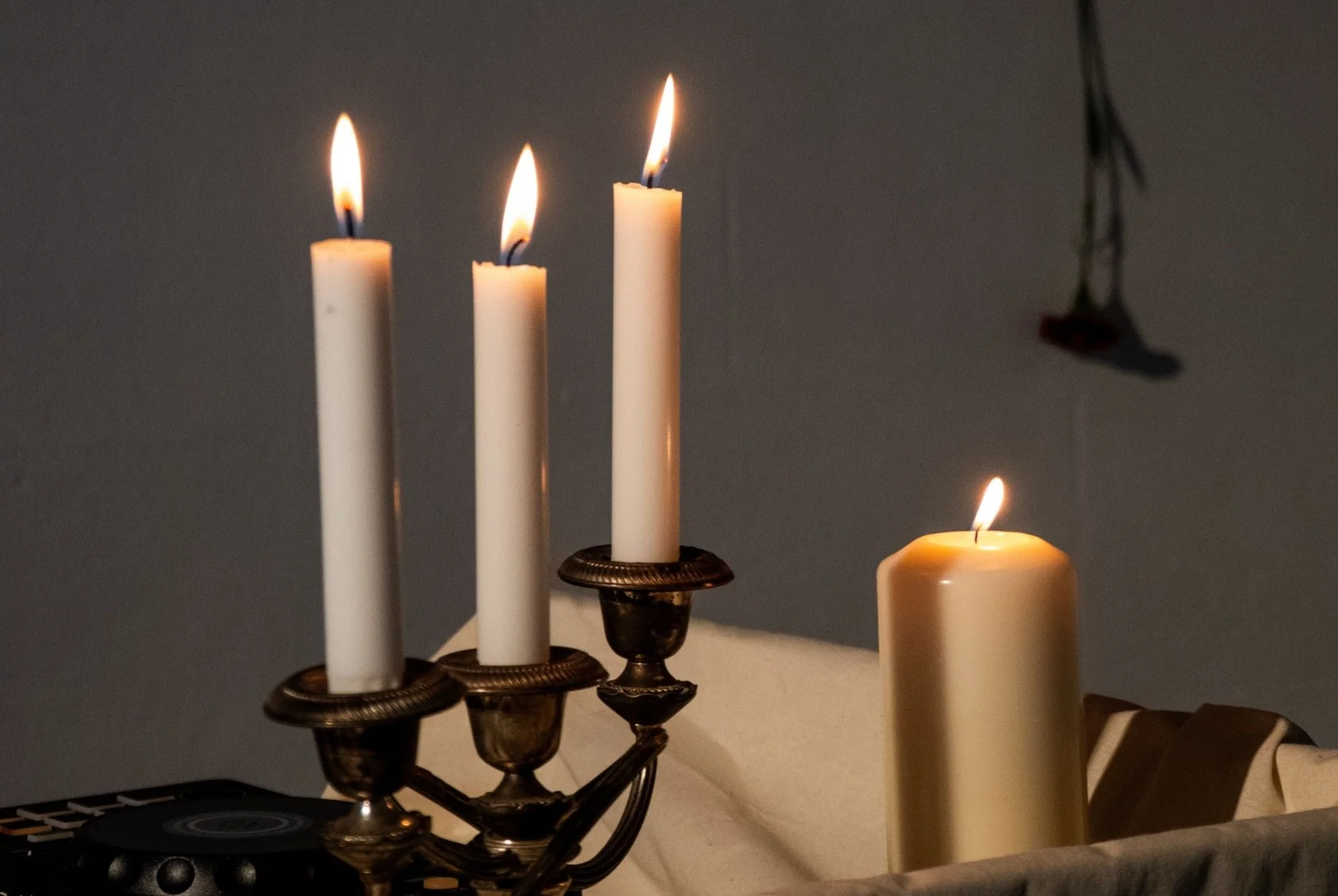
There is a particular kind of advice that arrives when you are grieving, and most of it is useless. Time heals. They would not want you to be sad. Everything happens for a reason. It is offered kindly and it lands like a stone. None of it is practice. All of it is an attempt to move you past the thing you are actually standing in.
The craft should know better, and at its best it does. Grief is not a problem waiting to be solved, a blockage to be cleared, or low energy to be raised. It is what love does when its object is gone, and the work is not to fix it. The work is to give it somewhere to go. That is what practice is for. Not relief, not closure, not the tidy emotional arc everyone else seems to want for you. Just somewhere to put your hands while the rest of you catches up.
This is a piece about working with grief in the dark half of the year, when the wheel turns toward endings and the season finally stops asking you to perform being fine. It is the second piece in the Practice cluster, and it belongs to the dark half on purpose.
Why the dark half holds grief
The Wheel of the Year splits into two halves. The light half runs from Beltane to Lughnasadh, all growth and abundance and the outward season. The dark half runs from Samhain to Imbolc: descent, rest, the inward turn. Modern practice often treats that second half as the hard part of the year, a stretch to be endured until spring comes back round. I think that framing misses what it is for.
The dark half turns the work inward because there is nowhere else for it to go. The light has withdrawn, the ground has hardened, and the season stops rewarding output. For grief this is no hardship. It is the first time all year that the world outside matches the world inside. Nobody is asking you to bloom against the season. You are simply allowed to be in the dark along with everything else.
Samhain sits where it does for the same reason. The festival that opens the dark half is the one most concerned with the dead, and the veil-thinning folklore is poetry laid over something plainer: the year is dying, the harvest is in, and the mind turns to those who will not see another spring. I have come to think of the dark half as the part of the wheel that refuses to lie to you. It will not tell you the loss was for the best. It just makes room.
What grief is not, in the craft
A few corrections worth making plainly, because the wellness-adjacent corners of modern witchcraft blur all three.
The first is the idea of grief as low vibration. That language, all talk of raising your frequency out of sadness, came into witchcraft from New Thought and twentieth-century positive thinking, not from any folk tradition of mourning. The older traditions did the opposite of tuning grief away. They built it into the calendar and gave it a festival.
The second is grief as a blockage. You will see workings that promise to clear it, banish it, or cut the cord to it. Banishing has its uses, and I have written about them elsewhere, but this is not one of them. The love and the loss are cut from the same cloth. Sever one and you sever the other.
The third is the assumption that grief work and shadow work are the same thing. They meet, but they are not identical. Shadow work means turning toward the parts of yourself you have disowned. Grief sometimes drags that material up, especially when a relationship was complicated and the mourning comes tangled with anger or relief or guilt. The tangle is shadow work. The grief underneath it is something cleaner, a straight response to a real loss, and it does not need excavating. It needs witnessing.
A working: the candle and the place set
This is the simplest grief practice I know and the one I keep returning to. It has real roots: the custom of setting a place for the dead at the table turns up across Europe, and it survives most visibly in the Samhain dumb supper, a meal eaten in silence with a seat laid for those who have gone.
You do not need the whole dumb supper. The stripped-down version is enough.
Light a single candle somewhere you can sit. White or undyed is traditional and entirely optional, because the candle is a container, not a correspondence. Set one thing beside it that belongs to the person or the loss: a photograph, an object they owned, a flower they liked, a cup of the tea they drank. Then sit with it for as long as you can bear and not a minute longer.
There is no script. You do not have to speak, and you do not have to feel anything in particular. The practice is the sitting. If words come, let them. If tears come, let them. If nothing comes and you sit there feeling slightly ridiculous in front of a candle, that counts too. What matters is that you have made deliberate room for the grief somewhere in your day, rather than dragging it unspoken through all the rest.
When you are done, snuff or pinch the candle rather than blowing it out. Folk practice across many regions held that blowing scattered the intention or slighted the spirit of the fire. Whether that strikes you as meaningful or just a tidy piece of ritual punctuation, it gives the practice an ending, which is the one thing grief will not give itself.
Ancestor work and recent loss are different
Two practices tend to get folded together in the dark half, and they are worth keeping apart.
Ancestor work is the long, steady relationship with the dead who came before you: the lineage, the ones you may never have met, the inherited dead. It is devotional and rarely raw, and an ancestor altar is built over years rather than weeks.
Working with a recent loss is a different animal. The death is fresh, the person is still a person to you rather than an ancestor, and the bond is in that violent early stage of being renegotiated from presence into absence. Folding a recent loss straight onto an ancestor altar can feel like filing someone away before you are ready to. There is no rule for when a recent death becomes an ancestor. For some it is the first Samhain after the funeral. For others it takes years. You will know when it shifts, or you never quite will, and either way is allowed.
If the loss is recent, keep its practice separate and small. A candle and a set place. Let the ancestor work wait until the grief has cooled into something you can hold without it taking the skin off your hands.
Grief that has no grave
Not every grief is a bereavement. The dark half holds the other kinds too: the relationship that ended while everyone involved is still walking around alive, the version of your life that never arrived, the place you cannot go back to, the self you were before something changed you for good. The craft has room for all of it, and the same practice carries it. A candle and a set place works as well for a loss with no headstone as for one with.
I will say this plainly, because the season can press hard. There is grief, which is the subject of this piece, and there is the kind of darkness that does not lift and starts to feel dangerous, which is not. The craft sits beside grief. It is not a stand-in for help when grief tips into something heavier. If you find yourself in that heavier place, please reach for a person, a doctor, or a helpline alongside the candle. The two were never in competition.
Letting the season do its part
The one thing no single working can offer, but the dark half can, is time. The wheel turns slowly through winter, and grief is among the very few things that genuinely cannot be hurried. You do not graduate from it. You do not finish it by Imbolc. What the season grants is permission to stop performing recovery for everyone else's comfort, and to let the grief move at the pace of the dark rather than the pace of other people's patience.
When Imbolc comes and the first light stirs again, it arrives as no kind of deadline. The snowdrop is not telling you to be done. It is only a quiet reminder that the wheel keeps turning whether or not you feel ready, and that it means to carry you with it. The candle you lit in October and the snowdrop you mark in February are the same craft. One season holds the loss. The next begins, very gently, to hold the going on.
Questions
Is there a spell to make grief go away faster? No, and anything promising one is selling something. Grief is neither a curse nor a blockage, so the craft offers it a container and a companion rather than an exit. The candle-and-place working is not built to speed grief up. It is built to give it somewhere to be.
Can I put a recently deceased person on my ancestor altar? You can, but you do not have to, and plenty of practitioners find it too soon. No fixed point marks when a recent death becomes an ancestor. If the altar feels wrong, keep the recent grief in its own small practice and let the person become an ancestor in their own time.
Is grief work the same as shadow work? Not quite, though they overlap. Shadow work turns toward disowned parts of the self, while grief is a clean response to real loss and needs no excavating. If grief surfaces guilt, anger, or relief you have pushed away, that buried material is shadow work. The grief beneath it is not.
Do I need particular herbs, crystals, or correspondences? No. The candle is a container, not a correspondence. Use rosemary for remembrance or a stone the person loved if you find it meaningful, but the practice does not depend on any of it. The sitting is the practice.
Why the dark half in particular? Because it is the only stretch of the year that matches the inward turn grief asks for, instead of demanding growth against the season. Samhain opens the dark half as the festival of the dead for exactly that reason.
If this season has brought a loss to your door, the practice is small and it is enough: a candle, a place set, the time to sit with both. The wheel will keep turning. It does not ask you to be finished.
More from the Blog
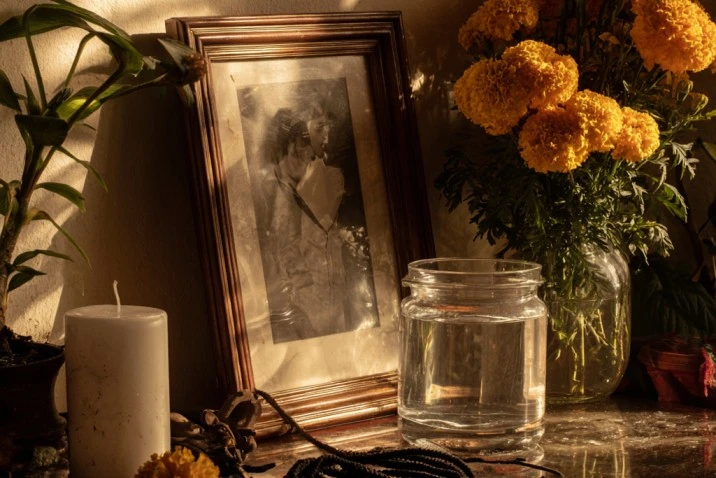
Beginning Ancestor Work
Ancestor work is one of the oldest spiritual practices in human history — and one of the least addressed in modern Western witchcraft. A structured introduction for the solitary practitioner: what it is, how to build a basic altar, how to show up consistently, how to work with difficult ancestors, and how to engage with the practice honestly.

Building a Daily Practice as a Solitary Witch
You do not need an hour a day, a dedicated altar room, or a coven. You need five minutes and a clear intention.
Begin your practice
Grimoire is available now on Android and as a web app. Start today.