Practice
Beginning Ancestor Work
Rowenna
Solitary witch and the founder of Grimoire. Built the app she couldn't find anywhere else. Writes about the craft with primary sources, honest lineage notes, and a low tolerance for vague correspondences. Based in the UK with more herbs than shelf space.
· 9 min read
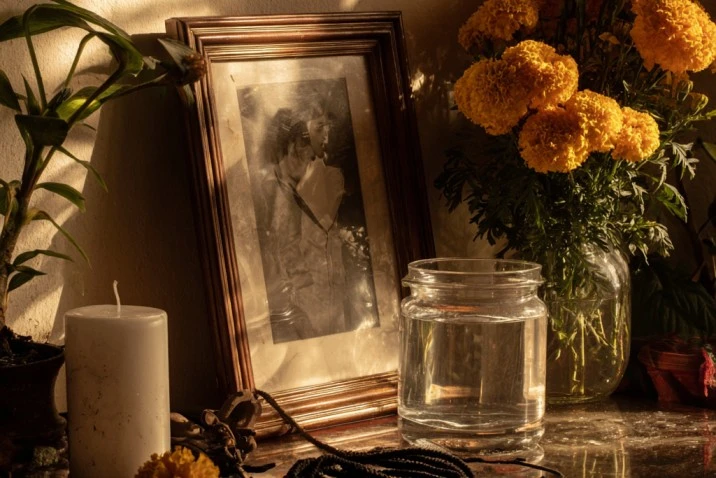
Ancestor work is one of the oldest spiritual practices in documented human history. Archaeological evidence of grave goods, food offerings, and deliberate grave-tending extends back at least 100,000 years. The practice appears in every major human culture — Roman, Japanese, Mexican, Slavic, Chinese, West African, Irish, Scottish — in forms that vary enormously in their theology and their ritual but share a common intention: maintaining a conscious relationship with the dead who came before.
Modern Western witchcraft has been remarkably slow to engage with it. Most contemporary practice focuses on working with living energy — plants, stones, the elements, the lunar cycle — and leaves the dead largely alone. This is partly a reaction against Victorian spiritualism and its later derivatives, partly a function of the Wiccan tradition's emphasis on the living year, and partly simple unfamiliarity. The practice has not been widely taught. This piece teaches it.
The autumn equinox window — from now through Samhain on 31 October — is the most receptive time of year to begin. The boundary between the living and the dead thins as the year turns inward. Beginning now, rather than rushing the practice into existence on Halloween night, gives the altar time to settle, the relationship time to develop, and you time to gather what you need thoughtfully. By Samhain, the practice should already be underway.
What ancestor work actually is
Ancestor work is the practice of maintaining an intentional, ongoing relationship with the dead who are connected to you. Not thinking about deceased relatives at Christmas — every family does that — but creating a dedicated space for relationship, showing up consistently, and receiving whatever comes: memory, presence, guidance, or simply the grounding sense of being part of a lineage longer than your own life.
There are several categories of ancestor, and understanding them matters for practitioners whose family history is complicated, unknown, or traumatic.
Ancestors of blood are your biological lineage — parents, grandparents, and the long chain behind them. This is the most obvious category and often the most emotionally complex. Not every family history is one you want to be in relationship with.
Ancestors of spirit are those who came before you in your path — practitioners who kept the old knowledge, cunning folk and healers, those who walked a similar way and whose work has reached you even without a blood connection. For a witch, this is a lineage you can consciously choose and cultivate.
The beloved dead are close personal dead who are not family — friends, teachers, mentors, companions. They belong at the altar as fully as anyone.
Ancestors of land — those who lived, tended, and died in the specific place where you now live — are the most ethically complex category, because the land's indigenous dead often belong to a culture entirely distinct from yours. This category requires particular care and a different approach than the family ancestor work this piece focuses on.
You do not have to work with all categories. If your biological lineage is unknown, traumatic, or inaccessible, you can focus entirely on ancestors of spirit and the beloved dead. The practice is not blood-mandatory.
Why the autumn season
The idea that the boundary between the living and the dead thins in autumn is not a Halloween invention. It runs through European folk tradition as a consistent and widespread teaching: the Gaelic Samhain (31 October/1 November), the Roman Lemuria (May) and Parentalia (February), the Slavic Dziady, the general northern European association of the dying year with the dead. The autumn months are when the year itself goes underground — the light withdraws, the earth closes, the last harvest is brought in. The season's logic aligns with the logic of death, and the dead are easier to reach here than at midsummer.
The autumn equinox is the beginning of this window, not its peak. Mabon tips the year inward; Samhain is the peak of opening. Beginning at the equinox means you have six weeks to build the practice before it reaches its most intense and energetically active moment. For more on working with the season itself, see Mabon for Solitary Witches. For working with an actual Neolithic burial site as part of an ancestor practice, the Avebury piece covers West Kennet Long Barrow specifically.
The basic ancestor altar
The ancestor altar does not need to be large or elaborate. It needs to be consistent, dedicated, and tended. A small shelf, a corner of a dresser, a clear section of a windowsill — these are sufficient. The consistency of place matters more than the size of it.
Photographs of the dead are the traditional central object — a face is a presence. If you have no photographs (because your lineage is unknown, or the photographs were lost), write names on paper instead. If you know no names, write "my ancestors" and let that be enough. The altar holds whoever can be reached, not only whoever can be named.
A glass of clean water, changed every few days, is the most consistently recommended offering across ancestor traditions that are otherwise very different from each other. Water is the element most widely associated with the dead and with the boundary between worlds. Keep it clear and fresh. It is not symbolic — it is offered genuinely.
A candle, traditionally white. Light it when you are at the altar; blow it out when you leave. The lit candle marks the time of practice as distinct from ordinary time.
Food and drink offerings — whatever the person enjoyed in life, or seasonal food appropriate to the time of year. A cup of tea beside a grandmother's photograph. A small glass of whisky for a grandfather. Autumn fruit — apples, pears, blackberries — for those whose preferences you don't know. The offering is genuine and then disposed of properly: offered outside, composted, or poured away. Do not eat the ancestor offerings yourself.
Optional additions: flowers (marigolds are used cross-culturally for ancestor work; white flowers are traditional in European practice). A small object associated with the person — a coin, a button, something of theirs that came to you. A brief note or letter, if writing to the dead feels natural to you.
Build the altar before Samhain arrives. Let it exist and be tended for several weeks before you ask anything of it.
The discipline of presence
The practice deepens through consistency rather than elaboration. The most effective ancestor work is also the most ordinary: a few minutes at the altar each day or every few days, without drama.
A simple daily practice: light the candle. Refresh the water if it needs refreshing. Spend five minutes in silence, or speak a brief greeting, whatever comes naturally. You do not have to speak aloud if it feels awkward; the presence at the altar is not conditional on your performing it correctly. Blow out the candle when you leave.
This is enough. The relationship builds through this consistency the way any relationship builds: through regular, attentive presence over time rather than through a single intense encounter. By Samhain, if you have been showing up consistently since the equinox, the altar will feel inhabited in a way it does not in the first days. That quality of inhabitation is what you are cultivating. It cannot be rushed. The structural discipline of practice (showing up regularly, whether or not it feels productive) is the same principle here as in any other sustained working.
Working with difficult ancestors
Many people have complicated family histories. Abuse, addiction, abandonment, violence, inherited harm: these run through family lines, and it is not reasonable to ask a practitioner to maintain a loving altar to someone who caused serious damage. The practice has tools for this.
You are not obligated to work closely with harmful ancestors. You can acknowledge their existence, pray for their healing, and leave them largely alone while focusing your active relationship on ancestors who are more clearly in a position to support you. This is not avoidance; it is discernment about which relationships within the lineage to develop.
The concept of the "elevated dead" (those who have had some degree of healing or spiritual growth, and who are therefore in a better position to offer support rather than transmit harm) is useful here. You do not know exactly what your ancestors experienced after death or what they have become. But you can set the intention to work with those who are able to support you, and let the rest of the lineage receive your prayers for healing without being invited into close working relationship.
If your lineage is unknown (through adoption, donor conception, or the erasure of family records) the ancestors of spirit and the beloved dead are fully sufficient. The practice does not require blood genealogy. Some of the most powerful ancestor relationships practitioners describe are with those they never knew by birth.
The ethics of the practice: which traditions are yours to borrow
Ancestor work is a practice area where the appropriation question is not peripheral. It sits at the centre.
Several specific traditions have ancestor altar practices that are culturally and religiously bounded, and that should not be casually borrowed as a generic template. The Hoodoo ancestor altar practice (discussed in the Jar Spells piece's Hoodoo attribution section) has specific roots in the African American conjure tradition and the survival practices of enslaved Africans. The eggun practice of Lukumí (Cuban Yoruba-derived religion) is a specific religious tradition with initiatory requirements. Haitian Vodou's relationship to the Gede lwa (the spirits of the dead) is a religious tradition with its own structure and clergy; treating the Baron Samedi aesthetic as decoration is not engagement with the tradition. The Japanese Obon and the Mexican Día de los Muertos are each specific cultural and religious practices with their own histories, communities, and contexts: not interchangeable Halloween traditions.
This piece guides toward the European folk-magical and Pagan/Wiccan ancestor traditions, which are less culturally bounded and more generally available as a starting point for practitioners of European heritage. The Roman Parentalia and Lemuria (household offerings to the dead at specific times of year) are historical precedent for domestic ancestor practice in a European framework. The broader Celtic and Northern European Samhain traditions are the most directly relevant for modern Pagan practice. The Wiccan concept of the Mighty Dead (those who have gone before in the craft) is a specific and available ancestral lineage for anyone who practises witchcraft, regardless of blood heritage.
A practitioner of non-European heritage should seek out their own ancestral traditions specifically. The European folk-magical framework offered here is not universal; it is one tradition among many, and for many practitioners it will not be the right starting point. The right starting point is the traditions of your own people, learned as carefully and directly as possible from those communities.
Common questions
Do I need to believe in an afterlife to do ancestor work? No. The practice can be framed as maintaining relationship with the memory and influence of the dead: as a practice of living memory rather than literal communication. Many practitioners hold uncertainty about the metaphysics while finding the practice genuinely meaningful and useful. The altar works as a structure for attention regardless of what you believe about what happens after death.
What if I'm afraid of working with the dead? Fear is a reasonable starting response. The practice is not about forcing an encounter; it is about building a gradual, tended relationship at a pace that feels manageable. Start with one photograph and one glass of water. Show up for two weeks. Add from there. The fear tends to diminish as the altar becomes familiar and the dead (as they present themselves in practice) are almost always more ordinary than frightening.
Should I work with the ancestor altar at Samhain specifically? Yes: the Samhain period is the most energetically resonant time for ancestor work in the European and modern Pagan tradition. But do not limit the practice to Samhain. The altar built now and tended through October will feel very different on 31 October than an altar assembled the day before. Consistency before the peak is what allows the peak to be useful rather than just intense.
Can I include pets on the ancestor altar? Yes. The beloved dead include those who were part of your life and are gone; and for many people, beloved animals belong in that category without qualification. A photograph, a collar, a favourite toy: these are legitimate altar objects for a beloved companion animal.
Sources
For the European folk-magical ancestor tradition: Ronald Hutton, The Stations of the Sun (Oxford University Press, 1996) for the Samhain and autumn ancestor-practice context in the British calendar. For the Roman precedent: Ovid, Fasti (the most accessible literary source for the Parentalia and Lemuria). For the Hoodoo ancestor altar context: Yvonne Chireau, Black Magic: Religion and the African American Conjuring Tradition (University of California Press, 2003): the reference cited in the Jar Spells piece, relevant here for the cultural attribution framing. For the contemporary Pagan ancestor work tradition: Kristoffer Hughes, From the Cauldron Born (Llewellyn, 2012): the most thorough recent treatment of Celtic ancestor practice in a modern Pagan framework.
Grimoire is a digital practice companion for the solitary witch: a private grimoire journal, sacred calendar, deity work, daily tarot, and spell builder, all in one place. Now available on Android.
More from the Blog
What Is Glamour Magic? Confidence, Scent, and Letting Your True Self Be Seen
Glamour magic is not about changing your appearance or bending how others see you. It is about growing the confidence that lets your true self be seen. A practitioner's guide, with the scent ritual at the heart of my own practice.
Working with Grief: Practice for the Dark Half
Working with grief in the dark half of the year: a witch's guide to mourning practice, the candle and set place, and ancestor work for recent loss.
Begin your practice
Grimoire is available now on Android and as a web app. Start today.