Sabbats
Lughnasadh Deities: Lugh, Tailtiu and the Spirit of the First Harvest
Rowenna
Solitary witch and the founder of Grimoire. Built the app she couldn't find anywhere else. Writes about the craft with primary sources, honest lineage notes, and a low tolerance for vague correspondences. Based in the UK with more herbs than shelf space.
· 8 min read
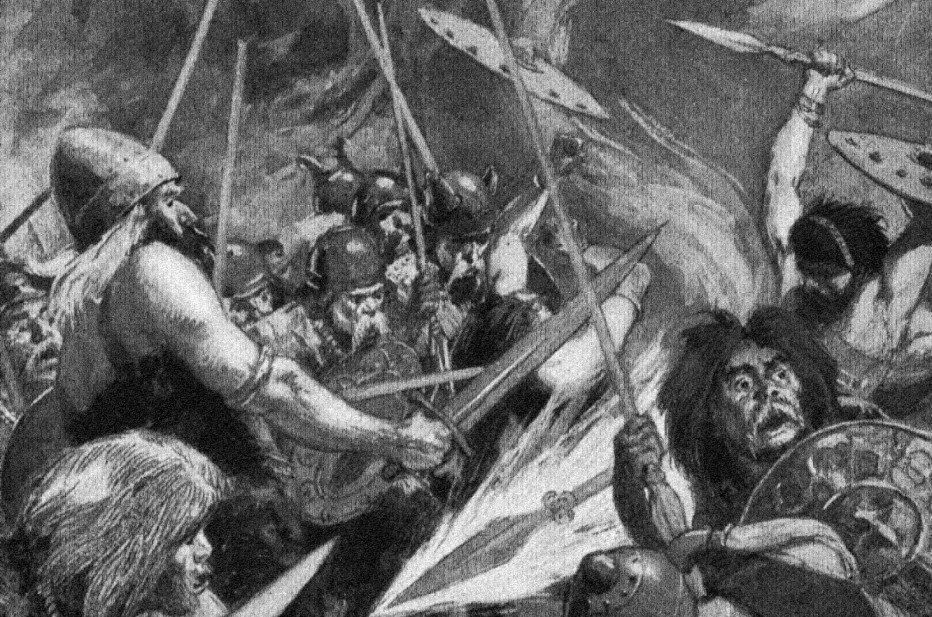
Lughnasadh (the first harvest sabbat, falling on or around 1 August) is named for a god, but its heart belongs to a goddess. The Irish festival of Lúnasa commemorates not the triumph of Lugh the long-handed, but the death of Tailtiu, his foster-mother, who gave her life clearing the plains of Ireland for cultivation. Lugh instituted the funeral games in her honour. The festival that bears his name exists as an act of devotion to her.
Modern Wiccan Lughnasadh practice draws on several traditions that did not historically share a festival: the Irish mythological material around Lugh and Tailtiu, the Mediterranean grain-goddess tradition of Demeter and Ceres, and the English folk figure of John Barleycorn, the grain spirit who dies to become the bread. Each tradition contributes something real to the sabbat's character. Each tradition also has its own integrity and its own origins, and naming the synthesis as synthesis is part of working honestly with these figures.
This is the launch piece for the Grimoire blog's Lughnasadh cluster. Further pieces cover the wider practice, the season's herbs, the energy and intentions of the first harvest, and specific spell workings for the sabbat.
Lugh: the Skilled One, the Long-Handed
Lugh (Lú in modern Irish, Lug in Old Irish) is one of the central figures of the Irish mythological cycle and one of the Tuatha Dé Danann: the divine peoples of ancient Irish tradition. His epithets are striking: Lámhfhada, "the Long-Armed" or "Long-Handed," and Samhildánach, "Skilled in All Arts" or "Many Gifts Together." In the medieval Irish text Cath Maige Tuired (The Battle of Mag Tuired), Lugh presents himself to the gatekeepers of the Tuatha Dé's hall by claiming mastery of every skill in turn: smith, harper, warrior, poet, historian, sorcerer. He is the god of all crafts, not one.
His name is almost certainly cognate with the names of the Gaulish god Lugus and the Welsh figure Lleu Llaw Gyffes ("Lleu of the Skilful Hand"). The reach of this deity across the Celtic world is attested in place names: Lyon in France preserves Lugdunum, "fort of Lugus"; Leiden in the Netherlands traces to the same root; Luguvalium, the Roman name for Carlisle, means "strong in Lugus." This was not a local deity but a pan-Celtic figure of the first importance.
The festival now called Lughnasadh was, in the historical Irish record, called Lúnasa: the month of August, named for Lugh. But Lugh's role in the festival is primarily as the institutor of the commemorative games, not as their subject. He does not die at Lughnasadh; he acts. The solar god who "weakens" at the first harvest is a modern Wiccan interpretation that has some internal logic (the days are shortening, the sun's strength is beginning to wane) but should be distinguished from the older mythological material, where Lugh is primarily defined by skill, sovereignty, and the honouring of his foster-mother's sacrifice.
For working with Lugh at Lughnasadh: his attributes are craft, skill, the commitment to doing well what you do, and the discipline of excellence. He is a deity for the witch who is also a maker, who brings the same quality of attention to their craft, their work, or their art that they bring to their practice.
Tailtiu: the Cleared Plain, the Sacrificed Earth
Tailtiu is the figure at the centre of Lughnasadh, and modern practice does not always give her the prominence she deserves.
In Irish mythology, Tailtiu was a queen of the Fir Bolg (the peoples who preceded the Tuatha Dé Danann in Ireland) and the foster-mother of Lugh. Her defining act was the clearing of the great plain that bears her name: Tailtiu cleared the forests of the Irish midlands for agriculture, opening the land to cultivation. The labour was enormous and it killed her. She died exhausted from the work of making the farmland that would feed the people of Ireland.
Lugh, in grief and honour, established the Óenach Tailteann, the assembly at Tailtiu's site (Teltown, County Meath), as her funeral games and commemoration. These games, described in medieval Irish sources as athletic contests, fair-making, and the enactment of legal contracts, were held on 1 August for centuries. The historicity of the games is attested in the annals; the mythology of their founding is the frame that makes their meaning legible.
Tailtiu's story is the honest heart of Lughnasadh: the earth gives itself over to human cultivation, and the price of the harvest is paid in exhaustion, transformation, and ultimately death. She is the soil that accepted the plough. She is the wildness that became the field. Working with Tailtiu at Lughnasadh means acknowledging what was given up for the harvest to exist, both in the mythological sense and in the practitioner's own life. What did the work of this year cost? What was cleared? What died so that something else could grow?
Demeter and Ceres: the Grain Mothers
The Greek Demeter and her Roman counterpart Ceres appear in modern Wiccan Lughnasadh practice as the Mediterranean grain-goddess correspondence to the northern European harvest. Their inclusion is a 20th-century Wiccan synthesising move rather than a historical connection; the Greek and Roman harvest festivals did not share dates or cultural context with the Irish Lúnasa. But the underlying archetype (the mother of the grain, the one who guards the harvest and grieves its passing) is present in both traditions and the modern synthesis is coherent even if it is relatively recent.
Demeter is the Olympian goddess of the grain, the harvest, and the fertility of the cultivated earth. Her mythology is dominated by the story of her daughter Persephone's abduction by Hades: a story that accounts for the seasons, with Persephone's return in spring bringing the growing season and her descent in autumn bringing the dying of the year. Demeter's grief at Persephone's loss is so absolute that she withdraws her gifts from the earth, causing famine; Zeus must negotiate Persephone's partial return to restore fertility. Demeter does not simply give the harvest. She is the source of the harvest, and the harvest ends when she withdraws.
Ceres, her Roman counterpart, gave her name to grain itself; our word "cereal" derives from hers. The Roman festival of Cerealia, held in April, celebrated the sowing rather than the reaping; but Ceres as a working-day goddess of the grain is present in the Roman agricultural calendar year-round.
For working with Demeter and Ceres at Lughnasadh: they bring the grain-mother archetype into the sabbat: the deep, slow nurturing energy of the earth's abundance, the grief that is always present at the harvest (the cutting down of what was grown), and the promise that the cycle continues.
John Barleycorn: the Grain Spirit of English Folk Tradition
John Barleycorn is not a deity in the strict sense; he is a folk figure, a personification of the barley grain in English agricultural tradition, whose story is preserved in the ballad that bears his name. But he carries more genuine folk-magical weight for British witches than many figures with older mythological credentials, and he belongs in any honest account of Lughnasadh in the British Isles.
The ballad of John Barleycorn describes the planting, growing, and harvesting of barley in the form of a death-and-resurrection narrative. Three kings (sometimes lords) decide that John Barleycorn must die. They bury him in the earth (sowing). He rises from the ground (germination), grows tall, and is then cut down, threshed, malted, and brewed. Through his death he becomes the ale that sustains and gladdens the people who killed him. His death is also his transformation into a new and enduring form.
Robert Burns wrote the most famous version of the ballad in 1782, but the tradition is older; versions appear in the sixteenth century, and the identification of the grain spirit as a dying-and-rising figure whose sacrifice feeds the community is a well-documented feature of European harvest folklore.
John Barleycorn brings Lughnasadh into the British folk tradition directly: the witch who bakes bread at Lughnasadh, who brews or pours ale at the harvest feast, who cuts the last sheaf and binds it into a figure; this is the John Barleycorn working in practice. He is the spirit of the grain who must die so that the food and drink can exist. At Lughnasadh, his death is what the season is made of.
Working with the deities of Lughnasadh
The four figures above do not historically belong to a single tradition. Lugh and Tailtiu are Irish; Demeter and Ceres are Greek and Roman; John Barleycorn is English folk. The modern Wiccan Lughnasadh brings them into the same sabbat because the harvest archetype they each carry is real across all their traditions. The synthesis is recent; the archetypes are not.
Working with these deities at Lughnasadh does not require choosing only one. Tailtiu grounds the practice in the specific mythology of sacrifice-for-cultivation. Lugh brings the craftsperson's discipline and the quality of skilled attention. Demeter brings the grain-mother's grief and nurturing depth. John Barleycorn brings the English folk-magical body of the harvest: the bread, the ale, the sheaf.
For the wider context of Lughnasadh practice, see Lughnasadh for Solitary Witches. For the herbs of the season, see Herbs of Lughnasadh. For the energetic and intention-setting work of the first harvest, see Lughnasadh Energy and Intentions. For the deities of the adjacent sabbats, see Litha Deities and the Mabon Deities piece publishing in August.
More from the Blog

Litha Energy and Intentions: Working with Solstice Power for the Year Ahead
Litha is the sabbat of recognition and the year's mid-point check-in. Here is how to work with its energy intentionally, and what it is most potent for.
Lughnasadh for Solitary Witches
Lughnasadh falls on 1 August: the first harvest sabbat, the feast of Lugh, and the beginning of the harvest arc that runs to Samhain. A complete practical guide for the solitary practitioner: rituals, altar, journal prompts, and how to mark the first cutting when you are working alone.
Begin your practice
Grimoire is available now on Android and as a web app. Start today.