Sacred Sites
Stonehenge: Stones of the Solstice
Rowenna
Solitary witch and the founder of Grimoire. Built the app she couldn't find anywhere else. Writes about the craft with primary sources, honest lineage notes, and a low tolerance for vague correspondences. Based in the UK with more herbs than shelf space.
· 11 min read
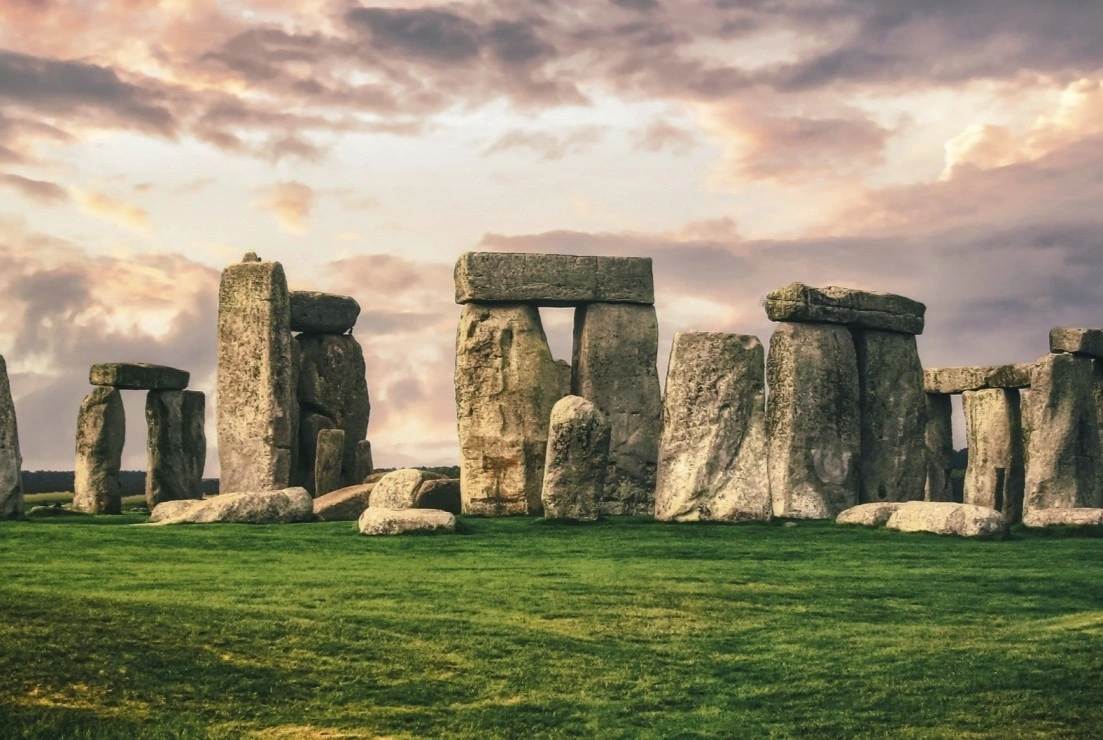
Stonehenge is the most-photographed ancient monument in Britain, and also the most misunderstood. The popular narrative (ancient Druids, mystical solar alignment, a continuous pagan tradition stretching from prehistoric Britain into modern witchcraft) is substantially a fiction, most of it invented in the eighteenth century and overlaid on a 5,000-year-old monument whose builders left no name, no writing, and no direct cultural descendant alive today.
This does not make Stonehenge less extraordinary. It makes it more so. The monument's builders moved multi-tonne stones across tens and in some cases hundreds of miles using Neolithic technology. They oriented the construction to catch the midsummer sunrise with precision that has survived intact across five millennia. They worked on and expanded the site across roughly 1,500 years of continuous use: a span of time that makes the entire recorded history of Christianity seem recent by comparison. And then they vanished, leaving no oral tradition, no script, no language connecting them to any living culture.
This piece covers what the archaeological record actually tells us, what it does not, and how modern witchcraft practitioners can work with Stonehenge on its own actual terms.
The archaeological record
Stonehenge was built in multiple phases over approximately 1,500 years, beginning around 3000 BCE: a period archaeologists call the Neolithic or New Stone Age. The people who built it were settled farmers who cultivated crops, raised cattle, and built permanent settlements on the Wiltshire chalk downs. They were not Celtic, not Iron Age, not Druidic. The Druids who appear in classical Roman accounts were an Iron Age Celtic phenomenon that emerged roughly 2,000 years after the first phase of Stonehenge was already complete.¹
The first phase (~3000 BCE) established the circular earthwork visible today: a bank, a ditch, and the ring of 56 pits now called the Aubrey Holes, possibly holding wooden posts or an early arrangement of bluestones.
The second phase (~2500 BCE) brought the bluestones: approximately 80 stones of spotted dolerite, rhyolite, and other volcanic rock transported from the Preseli Hills in south-west Wales: roughly 200 miles distant. The logistics remain extraordinary. No single theory fully explains how Neolithic people moved multi-tonne stones that distance, and the ongoing archaeological debate about the transport route (overland, by sea and river, or some combination) reflects genuine uncertainty.
The third phase (~2500–2000 BCE) produced the iconic monument we see today: the large sarsen stones, each weighing approximately 25 tonnes, transported from Marlborough Downs about 25 miles to the north. These were shaped and fitted with mortise-and-tenon joints (the lintels locked onto the uprights) using stone tools. The outer circle, the trilithons of the inner horseshoe, and the surviving lintels all date to this phase.² Stonehenge, in the form that has been photographed by every tourist who has stood before it, is approximately 4,000 years old.
Later Bronze Age additions and rearrangements continued through to roughly 1500 BCE, after which the monument appears to have fallen out of active use.
The solstice alignment
The monument is oriented along the midsummer solstice sunrise axis and the midwinter solstice sunset axis: both from the same central viewing position. Stand in the centre of the monument at midsummer dawn and the sun rises directly over the Heelstone, the outlying upright stone to the north-east. The Avenue (the processional earthwork leading from Stonehenge to the River Avon) also follows this alignment.
This is intentional. The precision required to achieve a consistent solstice alignment in a structure of this scale, constructed over multiple centuries by multiple generations of builders, removes any reasonable doubt that the alignment was designed.³ Whether it was used as a solar calendar, a ceremonial marker for the year's turning, a pilgrimage destination for seasonal festivals, or something else entirely, these questions remain open. The alignment is established fact; its ritual or religious function is inference.
What can be said with some confidence, based on the broader archaeological context: Stonehenge was associated with death and the ancestors. The human remains found at the site span from around 3000 BCE to after 2000 BCE. The cremated remains of at least 200 individuals have been recovered from the Aubrey Holes and surrounding areas. The monument may have been a destination for the dead, or a place of connection between the living and the dead, with the solstice alignment marking the passage between one state and another. This reading is speculative but archaeologically grounded. It is a more interesting site than the popular "Druidic solar temple" narrative and a significantly more honest one.
The builders and their world
The Neolithic people who built Stonehenge are known primarily through their monuments and their material culture: the tools they left behind, the patterns of their settlements, the structure of their ceremonial sites. They were skilled, organised, and capable of sustained collective projects across generations. The transportation of the bluestones alone represents a planning and logistical achievement that should not be underestimated.
What they believed, what names they gave to the powers they worked with, what their dead meant to them, these things are not recoverable from the archaeological record alone. They left no writing. Their descendants left no oral traditions that can be confidently traced back to the monument's builders. The honest position is to sit with that silence: these were real people who built something extraordinary, and we do not know what it meant to them.
The modern Druidic reception
The identification of Stonehenge with Druidry is largely the creation of one man: William Stukeley (1687–1765), an English antiquarian who spent decades studying Stonehenge and Avebury and who published Stonehenge: A Temple Restor'd to the British Druids in 1740.⁴
Stukeley was not operating from evidence. He knew, as any eighteenth-century classically educated scholar knew, that the Roman writers described Celtic Druids gathering in groves and conducting ceremonies. He also knew that Stonehenge was ancient. The attribution (these ancient stones must have been made by these ancient people) was speculative reasoning from proximity. Stukeley was also, by the 1730s, deeply invested in Druidry as a personal identity: he referred to himself as a Druid, presided over Druidic ceremonies, and named himself "Chyndonax" within a Druidic fraternity. His scholarship was shaped by his devotion.
The Ancient Order of Druids was founded in 1717 by John Toland: a founding of a modern revival organisation, not a continuing institution from antiquity.⁵ The first documented modern solstice ceremony at Stonehenge was conducted by the Ancient Order of Druids in 1905. The Druid-Stonehenge connection is 18th-century at its oldest and 20th-century in terms of actual ceremonial practice at the site.
Ronald Hutton, the foremost historian of British paganism, has documented this history at length in Blood and Mistletoe: The History of the Druids in Britain (2009). His conclusion is clear: modern Druidry is a revival tradition of the 17th century and later, not a continuous ancient practice. The Druids who built Stonehenge existed only in William Stukeley's imagination.
This matters for modern witchcraft's relationship with the site. The pagan community that gathers at Stonehenge each solstice is a real, living, meaningful community, but it is not a continuous tradition stretching back to the monument's builders. It is a modern community with roots in 20th-century paganism, gathered at an ancient site that predates it by several millennia. This is not lesser. It is honest.
Contemporary practice
English Heritage manages Stonehenge and the surrounding World Heritage Site. On most days, the standing stones are viewable from a path at a short distance; inner access requires a booked ticketed tour.
For the solstices and equinoxes, English Heritage provides managed open access (typically beginning in the early hours of the morning of the relevant astronomical event) which allows visitors to enter the inner stone circle. Access is free but limited, and booking in advance is essential. The summer solstice gathering draws thousands of visitors each year.
The solstice gatherings at Stonehenge are a genuine pagan community event, multi-tradition and largely self-organising within the managed-access framework. Those attending include Druids, Wiccans, witches of various traditions, and a great many people who have no formal spiritual affiliation but feel drawn to mark the solstice at the monument. The atmosphere is, by most accounts, genuinely communal.
Visiting Stonehenge is not the same as working with Stonehenge. Being present at the solstice sunrise in the inner circle is its own experience, distinct from either tourism or formal ceremony.
Working with Stonehenge from a distance
Most witches will not attend the solstice gathering. Most will never enter the inner circle. The distance working with Stonehenge is still available, and may in some ways be more accessible than the crowded solstice event.
Work with the alignment. The solstice sunrise that Stonehenge is built to catch happens everywhere on the same morning, at the same astronomical moment. The sun rising over the Heelstone is the same sun rising over your own horizon. Marking the solstice sunrise wherever you are (with a candle, with a moment of attention, with the Solstice Sun Magic workings built for that moment) engages the same alignment the builders designed around. You do not need to be there. The alignment is not local; it is astronomical.
Work with sarsen stone. The stones of the main circle are sarsen: a silicified sandstone found in concentrated deposits on Marlborough Downs. Sarsen is available as a material; pieces of Wiltshire sarsen can be found (ethically, from weathered surface scatter, not quarried) or purchased from specialist suppliers. A piece of sarsen on a Litha altar is a material connection to the monument's substance.
Work with the long witness. Stonehenge has been present (in some form, in use or in silence) for five thousand years. It has watched more solstices than any living tradition can claim. A meditation that places you in relation to that witness (not seeking an audience with its builders, not appropriating a tradition that isn't yours, but simply acknowledging the monument's long presence and your own brief visit to the same turning earth) is a working that the site genuinely supports.
Conclusion
Stonehenge is an extraordinary Neolithic and Bronze Age monument whose builders aligned it to the solstice axis with precision that has survived five millennia. It is not a Druidic temple; the Druids came 2,000 years after the builders had vanished, and their association with the monument was largely invented by an 18th-century antiquarian. Modern witchcraft's relationship with Stonehenge is a 20th-century construction that is meaningful as a living practice without needing to claim continuity it does not have.
Working with Stonehenge honestly means working with what it actually is: the most significant astronomical monument in Britain, built by people whose beliefs are not recoverable, oriented to a solstice sunrise that still rises, standing in a landscape that has held ceremony for longer than most civilisations have existed. That is enough. It does not need a myth added to it.
For the Litha and solstice practice that pairs with this piece, see Litha for Solitary Witches and Solstice Sun Magic.
Sources
- Ronald Hutton, Blood and Mistletoe: The History of the Druids in Britain (New Haven: Yale University Press, 2009): the standard scholarly treatment of Druidic history, establishing with clarity that Celtic Iron Age Druids postdate Stonehenge's construction by approximately 2,000 years and that modern Druidry is a revival tradition.
- Mike Parker Pearson, Stonehenge: A New Understanding (New York: The Experiment, 2012): accessible modern archaeological synthesis by the leading excavator of Stonehenge and the Stonehenge Riverside Project.
- Wikipedia: Stonehenge, comprehensive overview of the monument's construction phases, archaeological context, and solstice alignment.
- Wikipedia: William Stukeley, biography and analysis of Stukeley's role in creating the modern Druid-Stonehenge association.
- Wikipedia: Druids, covering both the historical Iron Age Druids and the modern Druidic revival, with clear distinction between the two.
More from the Blog

Gogottes: The Fairy Stones of Fontainebleau Forest
The witchcraft, folklore and fairy lore behind gogottes; the otherworldly sandstone sculptures of France's most enchanted forest.
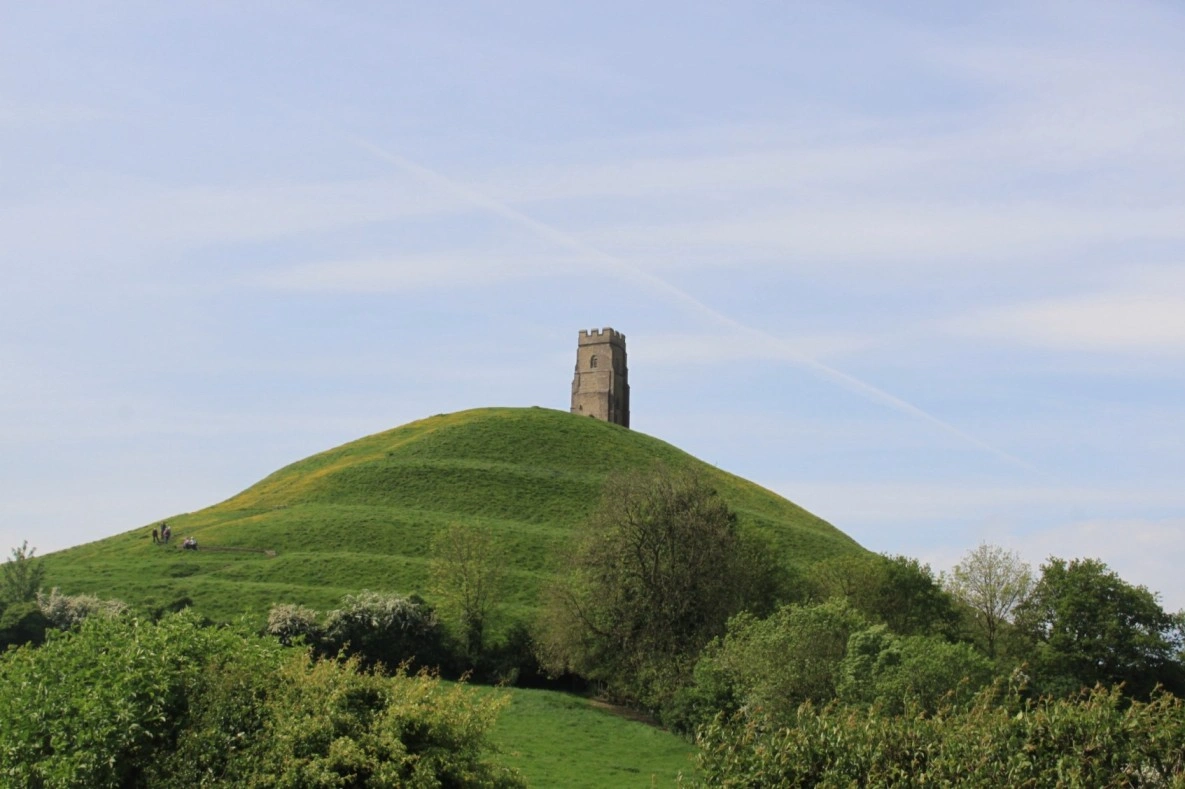
Glastonbury Tor
A hill in Somerset that has been a Neolithic settlement, the legendary Isle of Avalon, a Christian monastic stronghold, and one of the most significant sites in modern paganism. A layered history of Glastonbury Tor, and how to work with it from a distance.
Begin your practice
Grimoire is available now on Android and as a web app. Start today.