Sacred Sites
Glastonbury Tor
Rowenna
Solitary witch and the founder of Grimoire. Built the app she couldn't find anywhere else. Writes about the craft with primary sources, honest lineage notes, and a low tolerance for vague correspondences. Based in the UK with more herbs than shelf space.
· 9 min read
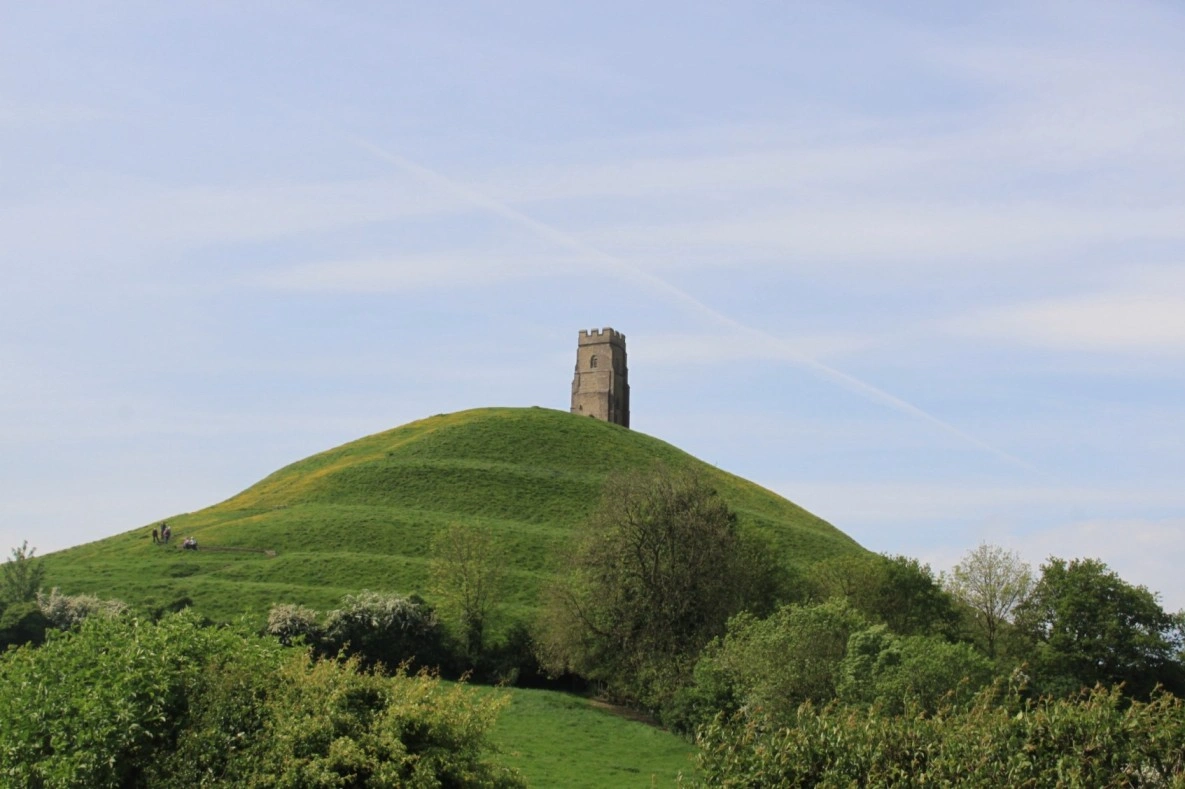
Every sacred site carries stories. Glastonbury Tor carries more of them than almost anywhere in Britain; and they are stories from radically different worlds, laid one on top of another over centuries, none of them fully displacing the ones below. A single hill in the Somerset Levels has been, in the span of recorded and mythologised history: a probable site of early medieval religious settlement; the legendary Isle of Avalon, last harbour of King Arthur; a monastic stronghold with a pilgrimage trade in royal bones; and for the past half-century, one of the most significant sites in living pagan practice. Engaging with Glastonbury honestly means holding all of those things at once, and not reaching for the one that seems most ancient just because ancient feels most true.
This is the third piece in the Sacred Sites cluster, and it uses a different methodology than Stonehenge, which centred the archaeology. Glastonbury's question is not primarily archaeological. It is about what happens to a place when successive eras of belief each claim it as their own, and what a modern witch inherits from that process.
The hill itself
The Tor is a natural landform: a conical hill of hard Lias limestone rising about 158 metres above the Somerset Levels, which in earlier millennia were seasonally flooded marshland. Before drainage, the Tor would have been something close to an island for much of the year, which is not irrelevant to the Avalon legend that grew around it later.
The most visually striking feature (the terraces that spiral around the hill in a series of deep steps) has never been satisfactorily explained. The most widely accepted scholarly view is that they are medieval strip lynchets: agricultural terracing created by ploughing on a steep slope over generations. Some researchers have argued for an older and more deliberate origin, perhaps a Neolithic processional or ritual route following the contours of the hill. There is no archaeological consensus. The honest position is that the terraces may be a thousand years old, or they may be three thousand years old, and we do not currently have the evidence to settle it.
What excavation has found at the summit is a 5th or 6th century settlement with evidence of high-status occupation (metalworking, imported Mediterranean pottery) which places a community of some significance there in the post-Roman period. This is the Tor as it actually was in the era when Arthurian legend is set. A real, inhabited hilltop. Nothing more mystical than that, and nothing less.
The Avalon legend, and when it was made
The name Avalon does not appear in connection with Glastonbury before 1191. That date is precise and it matters.
Geoffrey of Monmouth, writing his History of the Kings of Britain around 1136, had already established Avalon in the popular imagination as Arthur's final destination after his fatal wounding at Camlann: a blessed isle where he was carried to heal, from which he might one day return. Geoffrey did not place Avalon at Glastonbury. He gave it no fixed location at all.
The location was fixed in 1191, when the monks of Glastonbury Abbey announced that they had discovered, in their own graveyard, the graves of Arthur and Guinevere. The timing requires scrutiny. The Abbey had suffered a catastrophic fire in 1184 that destroyed much of the complex. It needed money, urgently. A royal burial site drawing pilgrims from across England and the Continent was an exceptionally effective fundraising mechanism. Gerald of Wales, writing about the discovery within a few years, described it in enthusiastic detail; and even Gerald noted that the cross marking the grave conveniently supplied the identification. Modern historians are considerably less credulous. The discovery is widely regarded as a forgery, or at least a substantial embellishment of whatever genuine burials may have been found.
From 1191 onward, the Glastonbury-Avalon identification was set. Five centuries of pilgrimage, poetry, and cultural repetition made it feel ancient. It was not ancient. It was a twelfth-century marketing decision by a monastery in financial difficulty; and it worked, which is its own kind of power.
The Christian presence
The tower at the Tor's summit is all that remains of the Church of St Michael, a medieval structure built on a site probably dedicated to the archangel since the early medieval period. The ridgeline dedications to Michael (high places, dragon-killing, the threshold between sky and the upper air) are a recurring pattern in English sacred geography, and the Tor fits it exactly. The Michael tower is not an interruption of the site's pagan character. It is part of the same instinct that made the hill a site of power across traditions: something about a steep, isolated height above flat land that cultures reach for when they want to mark a boundary between worlds.
Below the Tor, the Abbey grounds contain the Lady Chapel, built over what tradition holds was the oldest Christian church in Britain: Joseph of Arimathea supposedly having brought Christianity to Somerset, and with it the Holy Grail. The Glastonbury Thorn, a hawthorn grafted from a medieval tree and growing on Wearyall Hill nearby, is said to flower at Christmas and was a pilgrimage object in its own right. These claims are medieval legends, not historical fact. But medieval legend is not nothing. It shapes the ground, and a witch who walks the Abbey ruins is walking through eight hundred years of sustained, serious religious intention.
Modern pagan Glastonbury: what it is and when it was built
The Glastonbury that most pagans picture (the Goddess of Avalon, the sacred landscape as the body of the divine feminine, the Tor as a centre of living mystical practice) is substantially a twentieth-century construction. This is not a criticism. It is a fact worth knowing, because the practice built here is genuine and it deserves to stand on its own honest ground rather than on borrowed ancient credentials.
The earliest significant thread is Dion Fortune, the occultist and novelist who lived and worked in Glastonbury from the 1920s and who developed, in her fiction and in her magical work with the Society of the Inner Light, a framework for Glastonbury as a place of initiatory power: the landscape itself as a living spiritual being, the Tor as a point of contact with an older current running beneath the Christian surface. Fortune's influence on subsequent pagan practice here is substantial and often unacknowledged.
The modern pagan Glastonbury coalesced more visibly from the 1970s onward, as the counterculture arrived and the town became a gathering point for alternative spirituality. Marion Zimmer Bradley's The Mists of Avalon, published in 1983, gave an enormous number of readers their first image of a Glastonbury in which the Goddess tradition and the Arthurian material were fused through a feminist neopagan lens. The book's cultural reach was extraordinary, and its Glastonbury (the hidden Goddess beneath the Christian overlay) became the Glastonbury many practitioners arrived carrying in their imagination.
The Goddess of Avalon as a named tradition belongs to Kathy Jones, who founded the Glastonbury Goddess Conference in 1996 and whose theology of the Glastonbury Goddess has shaped the living practice at the town's Goddess Temple since 2003. This tradition is real, serious, and has a specific origin point in the 1990s. To call it ancient would be to do it a disservice. It is modern practice that chose Glastonbury deliberately, worked it with intention, and built something that now has its own depth. That is how traditions are made.
Working with the Tor from a distance
Most practitioners will never climb Glastonbury Tor in person. The site works as a correspondence regardless.
Apple work. The name Avalon carries a long association (whether or not the etymology is strictly proven) with the Old Welsh and Breton word for apple: abal, aval. Apples are the Glastonbury correspondence most portable to a home altar. At Mabon, the autumn equinox, cut an apple horizontally to reveal the five-pointed star of seeds at its core. Set it on your altar as an offering to the spirit of the place. Let it sit through the equinox. This is a simple and grounded working; it connects you to the harvest tradition, the descent of Persephone, and the Avalon association all at once. For more on the Mabon season, see Mabon for Solitary Witches.
Autumn equinox alignment. Glastonbury's atmosphere (the descent, the year tipping inward, the harvest made and the dark coming) is autumnal. The equinox is the Tor's natural season for distance working. Sit with a lit candle at dusk on the equinox and hold the intention to connect with the genius loci of the hill: not Avalon as myth, but Glastonbury as the actual layered place it is: the real hill, the real history, the long succession of people who found it powerful. This is more honest, and arguably more powerful, than connecting to a legend.
Working the landscape as body. Dion Fortune's image (the sacred landscape as the living form of the Goddess) has passed into the broader pagan tradition of Glastonbury, and it is the kind of meditation that works anywhere. Begin with a map, or simply with knowledge of the landscape: the Tor as the highest point, the Chalice Well at its foot, the flat Levels spreading in all directions. Hold the intention of meeting the spirit that has gathered in that land across millennia of accumulated prayer and practice, under every name it has been given. What arrives is your work to interpret.
Common questions
Is Glastonbury Tor really the Isle of Avalon? The identification was made in 1191 by the monks of Glastonbury Abbey, who had strong financial reasons to claim it. Historians regard the discovery of Arthur's grave as a forgery or embellishment. The site is genuinely ancient and genuinely powerful, but the Avalon claim is a medieval story, not a pre-Christian fact.
Are the spiral terraces really Neolithic? Possibly. The most widely held scholarly position is that they are medieval agricultural terracing. Some researchers argue for an older ritual origin. There is no consensus, and the honest answer is that we don't currently know.
Is the Goddess of Avalon tradition ancient? No, it is a living tradition with roots in the 20th century, shaped most recently by Kathy Jones and the Glastonbury Goddess Temple from the 1990s onward. That makes it contemporary, not lesser. Modern paganism builds real things.
Do I need to visit to work with the Tor? No. The apple correspondence, the autumn equinox alignment, and the landscape-as-body meditation all work as distance practice. Physical pilgrimage is meaningful if you can make it; it is not the only way to engage.
Where this sits
Together with Stonehenge, this piece forms the cluster's British axis: Stonehenge read through archaeology, Glastonbury through layered religious history. For the wider question of British folk-religious sites and the people who worked them, The Pendle Witches sits in the same conversation.
Sources
Ronald Hutton, Witches, Druids and King Arthur (Hambledon and London, 2003): the most rigorous scholarly treatment of the Glastonbury legends and their modern pagan reception. Geoffrey of Monmouth, History of the Kings of Britain (c. 1136): the source that fixed Avalon in the popular imagination. For the modern tradition: Kathy Jones's work at the Glastonbury Goddess Temple, and Marion Zimmer Bradley, The Mists of Avalon (1983), for the cultural reception that shaped how most modern practitioners first encounter the site.
Grimoire is a digital practice companion for the solitary witch: a sacred-text library, a private grimoire journal, the sacred calendar, herbology, deity work, and a spell builder, all in one place. Now available on Android.
More from the Blog
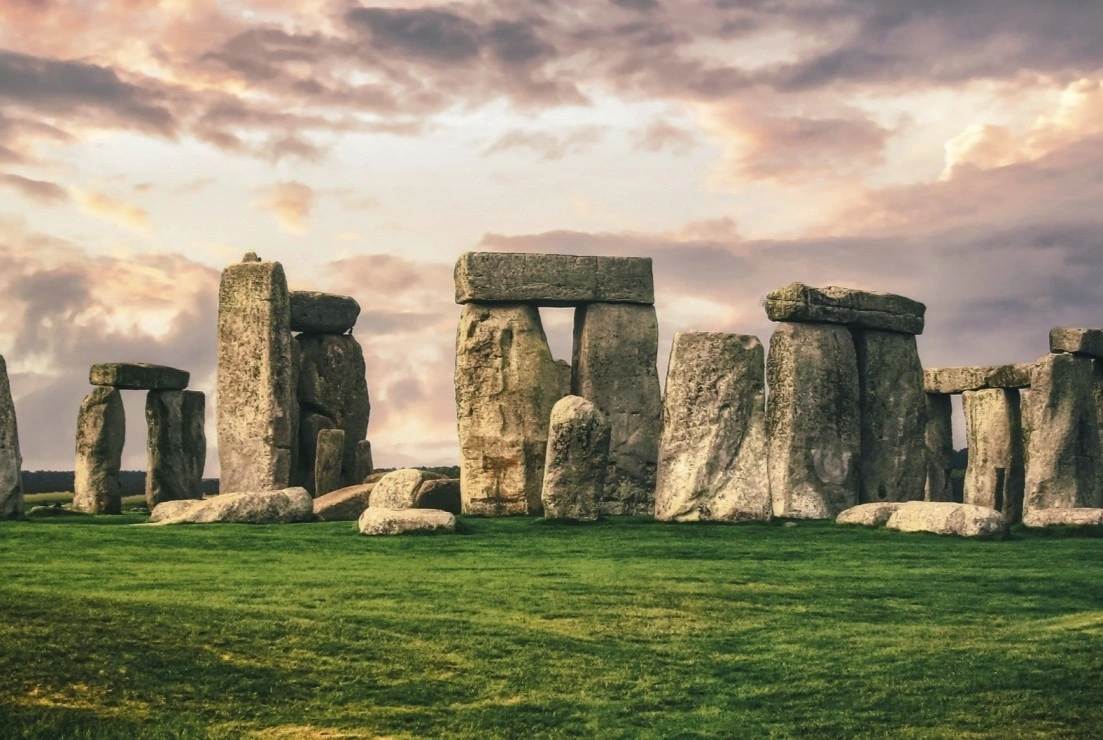
Stonehenge: Stones of the Solstice
What the archaeological record actually tells us about Stonehenge, and what it does not. The solstice alignment, the builders who were not Druids, the 18th-century invention of the Druid-Stonehenge myth, and how to work with the site from a distance.
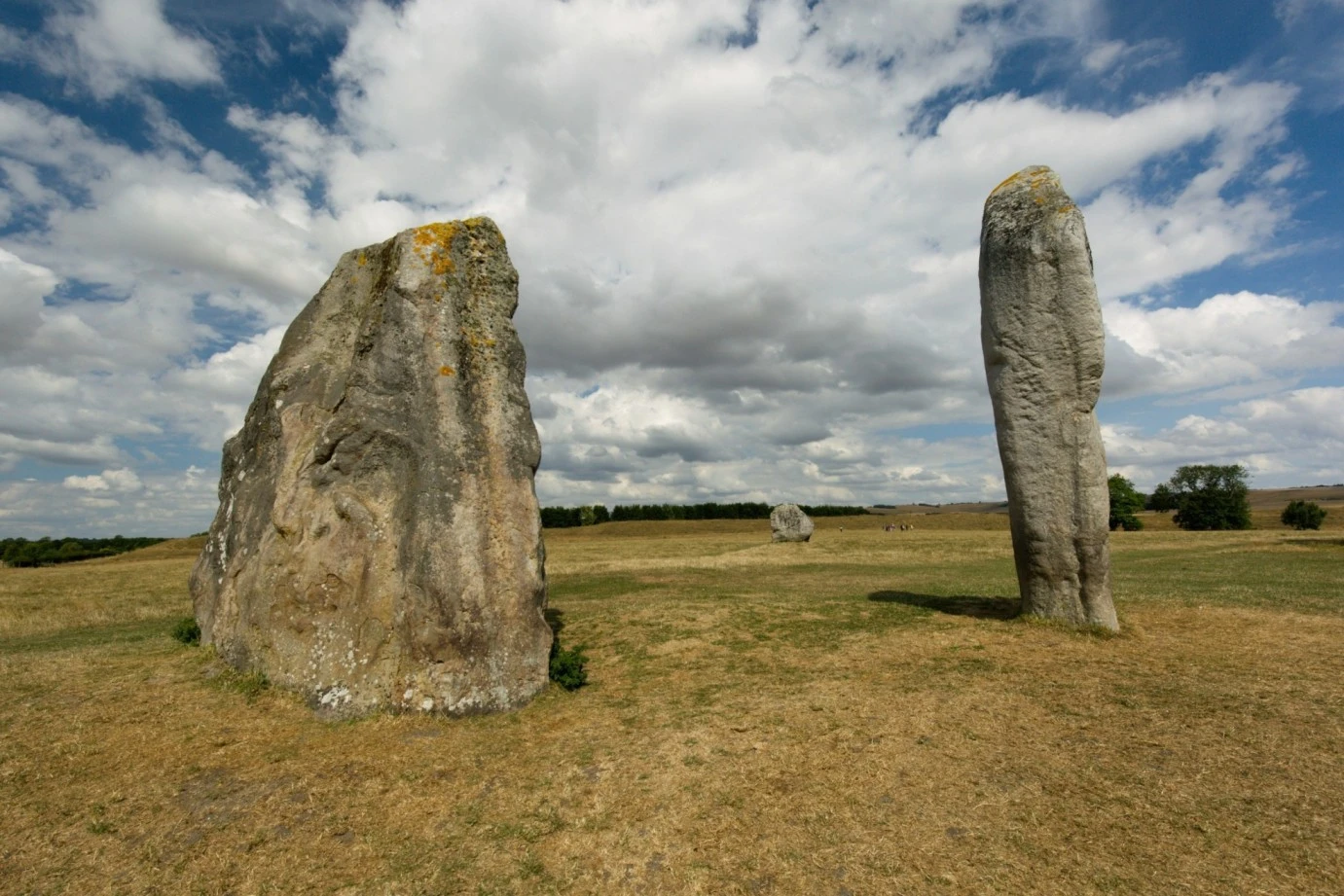
Avebury
Larger than Stonehenge, older in parts, and almost entirely unknown outside Wiltshire; Avebury is Britain's most substantial Neolithic sacred landscape. A layered account of the henge, the wider monument complex, the medieval village inside the ancient circle, and how to work with the site.
Begin your practice
Grimoire is available now on Android and as a web app. Start today.