Crystals
The Witch's Guide to Selenite: Cleansing, Clarity and Practice
Rowenna
Solitary witch and the founder of Grimoire. Built the app she couldn't find anywhere else. Writes about the craft with primary sources, honest lineage notes, and a low tolerance for vague correspondences. Based in the UK with more herbs than shelf space.
· 8 min read
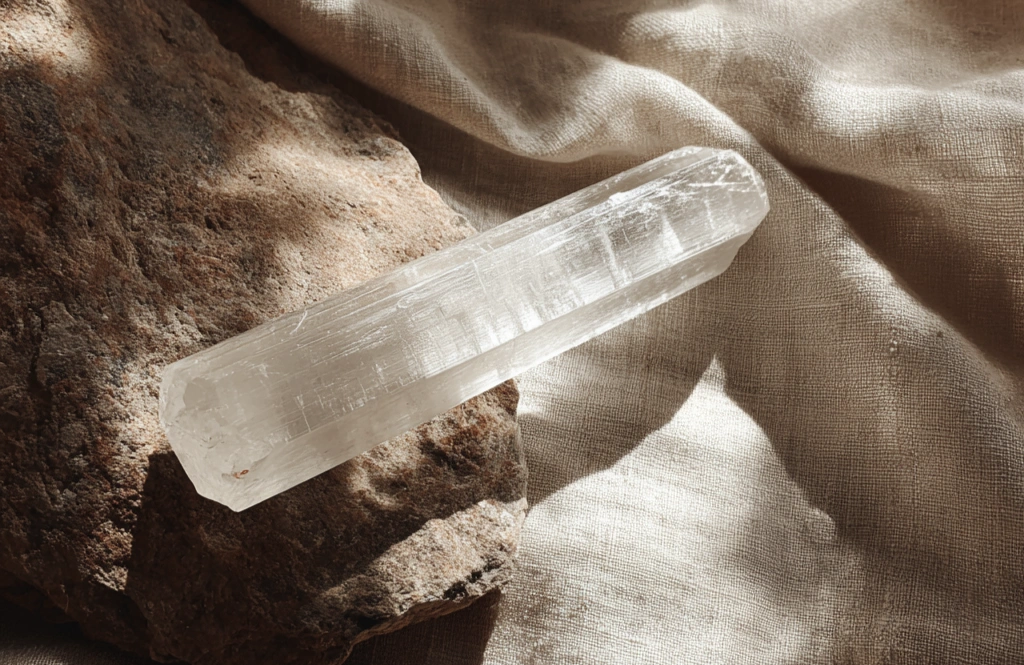
Selenite is the cleansing stone of modern witchcraft. If you have a crystal collection, you almost certainly have a piece. The selenite wand placed across a row of stones to clear them. The selenite tower in a room's corner. The plate kept under a tarot deck. Selenite is one of the most ubiquitous tools in current crystal practice, and one of the most misunderstood.
This piece is a working guide. What selenite actually is (and isn't). Where it sits in the historical record. How to work with it without ruining it. And why most of the selenite for sale in shops is technically a different stone.
What selenite actually is
Selenite is a variety of gypsum: calcium sulfate dihydrate, one of the softer minerals in commercial use. On the Mohs hardness scale it scores about 2, which means it can be scratched with a fingernail. It is also slightly water-soluble. Both of these facts matter for practice, and both are routinely ignored.¹
The name comes from the Greek selēnitēs, meaning "of the moon": from Selene, the Greek moon goddess. Confusingly, this Greek term has historically been applied to several different stones, including what we now call moonstone (a feldspar, mineralogically unrelated to selenite). The lunar association in the name is consistent. The mineralogical relationship to actual moonstone is not.
Strictly speaking, true selenite is the transparent, foliated form of gypsum: clearer crystals that you can see through. The white, fibrous, silky-looking "selenite" that fills most modern crystal shops is technically satin spar, a different variety of gypsum that shares the same chemical composition but a different crystalline structure.² Both are sold and used as selenite in modern witchcraft, and for practical purposes they behave the same way. But a reputable dealer will distinguish between them.
Selenite occurs in white, clear, peach, orange, and grey varieties. Major modern sources are Morocco (which produces most of the satin spar in the global market), Mexico, and the United States: particularly the Great Salt Plains of Oklahoma, where the famous "selenite roses" (clusters of selenite blades that form in salt-rich evaporite deposits) are dug each summer.
A stone of clarity: the historical record
The folklore of selenite is thinner than the folklore of moonstone, and this is worth saying directly rather than papering over with manufactured tradition.
Gypsum has been known and used since antiquity. Theophrastus describes it in his fourth-century BCE On Stones, and Pliny the Elder mentions it in Natural History. It was used in classical and medieval times for plaster, alabaster carving, and (in its purer crystalline forms) for windowpanes in monasteries: translucent enough to admit light but more easily worked than glass. The lunar association embedded in the Greek name selēnitēs is genuine and ancient.
What is not ancient is the specific modern witchcraft practice of selenite as a primary cleansing stone: the wands, the plates, the towers used to clear other crystals and ritual tools. That practice is largely a twentieth-century development, formalised through New Age crystal healing literature in the 1980s and 1990s, and now ubiquitous in solitary witchcraft. The principles underlying the practice are sound: gypsum's softness, its translucence, its association with light and clarity all support the cleansing symbolism. But the practice as currently used is modern, not medieval or classical.
This matters because honesty about lineage is a brand-trust issue. The use is real, the principles are sound, and the practice works for many practitioners; but it is best held as contemporary witchcraft rooted in older symbolic associations, not as inherited ancient tradition.
Working with selenite today
Selenite earns its place in modern solitary practice through a small number of well-defined uses.
- Cleansing other stones. The most common use. A selenite plate, slab, or wand placed under or over other crystals is believed to clear absorbed energy from them. Time required varies by tradition: anywhere from a few hours to overnight. This practice has filled the gap left by the difficulty of using salt or water for cleansing harder stones.
- Clearing space. Selenite is often carried through a room or placed in corners to clear stagnant or heavy energy. Larger pieces (towers, slabs) are kept on altars or by entryways for ongoing space-clearing work.
- Clearing tools and decks. A selenite plate kept under a tarot deck, runes, or ritual jewellery is a common practice for ongoing clearing without active ritual. Convenient, and fits naturally into a daily craft.
- Pairing with other stones. Selenite pairs especially well with moonstone (lunar resonance), clear quartz (amplification), and any heart-territory stone where you want a clearer, more focused expression of the stone's energy.
The most important thing to know about selenite (the thing most working with it for the first time learn the hard way) is that selenite cannot get wet. Water dissolves it. Slowly at first, but reliably. A selenite wand left in a damp bathroom will, over months, develop fissures and weight loss; one rinsed under a tap will lose strands of fibre to the drain. Salt water is worse. Even high humidity is not ideal. Keep selenite somewhere dry, and never use water to cleanse it.
For the wider safe-cleansing methodology, see How to Cleanse and Charge Your Crystals. Most of those methods apply to selenite. Water is the exception that is so significant it has to be named separately.
The stone that clears does not retain.
Selenite is also widely believed to be one of the few stones that does not need to be cleansed itself. The rationale is symbolic rather than mechanical: the stone that clears does not retain. Whether you accept this or not is a matter of practice; some witches still cleanse their selenite with sound (singing bowl, bell, voice), which is one of the few methods compatible with the stone's water-vulnerability.
A note on what selenite is not for
Selenite is one of the most narrowly useful stones in modern witchcraft, and one of the most over-applied. The cleansing function (clearing other stones, spaces, and tools) is its specialty. The drift in some modern practice is to treat it as a kind of universal magical solvent, applicable to any working that involves clearing, opening, brightening, or aligning.
It is more specific than that. Selenite is reflective rather than absorptive. It does not hold what it clears; it lets it pass. This makes it excellent for ongoing maintenance work and useless for protection, grounding, or any working that requires the stone to take something on. If you need a stone that absorbs, use black tourmaline or smoky quartz. If you need a stone that grounds, use hematite. If you need a stone that protects, use obsidian or jet. Selenite cleans, and that is the work it was made for.
The other risk is the substitution risk. Because selenite is cheap, soft to carve into pretty shapes, and ubiquitous, it is sometimes used as a default stone for any witchcraft purpose. The result is a craft that looks like crystal practice but does very little: many tools doing the same job, none of them the right tool for what is actually needed. A focused practice with the right stone for each working is more useful than a shelf full of selenite.
Sourcing ethically
Most selenite in the modern market (by some estimates 80% or more of what is sold globally) comes from Morocco, where it is mined in the desert south of the Atlas mountains. Moroccan selenite is mostly satin spar. The mining conditions in this supply chain have been poorly documented, and ethical concerns about labour conditions and environmental impact have become more prominent in recent years.
When buying selenite, the principles are the same as for any stone:
- Buy from dealers who can name the country of origin and, ideally, the specific mining region.
- Be cautious of suspiciously cheap selenite; at very low prices, the supply chain is almost certainly compromised somewhere.
- Consider buying smaller pieces. A working witch needs perhaps one wand, one slab, and one or two small tumbled pieces. The four-foot tower is decoration, not practice.
- Look for sources from the Great Salt Plains of Oklahoma if you are in the US, or from European wholesalers who can document the supply chain if you are in the UK or EU.
Vintage selenite is harder to find than vintage moonstone (selenite has not historically been a popular jewellery stone) but estate sales and antique markets occasionally yield older pieces, often labelled as "satin spar" or with no label at all.
Conclusion
Selenite is the cleansing stone of modern witchcraft, and it has held that title for less time than most crystal content suggests. But the practice that has grown around it is real, the principles are sound, and the stone works for the purpose it has been given. Use it for what it does. Keep it dry. Trust the simplicity.
A small piece of selenite, a working understanding of its limits, and a habit of running a wand over your other stones once a week or so: this is most of what modern practice asks of selenite. The rest is decoration.
Frequently asked questions
Can I get selenite wet?
No. Selenite is a variety of gypsum, which is slightly water-soluble. Brief contact with water (splashes, an accidental damp cloth) will not destroy a piece, but repeated wetting or extended soaking will dissolve it over time. A wand kept on a bathroom counter develops fissures within months. Cleanse selenite with sound (singing bowl, bell, voice), with smoke, or with brief sunlight. Never with water. Never with salt water.
What is the difference between selenite and satin spar?
Both are varieties of gypsum, with the same chemical composition. True selenite is the transparent, foliated form: clearer crystals that you can see through. Satin spar is the white, fibrous, silky form that is most common in shops. Most "selenite" sold today is technically satin spar. For practical purposes in witchcraft, the two are used interchangeably and behave similarly. But a reputable dealer will distinguish between them, and knowing the difference is worth the small amount of effort.
Does selenite need to be cleansed?
This is debated in modern witchcraft. The majority view is that selenite is self-cleansing: that the stone that clears does not retain. The minority view is that any tool used regularly for psychic or energetic work benefits from periodic clearing. If you choose to cleanse your selenite, sound (singing bowl, bell, voice) is the most appropriate method, since water is incompatible with the stone. Smoke is also fine.
What is the difference between selenite and moonstone?
They are often confused because of the lunar associations and the soft glowing appearance, but they are very different stones. Selenite is a soft, water-soluble form of gypsum, used primarily for cleansing other stones and clearing space. Moonstone is a feldspar, hard enough to wear as jewellery, and used primarily for lunar work, divination, and cycle work. Selenite cannot get wet. Moonstone can take a brief rinse. They pair beautifully but are not interchangeable. For the full picture on moonstone, see The Witch's Guide to Moonstone.
Can I leave selenite in sunlight?
Briefly, yes. The lunar associations might suggest that sunlight is incompatible, but the stone is more practically threatened by water than by sun. A few minutes of sunlight to clear a piece is fine. Prolonged exposure (days or weeks on a sunny windowsill) can fade the colour and weaken the stone over time, particularly for the orange and peach varieties. The most appropriate cleansing method for selenite remains sound or smoke. Sunlight is acceptable but rarely necessary.
Sources
- Wikipedia: Selenite (mineral), overview of the mineralogy, including its identity as a variety of gypsum, the Mohs hardness rating, and the practical implications of water-solubility.
- Wikipedia: Gypsum, covers the broader mineral family, including the distinctions between selenite, satin spar, and alabaster, and the history of gypsum's use from antiquity onward.
- Theophrastus, On Stones (c. fourth century BCE): the earliest surviving Greek work on mineralogy, which describes gypsum and the family of stones from which selenite would later be named. Public-domain English translation available via the Hathi Trust.
- Pliny the Elder, Natural History (first century CE): references to gypsum and related minerals in Books 36 and 37, in the context of ancient classical mineralogy.
Further reading: this piece is part of the crystals and stones cluster on the Grimoire blog. For the closely paired lunar stone, see The Witch's Guide to Moonstone. For the broader cleansing methodology that applies to your wider collection, see How to Cleanse and Charge Your Crystals.
More from the Blog
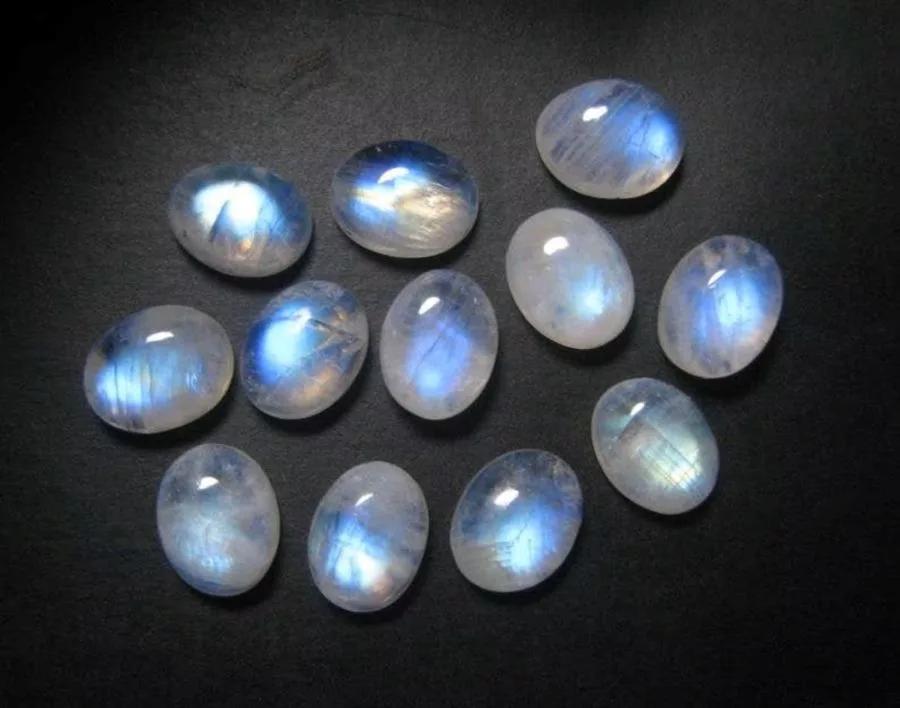
The Witch's Guide to Moonstone: Lunar Magic, Folklore and Practice
Moonstone is the witch's lunar stone, and has been for two thousand years. The folklore, the mineralogy, and how to work with it in a solitary practice.
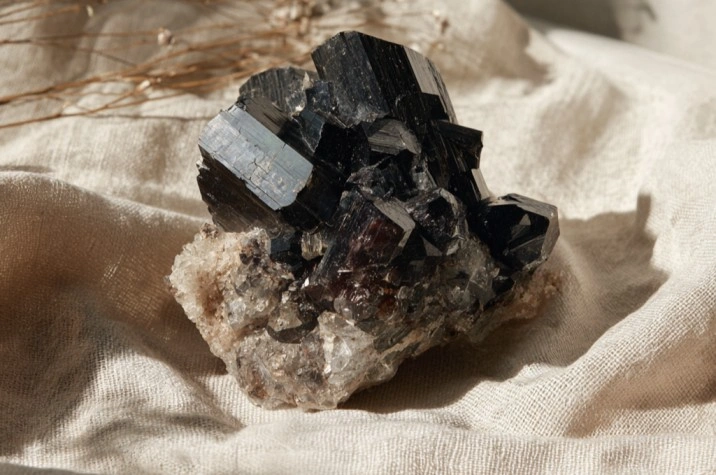
The Witch's Guide to Black Tourmaline
Black tourmaline is the most widely used protective stone in modern witchcraft. A complete profile: mineralogy, magical correspondences, threshold and grounding work, the selenite pairing, the EMF claim examined honestly, and sourcing guidance.
Begin your practice
Grimoire is available now on Android and as a web app. Start today.