Practice
What Is Glamour Magic? Confidence, Scent, and Letting Your True Self Be Seen
Rowenna
Solitary witch and the founder of Grimoire. Built the app she couldn't find anywhere else. Writes about the craft with primary sources, honest lineage notes, and a low tolerance for vague correspondences. Based in the UK with more herbs than shelf space.
· 9 min read
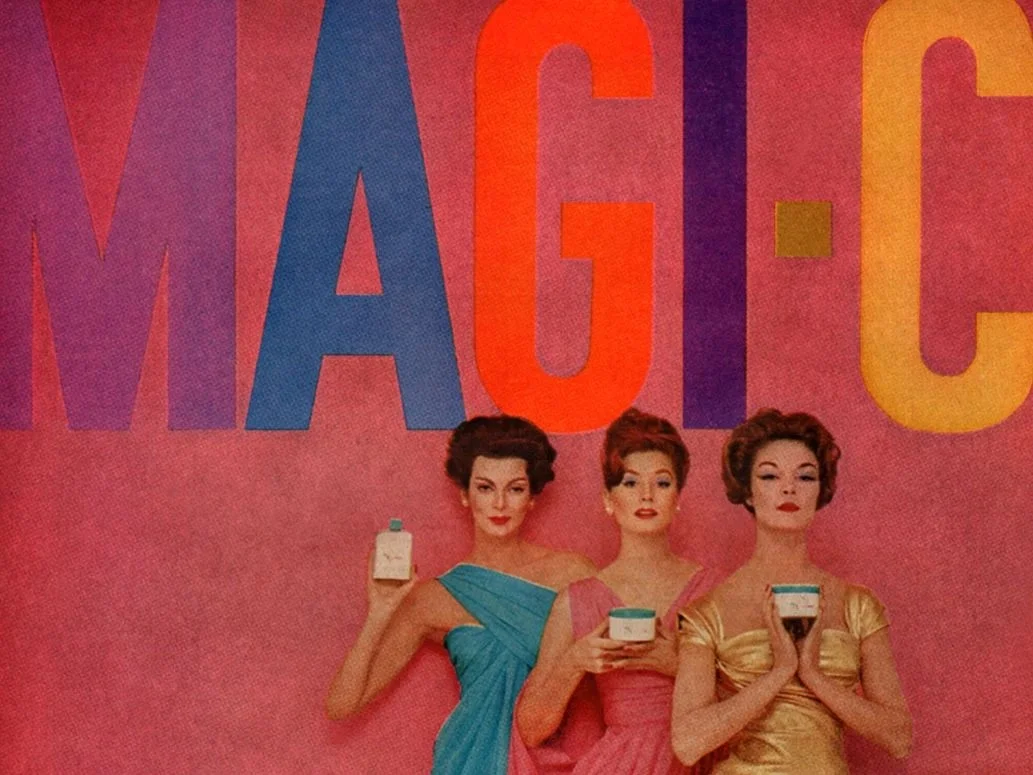
For a long time I thought glamour magic meant changing my face in the mirror. Making myself into someone smoother, prettier, easier to look at. That is not what it turned out to be. The glamour magic I practise does not change my face at all. It grows the confidence that lets my true self shine, so that other people meet me the way I already see myself on my best days. The work is not on my appearance and it is not on anyone else's eyes. It is on me.
This piece is about what glamour magic actually is: where the word comes from, why it has a mixed reputation, and how I practise it as self-devotion rather than as a trick played on anyone. I will share my own ritual in full, because the heart of my craft is scent, which is an unusually direct way to shift how you carry yourself. One line before we begin, because it matters early: glamour done well amplifies what is already true about you. It does not bend how other people must see you against their own judgement. Hold that distinction and the rest follows.
What glamour magic is (and is not)
Start with the word, because it carries the whole history. "Glamour" did not begin as a fashion term. It began as a word for witchcraft. In its oldest sense, a glamour was a magical spell or illusion cast by a witch to change how something was perceived: to make an old thing look new, a plain thing look fine, one thing look like another. The word is an altered form of "grammar," which in the medieval period also meant occult learning and the casting of spells (the related word "gramarye" meant exactly that). The Hollywood sense of glamour as polished allure is the late arrival, popularised in English only after Walter Scott used the older magical meaning in his early-nineteenth-century poetry. So when a witch talks about glamour magic, she is reaching back past the makeup counter to the word's first life as enchantment.
The modern practitioner reframe keeps the old bones and changes the target. Glamour magic, as I and many others work it, is the art of amplifying your own presence and confidence. It is self-perception magic. You are not casting an illusion outward onto other people; you are clearing away the things that dim you, so the presence you actually have can be felt. That is the part most worth being precise about.
So here is what it is not. It is not about conforming to a beauty norm. The point is not to look more like a magazine; the point is to look and feel more like yourself. And it is not about manipulating or deceiving other people. I want to be honest that practitioners disagree here, and that some do use glamour to deceive, to seem trustworthy when they are not, to bend a room against its own better sense. That use exists, and it is part of why glamour has a shadowed name. It is simply not the practice I am describing, and I think the difference is the most important thing on this page.
The manipulation question
Anything that works on perception raises a fair question about consent and honesty, and glamour works on perception, so the question is fair here. I do not want to wave it away.
My position is clear. Glamour magic done well works on you. It amplifies what is already true and lets it be seen; it does not install something false in another person's mind. When a glamour stays on the self (your confidence, your bearing, the way you hold a room because you are no longer shrinking) the people around you are responding to a real shift in you, freely. The moment a working tries to override someone else's judgement, to make them see what is not there or want what they would not choose, it has left self-devotion behind and become coercion. That is a line, not a spectrum. I name it, I keep on my side of it, and I move on, because moralising about it at length is its own kind of dimming.
Glamour and scent
Most glamour writing you will find online is about makeup, dress, and visualisation: stand in front of the mirror, see yourself radiant, paint the radiance on. That works for some people. My craft is rooted somewhere else. For me, glamour lives in scent, and I think scent is one of the most direct tools there is for this work.
The principle is simple and it is first-hand. Scent changes my own state before it does anything else. The right blend settles my shoulders, slows my breath, and reminds my body of who I am when I am unafraid. I stand differently. I take up my own space. And people respond to that authentic shift, because it is real: they are not being tricked by a perfume, they are meeting a woman who has remembered herself. That is the whole mechanism. Scent is the key that unlocks the state; the state is the glamour; the glamour is just me, amplified. If you want the technical side of how I build a blend that holds across a working, I wrote about that separately in my guide to layered scent formulas. Here I want to give you the rite itself.
My glamour ritual
This is how I do it. I am sharing it in full because I would rather show you a real working than a sanitised template, but please take it as an invitation and an example, not the one correct way. Everything here can be swapped for things that mean more to you. My practice runs in threes throughout, and you will see that pattern repeat: it is simply how I structure a rite.
I begin by clearing the space. I light frankincense incense and let the smoke move through the room until the air feels clean and the day's noise has settled out of it. Then I sit before my altar.
I dedicate the working to Lilith. For me she is the right patron for this kind of magic because she is the figure who refused to make herself smaller to be acceptable, and glamour magic, the way I practise it, is about self-sovereignty and unapologetic selfhood. That is as far as I will take her here; Lilith deserves her own piece and will get one, so I keep the dedication simple and let her presence sit over the rite without explaining her to death.
I set out the offerings in three: rich red wine, pomegranate, and dark chocolate. I light three candles, dark red, purple, and black. I place three stones where I can see them: obsidian for grounding and protection, smoky quartz for clearing what dims me, and labradorite, which has always felt to me like the stone of the hidden self made visible.
Then the heart of it. I make a spell oil for this working: frankincense, vetiver, and dark woods, three notes again. I anoint myself with it during the rite, at the pulse points where I want to carry the scent and the intention through the rest of the day. As the oil warms on the skin the blend opens, and that is the moment the glamour sets: the scent, the state, and the intention all arriving together.
One honest note on the oil, because oils touch skin and house style here is to keep safety in plain sight rather than in a footnote. Frankincense and vetiver are essential oils, so a spell oil meant for the skin must be properly diluted in a carrier oil and patch-tested first. It takes a minute and it keeps the practice kind to your body. Mind your candles too, the ordinary way; three open flames want a little attention.
How to begin your own glamour practice
You do not need my ingredients, and you certainly do not need to copy my rite. Start somewhere simpler and truer.
Begin with intention, and be honest about it. What do you actually want to feel and project? Not what you think you should want, but the real thing: to feel unafraid in a room, to be met as warm, to stop apologising for taking up space. Name that first, because everything else is just a way of pointing at it.
Then choose correspondences that mean something to you. A scent that makes you feel like yourself. A colour you are drawn to rather than one a list assigned. A stone that sits well in your hand. The meaning matters more than the tradition; a correspondence works because it speaks to you, not because a book ranked it. From there, build a small rite you can actually repeat: a moment before the mirror, a drop of oil, a breath, an intention spoken once. Something light enough that you will return to it. Personalise it, change it as you go, and let it grow with you. That is the practice.
Questions
Is glamour magic about changing how you look?
No. Glamour magic works on self-perception, not appearance. It is the practice of growing your own confidence and presence so that the self you already are becomes visible to other people. It does not change your face; it changes how fully you let yourself be seen.
Is glamour magic manipulative?
It can be misused that way, which is where it gets its mixed reputation. But glamour done as self-devotion works on you, amplifying what is already true. The line is simple: amplifying your own presence is self-work; trying to override another person's judgement against their will is not, and that is where it stops being glamour and becomes coercion.
Do I need special ingredients to do glamour magic?
No. Intention comes first. The correspondences (scent, colour, stone) are personal, and a glamour working can be as simple as a chosen perfume and a moment of intention before you leave the house. The ingredients I use suit me; yours should mean something to you.
Where does the word "glamour" come from?
From witchcraft. "Glamour" was originally a Scots word for a magical spell or illusion cast by a witch to change how something was perceived. It is an altered form of "grammar" in its old sense of occult learning, and it only came to mean fashionable allure much later, after Walter Scott brought the word into wider English use in the early nineteenth century.
Closing
Glamour magic did not make me into someone else. It let me stop hiding the woman I already was. That is the truth under all the candles and oil and careful threes: the work was never about becoming, only about being seen.
If scent is where you want to begin, the Scent Magic tool in Grimoire is where I keep my blends honest, building the three-tier notes and recording what went into the oil so a working I love can be found again. Start there, with one scent that makes you feel like yourself, and let your practice grow from it.
Sources
- Wikipedia: Glamour (presentation), on the word's origin as a Scots term for a witch's magical illusion, its derivation from "grammar"/"gramarye," and its popularisation in the modern sense by Walter Scott.
- Online Etymology Dictionary: glamour, tracing the word from "a magic spell, enchantment" through its alteration of "grammar" in the sense of occult learning.
- Modern glamour magic as a working practice is contemporary and folk rather than the subject of a single primary text; the ritual described here is the author's own practice, offered as one practitioner's approach rather than a transmitted tradition.
Grimoire is a digital practice companion for the solitary witch: a herbology compendium, crystal guide, sacred calendar, scent magic notebook, daily tarot, and private grimoire journal, all in one place. Now available on Android.
More from the Blog

Shadow Work with the Morrigan: Sovereignty, Fate, and the Necessary Ending
Shadow work with the Morrigan, Irish goddess of sovereignty, fate, and war: who she is, why she suits the work of facing what must end, and how to begin.
Beginning Ancestor Work
Ancestor work is one of the oldest spiritual practices in human history — and one of the least addressed in modern Western witchcraft. A structured introduction for the solitary practitioner: what it is, how to build a basic altar, how to show up consistently, how to work with difficult ancestors, and how to engage with the practice honestly.
Begin your practice
Grimoire is available now on Android and as a web app. Start today.