Sabbats
Yule Deities: Gods of the Winter Solstice
Rowenna
Solitary witch and the founder of Grimoire. Built the app she couldn't find anywhere else. Writes about the craft with primary sources, honest lineage notes, and a low tolerance for vague correspondences. Based in the UK with more herbs than shelf space.
· 9 min read
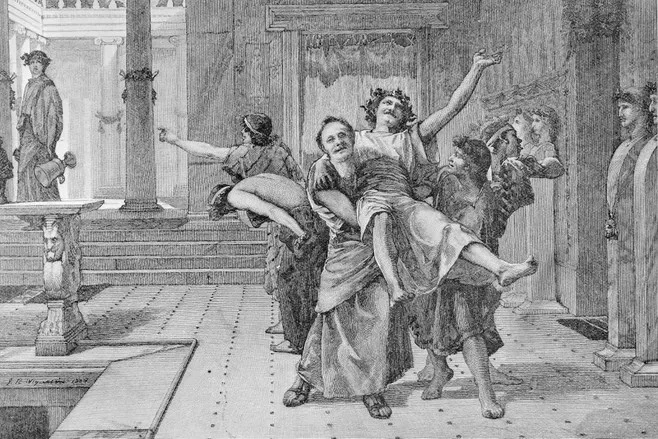
Yule gathers more gods to it than almost any other point on the wheel, and more invented ones too. The midwinter solstice has drawn deity after deity across the centuries, some with deep roots in genuine pre-Christian worship, others assembled in the last hundred years and given an ancient costume. This guide takes the well-attested route on purpose. The figures below are the ones with real textual or archaeological backing, and where a popular Yule deity is a modern construction, the piece says so plainly rather than passing the invention off as old.
This is the opening piece of the Grimoire Yule series, published in early November, roughly seven weeks ahead of the solstice on 21 December, following the same pattern as the other sabbat series around the wheel. The deities come first because they set the tone for everything that follows.
What we actually know about midwinter worship
A clear-eyed start matters here, because Yule is a magnet for confident claims that do not survive contact with the sources. We know the pre-Christian peoples of northern Europe marked midwinter. The Norse and Germanic feast of Yule is genuinely attested, and the Roman midwinter festivals of Saturnalia and Sol Invictus are very well documented. What we have far less of is detailed evidence about exactly which gods were honoured, how, and with what words. Much of what circulates as "ancient Yule tradition" is reconstruction, informed guesswork, or outright Victorian and twentieth-century invention. Holding that distinction is the whole point of working with honest lineage rather than a tidy myth.
Odin and the Wild Hunt
Of all the Yule deities, Odin has the strongest claim to genuine midwinter association. The Norse and Germanic Yule was bound up with Odin in his guise as the leader of the Wild Hunt, the spectral ride that swept across the winter sky in the darkest part of the year. One of Odin's many bynames, Jolnir, derives directly from Yule itself, which is about as direct a textual link as this material offers.
The folklore here is rich and well-sourced. Odin riding through the winter nights, sometimes leaving gifts, sometimes leading the host of the dead, is one of the genuine threads that later folded into the figure of Father Christmas, alongside Saint Nicholas and others. For a witch drawn to the Norse, Yule is Odin's season, and the working is one of welcome to the rider in the dark and respect for the Hunt that is said to pass.
Saturn and the Roman midwinter
The best-documented midwinter deity of all is Roman. Saturnalia, the festival of Saturn held in mid-to-late December, is one of the most thoroughly recorded festivals of the ancient world. It was a time of feasting, gift-giving, the reversal of social order, and a licensed misrule in which masters served slaves and the ordinary rules loosened. Many of the trappings we think of as Christmas, the gifts, the greenery, the feasting and licence, owe a genuine and traceable debt to Saturnalia.
Saturn himself is a complex god, associated with time, agriculture, and the golden age of plenty before the present world. Working with Saturn at Yule connects the season to its best-attested ancient root, and to the older meaning of midwinter as a brief, sanctioned overturning of the ordinary world in the year's deepest dark.
Sol Invictus and the returning sun
The Roman cult of Sol Invictus, the Unconquered Sun, celebrated on 25 December in the later empire, is the clearest ancient expression of the solstice's central idea: the sun at its weakest point, and then its turning and return. Whether or not Sol Invictus directly shaped the date of Christmas is a genuine scholarly debate rather than the settled fact it is often presented as, but the cult itself is real and well-documented. For the solstice as an astronomical and spiritual event, the return of the light from its lowest ebb, Sol Invictus is the ancient world's most explicit statement of it.
The Holly King and the Oak King
Here the honest lineage note matters most. The Holly King and Oak King, the twin kings who battle at the solstices for rule of the year, are one of the most beloved images in modern Yule practice, and one of the most modern. This is not an ancient pre-Christian myth. The specific Holly King and Oak King framework was popularised in the twentieth century, drawing on Robert Graves's "The White Goddess" of 1948 and the later Wiccan revival, which wove scattered folk fragments about holly and oak into a tidy seasonal duel.
That recent origin does not make the image worthless. It is a genuinely useful and resonant way to mark the solstice turn, the Oak King of the waxing year taking over from the Holly King of the waning one. It simply is not old, and a practitioner who values honest lineage should hold it as the meaningful modern construction it is rather than repeating the claim that it descends from the ancient Celts. Worked knowingly, it is a fine piece of solstice symbolism. Worked as forged history, it is the kind of thing that makes the whole craft easier to dismiss.
Goddesses of the deep winter
The midwinter goddesses are a more tangled case, and honesty requires saying so. Several figures are invoked at Yule, and their evidential footing varies widely. The Norse Frigg, Odin's wife and a goddess of the household and of foresight, has genuine attestation and a fair claim to the season as the keeper of hearth and home through the long dark. Beyond the well-sourced, a number of "winter crone" and "solstice mother" figures invoked at modern Yule are reconstructions or composites, assembled from fragments or invented outright, however meaningful they have become in practice. As ever, the figures with real textual backing and the figures with modern origins are both available to work with. The honest practitioner simply knows which is which.
Working with Yule deities
Whichever figure draws you, the Yule working is shaped by the season: the longest night, the turning point, the return of the light from its lowest ebb. Offerings of evergreen, of light kindled in the dark, of feasting and warmth and hospitality, suit nearly all of these deities, because they all gather around the same astronomical fact. Choose the figure whose lineage you can hold honestly, ancient or modern, and mark the solstice in their name. The longest night does not care whether your god is four thousand years old or seventy. It only asks to be kept.
Questions
Which deities are associated with Yule? The best-attested are Norse and Roman: Odin, linked to Yule through the Wild Hunt and the byname Jolnir, and the Roman Saturn of Saturnalia and Sol Invictus of the returning sun. Frigg has genuine Norse attestation as a household goddess. The popular Holly King and Oak King are a modern twentieth-century construction rather than an ancient myth.
Are the Holly King and Oak King ancient? No. The Holly King and Oak King framework was popularised in the twentieth century, drawing on Robert Graves's 1948 "The White Goddess" and the later Wiccan revival. It weaves scattered folk fragments about holly and oak into a seasonal duel. It is a meaningful modern image for the solstice turn, but it is not a genuine pre-Christian tradition.
Is Odin connected to Yule? Yes, and his claim is among the strongest. The Norse and Germanic Yule was associated with Odin as leader of the Wild Hunt, the spectral winter ride, and one of his bynames, Jolnir, derives from Yule itself. Folklore of Odin riding the winter nights later fed, alongside Saint Nicholas, into the figure of Father Christmas.
What is the connection between Yule and Christmas? Many Christmas customs have traceable roots in pre-Christian and Roman midwinter festivals, especially Saturnalia, with its gift-giving, greenery, and feasting. Whether Sol Invictus directly set the date of Christmas is debated by scholars rather than settled. The overlap is genuine, though often overstated with more certainty than the evidence supports.
How do I work with a Yule deity? Choose a figure whose lineage you can hold honestly, ancient or modern, and mark the solstice in their name with offerings suited to the season: evergreen, light kindled in the dark, feasting, warmth, and hospitality. These suit nearly all Yule deities, since they gather around the same event, the longest night and the turning return of the sun.
However you keep the longest night this year, keep it knowingly, with a clear sense of which gods are old and which are new. The rest of the Yule series, on solitary practice, herbs, spells, and the solstice intentions, will follow as the season draws in.
Sources
For Odin's byname Jolnir: Rudolf Simek, A Dictionary of Northern Mythology, translated by Angela Hall (Boydell and Brewer, 1993). For Saturnalia: H.H. Scullard, Festivals and Ceremonies of the Roman Republic (Cornell University Press, 1981). For Sol Invictus and the debate over the date of Christmas: Steven Hijmans, "Sol Invictus, the Winter Solstice, and the Origins of Christmas," Mouseion 3 (2003), pages 377 to 398. For the modern origin of the Holly King and Oak King: Robert Graves, The White Goddess (Faber and Faber, 1948).
Grimoire is a digital practice companion for the solitary witch: a spell builder, sacred calendar, private grimoire journal, herbology compendium, and daily tarot, all in one place. Now available on Android.
More from the Blog
Samhain Energy and Intentions: The Witches' New Year
Samhain energy and intentions for the witches' new year: how to work the turning of the wheel, honour the dead, and set intentions for the dark half ahead.
Beltane Energy and Intentions: What to Manifest at the Fire Festival
Beltane is the sabbat of commitment and full bloom. Here's how to work with its energy intentionally, and what it's most potent for.
Begin your practice
Grimoire is available now on Android and as a web app. Start today.