Sabbats
Samhain Energy and Intentions: The Witches' New Year
Rowenna
Solitary witch and the founder of Grimoire. Built the app she couldn't find anywhere else. Writes about the craft with primary sources, honest lineage notes, and a low tolerance for vague correspondences. Based in the UK with more herbs than shelf space.
· 7 min read
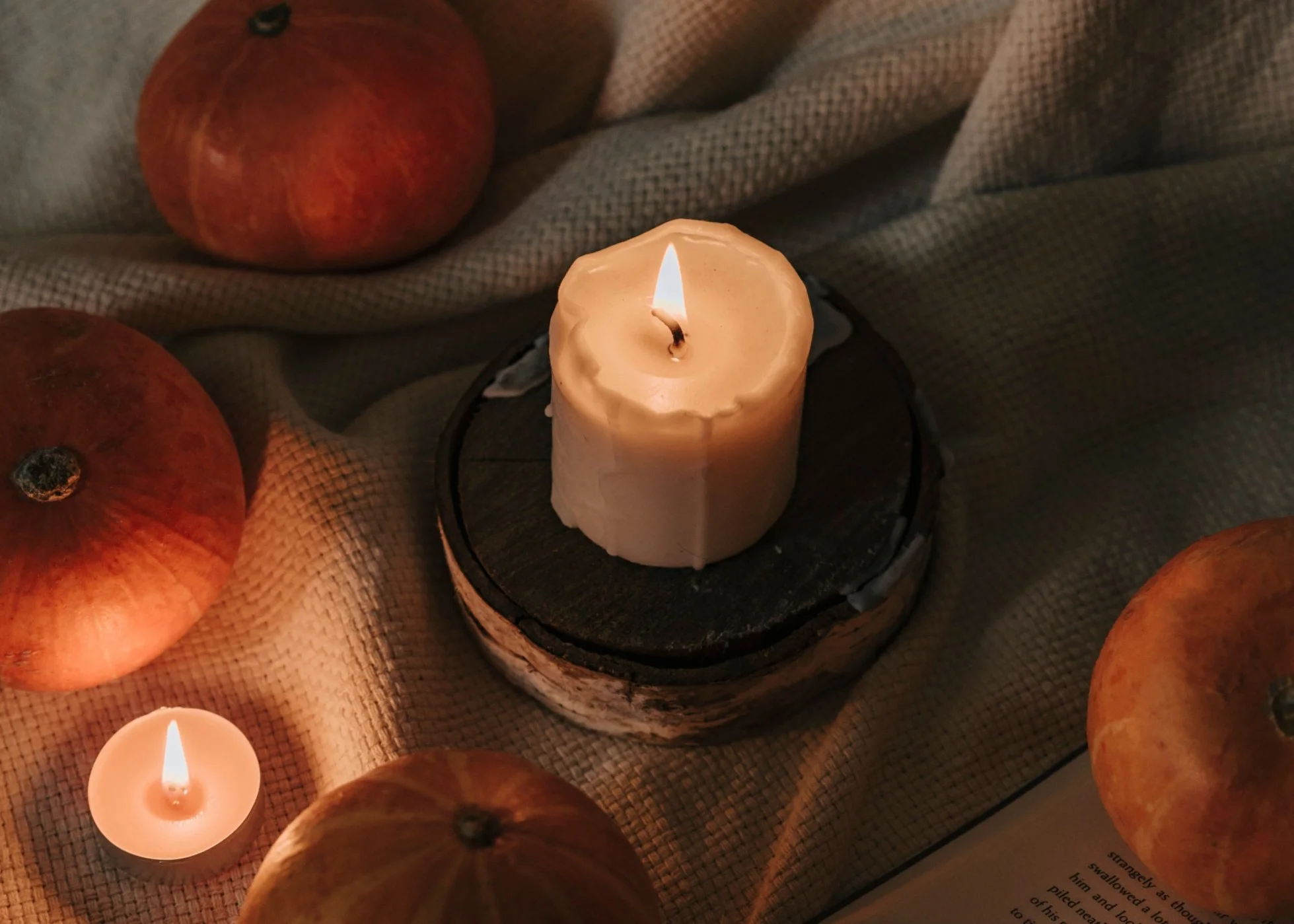
Samhain is the witches' new year, and that single fact reshapes everything about how the night is worked. While the rest of the calendar treats 31 October as the eve of nothing in particular, the old wheel treats it as the hinge of the whole year: the harvest fully gathered, the green world laid down, and the long dark begun. If you keep the wheel, this is your midnight on the thirty-first of December, your moment of ending and beginning at once. The intentions you set tonight are the first seeds of a new turn.
This is the fifth piece in the wheel-of-year intention arc, and it does something none of the others could: it closes one arc and opens another. To understand why tonight carries so much weight, it helps to see the shape the whole year has made.
Two arcs meeting at Samhain
The intention work across the wheel has formed two halves. The warm half ran from Beltane through Litha, Lughnasadh, and Mabon: a season of growth, manifestation, harvest, and gratitude, of intentions planted in spring and gathered in autumn. Tonight closes that arc. Whatever you set at Beltane has now had its full season to ripen, and Samhain is where you take the honest account of it.
At the same moment, a new arc opens. The dark half will run from Samhain through Imbolc to Ostara: a season of rest, reflection, shadow, and the slow underground stirring that precedes spring. Tonight's intentions are not the bright outward goals of Beltane. They are the quieter, inward kind, the work you do in the dark where no one is watching and nothing is yet visible above the soil.
Samhain is the only point on the wheel where an arc ends and another begins on the same night, which is exactly why it feels like a threshold. You are standing with one foot in the gathered year and one in the unplanted one.
The energy of the night
The quality of Samhain is unlike any other sabbat. The dominant note is release rather than acquisition, ending rather than beginning, even though a beginning is folded inside it. The harvest is in, the fields are bare, and the practical work of the year is done. What remains is reckoning: looking honestly at what the year held, what it cost, what it gave, and what did not survive it.
It is also the night of the dead, when the tradition holds the boundary with the Otherworld at its most porous. That gives the intention work a particular flavour. You are not setting goals in a vacuum. You are setting them in the presence of everything and everyone that has gone before, which has a way of stripping the trivial intentions away and leaving only the ones that matter.
Working the turning of the wheel
A Samhain intention practice has three movements: closing, honouring, and opening. You can do all three in a single sitting, and the night supports the depth.
Close the old year. Begin with the account. Look back over the turn of the wheel since last Samhain. What did you intend at Beltane, and what actually grew? What are you proud of? What are you ready to set down? Write it honestly, the harvest and the failures together, and then mark the ending: a line drawn under the page, a candle snuffed, a paper burned in a fire-safe dish. The old year is closed when you say it is closed.
Honour the dead. Before you look forward, turn to those who have gone. Light a candle, set a small bowl of water or a portion of food for the ancestors, and spend a few quiet minutes with them. This is not a detour from the intention work. It is part of it. The dark half is entered properly only by acknowledging the dead at its threshold, and their presence clarifies what is worth carrying forward.
Open the dark half. Only now, with the year closed and the dead honoured, set your intentions for the season ahead. Keep them inward and honest. The dark half does not reward grand outward plans; it rewards rest, reflection, the tending of what matters, the slow work that will not show results until the light returns. Plant something small and true: a practice you want to keep through the winter, a piece of shadow work you are finally ready for, a way of being you want to grow underground before spring asks you to show it.
Intentions for the dark, not the light
The most common mistake with Samhain intentions is treating them like Beltane intentions in a darker costume. The new year of the witches does not begin the way the calendar year does, with resolutions and outward striving. It begins in the dark, underground, invisible. The seed planted at Samhain is not meant to sprout now. It is meant to lie in the cold earth through the long winter, gathering what it needs, so that when Imbolc brings the first stirring of light, something is already there to wake.
So set intentions that suit the season: to rest without guilt, to face what you have avoided, to tend a quiet practice, to grieve what needs grieving, to let something lie fallow. These are not lesser intentions than Beltane's. They are the ones the dark half was made to hold, and the wheel will carry them toward the light in its own time.
Whatever you set tonight, you set it at the turning of the year, in the presence of the dead, at the one threshold where every ending is also a beginning. Happy new year. The dark half is yours now, and the wheel turns on.
Questions
What does Samhain energy feel like? Samhain energy is one of release, ending, and reckoning rather than acquisition, with a quiet beginning folded inside it. The harvest is gathered and the practical year is done, leaving room for honest reflection. As the night of the dead, it also carries a sense of the Otherworld being close, which strips away trivial concerns and clarifies what truly matters.
How do I set intentions at Samhain? Work in three movements: close the old year by taking honest account of what grew since Beltane and marking its ending, honour the dead with a candle and an offering, then set inward intentions for the dark half. Keep these intentions quiet and reflective rather than grand and outward, since the dark half rewards rest and slow underground work.
Why is Samhain the witches' new year? Because it marks both the end of the harvest year and the start of the dark half, making it the single threshold on the wheel where one cycle ends and another begins on the same night. The fields are bare, the year's work is done, and a new turn opens in the dark, so the wheel begins again at Samhain rather than in midwinter.
What kind of intentions suit the dark half? Inward, quiet ones: to rest without guilt, to face avoided things, to tend a steady practice through winter, to grieve what needs grieving, or to let something lie fallow. The dark half does not reward outward striving the way Beltane does. Its intentions are seeds planted to lie underground until Imbolc brings the first light.
However you mark the turning this year, set your seeds gently and let the dark do its slow work. For the rest of the festival, the companion Samhain pieces on its deities, its herbs, its spells, and solitary practice will see you through the longest night of the year's beginning.
More from the Blog
Herbs of Samhain: Plants for the Thinning Veil
Herbs of Samhain, from mugwort and rosemary to the poisonous nightshades of flying-ointment folklore. Their history, their uses, and the safety that matters.
Beltane Energy and Intentions: What to Manifest at the Fire Festival
Beltane is the sabbat of commitment and full bloom. Here's how to work with its energy intentionally, and what it's most potent for.
Begin your practice
Grimoire is available now on Android and as a web app. Start today.