Sacred Sites
Avebury
Rowenna
Solitary witch and the founder of Grimoire. Built the app she couldn't find anywhere else. Writes about the craft with primary sources, honest lineage notes, and a low tolerance for vague correspondences. Based in the UK with more herbs than shelf space.
· 9 min read
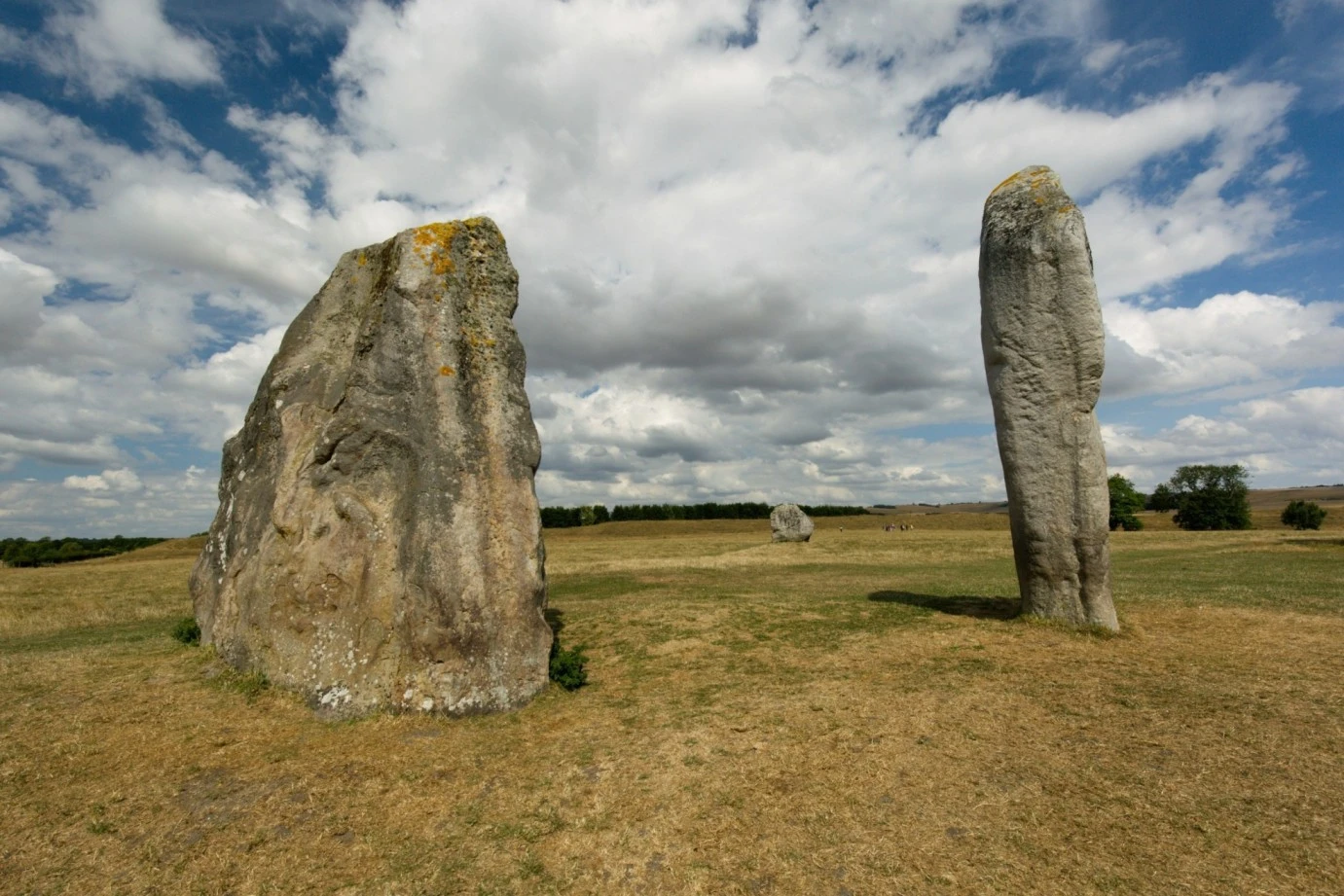
Stonehenge is the icon. Avebury is the body of evidence. The henge at Avebury is larger by area than Stonehenge, broadly contemporary with it, and almost certainly more architecturally complex when you account for the full landscape it anchors: a processional avenue of standing stones stretching more than two kilometres, a massive and purpose-unknown artificial mound, a Neolithic burial chamber still accessible to visitors, and a second smaller mound only recently confirmed as prehistoric. Stonehenge dominates the cultural imagination. Avebury contains more of the actual evidence for how Neolithic people organised a sacred landscape; and most British people have never heard of it.
This is the fourth piece in the Sacred Sites cluster, completing the British megalithic axis. Together with Glastonbury Tor, Stonehenge, and the cluster's other pieces, it builds toward a picture of how sacred landscape works in British tradition, which is never a single monument in isolation but always a network of sites in relationship to each other.
The henge and its stones
Avebury sits in the Wiltshire downland approximately forty kilometres north of Stonehenge. What you arrive at is a large circular earthwork (a bank and internal ditch, the bank on the outside, which immediately tells you it was not built for defence) approximately 420 metres in diameter. Within this earthwork stands a large outer stone circle, originally of roughly 98 standing stones, of which about 27 survive upright. Within that outer circle sit the remains of two smaller inner circles, north and south.
The stones are sarsen — hard silcrete sandstone formed in the Marlborough Downs to the east and present in quantity across the local landscape. Unlike the worked, shaped, lintelled stones of Stonehenge, the sarsens at Avebury are essentially unmodified. They were selected from what lay on the surface, dragged to the site, and set upright in their natural forms. Some are tall and tapering, some broad and roughly triangular. The Neolithic people who chose them may have been working with the shapes (the tall ones associated with masculine aspects of their belief system, the broad ones with feminine) but this is interpretation rather than established fact.
Construction took place across several phases between roughly 2850 and 2200 BCE, making the monument between 4,200 and 4,800 years old. It was therefore broadly contemporary with the main construction phases of Stonehenge, and both sites were likely active simultaneously for centuries. What the relationship between them was (whether Avebury served a different ceremonial function, drew a different community, or was understood as part of a larger ritual geography) we cannot know. The Neolithic builders left no writing. Their beliefs are unrecoverable from the physical evidence alone.
The wider landscape
Avebury's significance is inseparable from the monuments that surround it. The henge circle is the centre of a complex of interrelated structures that must have been experienced together rather than in isolation.
The West Kennet Avenue runs from the southern entrance of the henge for approximately 2.5 kilometres toward Overton Hill to the southeast. Originally a double row of roughly 100 paired standing stones, about half survive in their original positions. Archaeologists have proposed that the avenue was used for ceremonial processions: that the henge was approached through this corridor of stones rather than entered directly. Walking the surviving section today is one of the most immediate encounters with Neolithic intention available in Britain.
The Sanctuary at Overton Hill, at the far end of the avenue, is one of the less visually striking monuments (its original timber and stone rings are now marked by concrete posts) but it was the destination of the avenue, and therefore presumably significant. It was demolished in the 18th century; what it looked like and what it was for are both unestablished.
Silbury Hill, one mile to the south, is one of the most genuinely mysterious monuments in prehistoric Europe. It is a vast artificial mound (40 metres high, 160 metres in diameter at the base, containing approximately 248,000 cubic metres of chalk and earth) and its purpose is entirely unknown. Extensive excavations, including tunnelling into the core, have found no burial, no central chamber, no obvious votive deposit. It is the largest prehistoric artificial mound in Europe, it cost an extraordinary amount of human labour to build, and we have no idea what it was for. The honest position is: we do not know.
The West Kennet Long Barrow is a Neolithic chambered tomb built around 3650 BCE (predating the henge by several centuries) used for collective burial across many generations. Its stone-lined chambers, dug into a long earth mound overlooking the valley, are accessible to visitors and can be entered. It is one of the best-preserved examples of its type in Britain, and one of the rare prehistoric monuments where you can physically stand inside a space used for the dead four thousand years ago. Its significance for ancestor work is difficult to overstate.
The village inside the monument
The most striking thing about Avebury, for a first-time visitor, is that a village is inside it. The Red Lion pub, a medieval church, a National Trust shop, a car park, private houses: all within or cutting through the henge and stone circles. This is because the village grew up during the medieval period when the monument was already ancient and partially buried, and its population regarded it without any particular reverence.
In the early 14th century, locals began burying some of the standing stones, probably because they were considered pagan and dangerous. One of these burial episodes ended badly: a man was found beneath a buried stone during 20th-century excavations, apparently crushed when the operation to lower it went wrong. He has been dated to around the early 14th century; he was carrying coins and surgical instruments, which suggests he was a travelling barber-surgeon, caught under a stone that shifted unexpectedly while he was helping to lower it. His skeleton is in the Alexander Keiller Museum in the village.
In the 17th and 18th centuries, many more stones were broken up and used as building material. The village's houses contain sarsen stone from the henge. By the 19th century the site had been substantially reduced from its original form. Its recovery as a monument is largely the work of Alexander Keiller, a Scottish marmalade magnate who purchased much of the site in the 1930s, funded excavation and re-erection of fallen stones, and demolished houses within the henge perimeter. Keiller's restoration is why Avebury looks as it does today.
The modern pagan reception: and the honest limits
Avebury is more central to living British pagan practice than Stonehenge in a specific and practical sense: you can touch the stones. Stonehenge has been fenced off since 1977; access for most visitors is at a distance, through the visitor centre and along a roped walkway. At Avebury, the stones are in a field you can walk through. You can place your hands on four-thousand-year-old sarsen. Dogs run past them. People picnic against them. The intimacy available at Avebury is qualitatively different from anything Stonehenge currently offers outside its managed solstice access events.
That accessibility has made Avebury central to modern British Druidry and paganism. The Order of Bards, Ovates and Druids and other groups hold ceremonies at the equinoxes and solstices. Individual practitioners make regular pilgrimages. The landscape as a whole (henge, avenue, barrow, hill) is used as a meditation structure and a working environment.
The honest limit is the same limit that applies to Stonehenge and to every other Neolithic monument in Britain. There is no cultural continuity between the people who built Avebury and the people who practise at it today. The Iron Age Druids, even if they used the site, were separated from the Neolithic builders by two thousand years and an entirely different cultural world. The medieval villagers who buried the stones had no connection to the original builders. Modern paganism's relationship to Avebury is a 20th-century construction of meaning: developed particularly through figures like Michael Dames, whose 1977 book The Silbury Treasure proposed a Great Mother reading of the Silbury landscape, and through the broader Goddess spirituality movement of the same period.
This is not a diminishment. The practice built at Avebury is real, and the stones are genuinely powerful in whatever way places that have gathered centuries of concentrated human attention become powerful. It simply means that the relationship is ours to build honestly rather than one we inherit from unbroken continuity, which is the same position the Glastonbury Tor and Stonehenge pieces have taken. Modern paganism builds real things at these sites. Naming them as modern is part of the honesty that makes the building credible.
Working with Avebury
A physical visit. If you can go, go. Approach via the West Kennet Avenue rather than directly through the car park — walk the surviving stone pairs from the southeast, approaching the henge as the avenue was probably designed to be walked. Stand with individual stones rather than trying to take in the whole. The henge is too large to apprehend at once; work stone by stone, and let each one tell you what it tells you rather than bringing a predetermined interpretation.
West Kennet Long Barrow. Enter the burial chamber slowly and in silence. This is a four-thousand-year-old space built for the collective dead. Whatever your tradition of ancestor work, this is the most direct encounter with the Neolithic logic of communal death and remembrance available in Britain. As the Samhain season approaches (and as the ancestor practice piece develops) sitting in the long barrow is a preparation rather than a spectacle. Bring something to leave at the threshold if it feels right; water, a flower, a handful of grain are the appropriate offerings at a Neolithic burial site.
Equinox work. The autumn equinox at Avebury is a natural alignment: both the modern pagan observance and the landscape itself, which has been proposed as astronomically oriented in ways that may include solstice and equinox sunrise lines. For the equinox intention work specifically, see Mabon Energy and Intentions. A dawn visit to Avebury on or near the equinox (walking the avenue as the light comes up over the Downs) is one of the most straightforwardly powerful seasonal practices available to a British witch who can travel.
Full moon work. The stones in moonlight have a different quality from the stones in day: the scale of the sarsen becomes stranger, the shadows are deep between the stones, the sense of accumulated time is more immediate. A full moon at Avebury is worth planning around if you visit regularly.
Distance working. For practitioners who cannot visit, Avebury correspondences for distance work: the colour and texture of unworked grey-brown sarsen stone; the image of the wider landscape held in mind during meditation: henge, avenue, barrow, hill as four points of a structure to move between in visualisation; the West Kennet Avenue as a processional frame for any working that moves between two states. The Litha solstice work can be adapted for Avebury's equinox alignment with minimal adjustment.
Common questions
Is Avebury more significant than Stonehenge? Significant for different things. Stonehenge has a more complex and precise architecture (the dressed lintelled stones, the careful astronomical alignments) and remains the more sophisticated engineering achievement. Avebury is larger by area, its landscape complex is more extensive, and it offers physical access the fenced Stonehenge cannot. For working practice, Avebury is more useful. For architectural study of Neolithic precision, Stonehenge has no equal.
What is Silbury Hill for? Unknown. This is not a hedge or a modesty: extensive archaeological investigation has found no burial, no central structure, no clear votive deposit. The honest answer is that we do not know why an enormous amount of human labour was spent building a chalk mound in Wiltshire around 2400 BCE, and until new evidence emerges, we are unlikely to find out.
Can I actually go inside West Kennet Long Barrow? Yes. The chambers are accessible to visitors during daylight hours, though they are low and require crouching to enter fully. It is free to visit and is managed by English Heritage, though there is no staffed presence. You can enter, sit in the chambers, and leave offerings at the entrance; the site sees regular pagan use and most visitors are respectful of that.
Is the village actually inside the stone circle? Yes. The village of Avebury (including the pub, the church, private houses, and the car park) sits within or overlapping the henge perimeter and stone circles. The A4361 road cuts through the monument. This is a result of medieval settlement that predated any recognition of the site's significance, and subsequent development within the area. The National Trust now manages the monument and restrictions are in place for new construction.
Sources
For the archaeology: Aubrey Burl, Prehistoric Avebury (Yale University Press, 1979; 2nd ed. 2002): the standard archaeological reference for the monument. English Heritage, Avebury (English Heritage guidebooks) for accessible current archaeological information. For Silbury Hill: Jim Leary and David Field, The Story of Silbury Hill (English Heritage, 2010). For the modern pagan reception: Ronald Hutton, The Triumph of the Moon (Oxford University Press, 1999) and Michael Dames, The Silbury Treasure (Thames and Hudson, 1976): for the Goddess reading that shaped the modern pagan relationship to the site, read critically.
Grimoire is a digital practice companion for the solitary witch: a sacred calendar, private grimoire journal, daily tarot, herbology compendium, and deity work, all in one place. Now available on Android.
More from the Blog
Glastonbury Tor
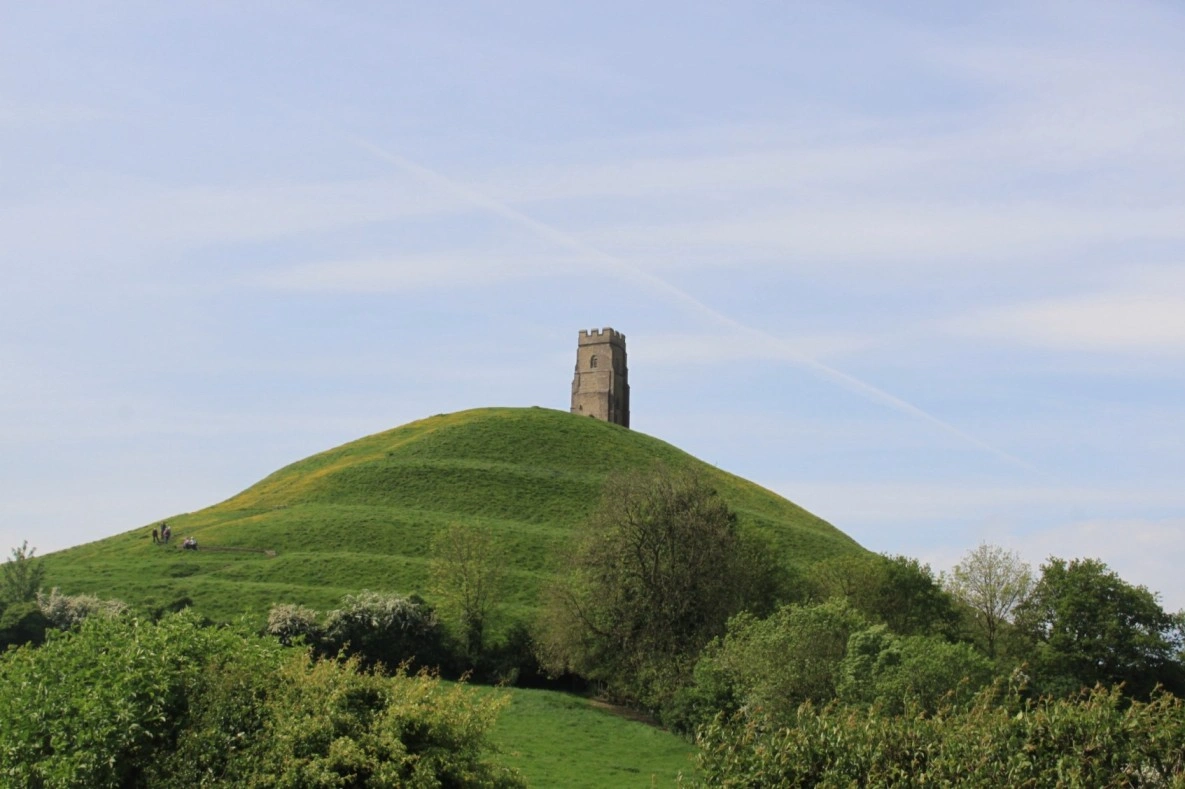
A hill in Somerset that has been a Neolithic settlement, the legendary Isle of Avalon, a Christian monastic stronghold, and one of the most significant sites in modern paganism. A layered history of Glastonbury Tor, and how to work with it from a distance.

Gogottes: The Fairy Stones of Fontainebleau Forest
The witchcraft, folklore and fairy lore behind gogottes; the otherworldly sandstone sculptures of France's most enchanted forest.
Begin your practice
Grimoire is available now on Android and as a web app. Start today.