Crystals
The Witch's Guide to Jet: Britain's Oldest Protective Stone
Rowenna
Solitary witch and the founder of Grimoire. Built the app she couldn't find anywhere else. Writes about the craft with primary sources, honest lineage notes, and a low tolerance for vague correspondences. Based in the UK with more herbs than shelf space.
· 8 min read
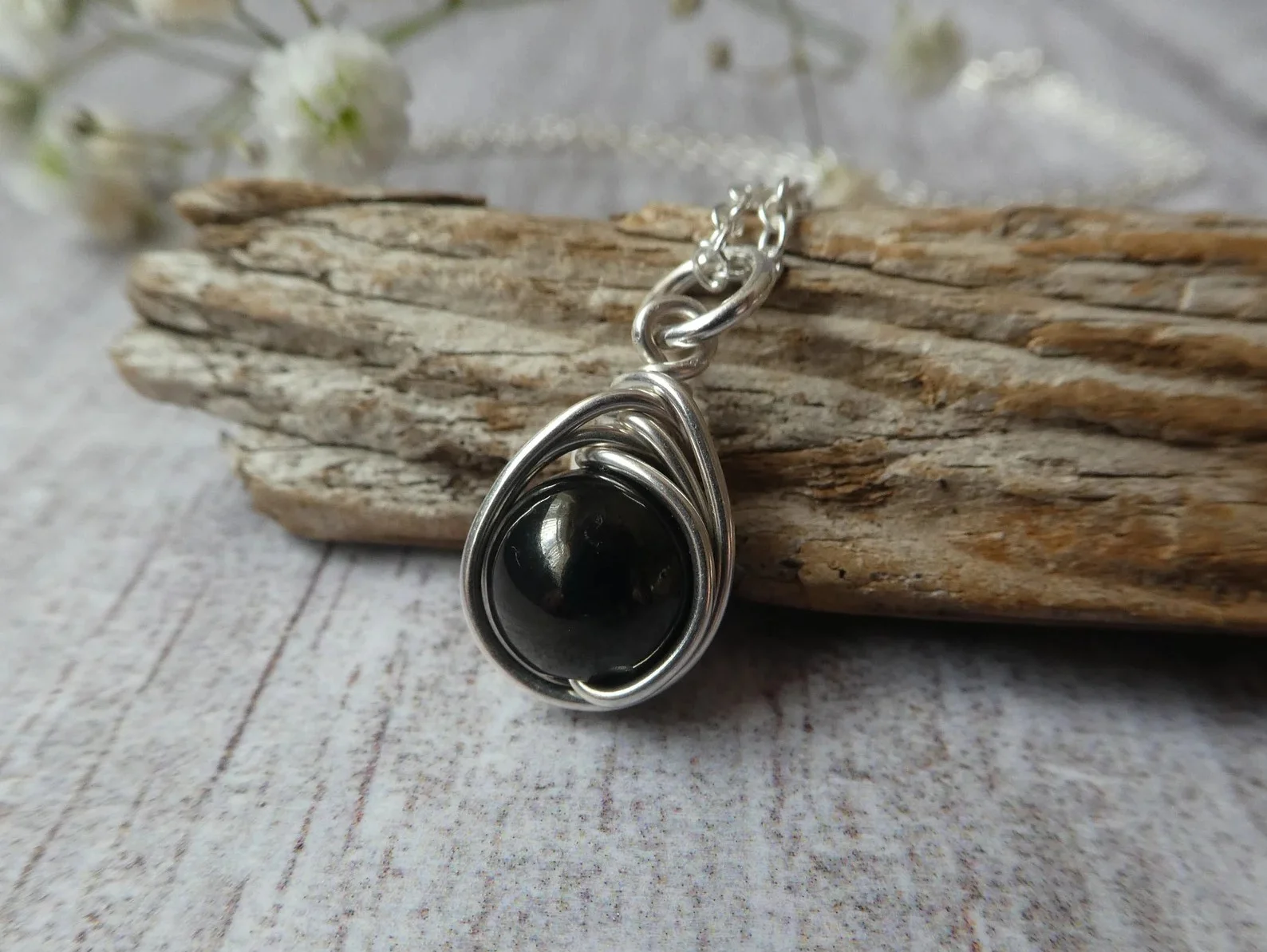
Most of the stones on a modern crystal shelf have a magical reputation that is younger than your house. The healing properties assigned to them were largely invented in the twentieth century, borrowed from a 1980s book or a colour chart, and dressed up as ancient wisdom. Jet is one of the rare exceptions. Its protective reputation in Britain is genuinely old, documented in the archaeology, and unbroken from the Bronze Age to the Victorian mourning brooch. When a tradition is real, it is worth saying so loudly, because so little of the crystal trade can make the claim.
This is the tenth single-stone guide in the Grimoire Crystals series, and it is the one with the firmest ground under it. Jet is not even a crystal in the mineral sense. It is fossilised wood, the compressed remains of ancient trees related to the monkey puzzle, turned over millions of years into a black, lightweight, workable stone. That origin matters, because it gives jet a foot in two worlds: the mineral kingdom the crystal trade claims, and the older folk category of the once-living thing turned protective.
The real history, which is the whole point
Jet has been worked in Britain for at least four thousand years. Bronze Age burials in Yorkshire contain jet beads and buttons, and the stone was prized well before the Romans arrived. When Rome did come, jet went continental. The Roman settlement at Whitby and the wider Yorkshire coast became a centre for jet working, and finished pieces travelled across the empire as protective amulets.
The Roman writer Pliny the Elder recorded jet's reputation in the first century, noting its strange properties: it burns, oddly for a stone, and when rubbed it holds a static charge that lifts small objects. Both facts are true, both would have looked like magic, and both fed jet's standing as a stone that drives off evil. Later, in the early Christian centuries, jet crosses and amulets carried the same protective charge into a new faith without missing a beat. This is not a correspondence someone dreamed up beside a colour wheel. It is a documented, four-thousand-year thread.
The Victorian chapter is the famous one. When Prince Albert died in 1861, Queen Victoria went into a mourning that lasted the rest of her life, and jet became the only jewellery permitted at a grieving court. Whitby jet boomed. By the 1870s the town had hundreds of workshops turning out mourning brooches, beads, and lockets. That association, jet as the stone of grief and remembrance, is the second great thread of its lore, and it lands this piece neatly beside the Samhain season and the grief practice published a few days before.
What jet is for, in practice
Two uses carry real weight, because both grow out of the genuine history rather than being bolted on.
Protection
This is jet's oldest and best-attested role. From the Bronze Age amulet to the Roman travelling charm to the apotropaic crosses of early Christian Britain, jet has been the stone you carry to drive off harm. For a working witch, that makes jet a natural protective stone to keep on the person: a bead in a pocket, a pendant worn at the throat, a piece set by a doorway. It pairs traditionally with the other dark protective stones, and it sits alongside black tourmaline in the small family of genuinely protective dark minerals, though jet's lineage runs far deeper and longer.
Grief and remembrance
The Victorian mourning tradition gives jet a second honest use, and an unusually tender one. A piece of jet held during grief work, set on an ancestor altar, or worn while mourning carries a hundred and fifty years of British practice behind it, and a far older thread beneath that. If you are doing the kind of grief practice the dark half invites, jet is the stone with the truest claim to the work. It does not promise to lift the grief. It keeps company with it, which is the more honest offer.
Working with jet through the dark half
Jet suits the season it sits in. Cleanse it gently, because jet is soft and porous: a wipe with a dry or barely damp cloth, a pass through incense smoke, or a night under the dark moon. Do not soak it, do not salt-scrub it, and do not put it in water for long, because water and abrasion will dull the surface that took a Whitby craftsman hours to raise.
For protection, carry it or place it where you want the boundary held. For grief, hold it during the candle-and-set-place working, or rest it beside the photograph on the altar. There is no elaborate correspondence to memorise here, which is rather the point. Jet's power is in its history and its plain physical presence, not in a borrowed chart of chakras and frequencies.
How to know your jet is real
Because Whitby jet is valuable and genuine pieces are increasingly scarce, the market is full of imitations: black glass, dyed bone, vulcanite, and modern plastic. A few traditional tests help. Real jet is warm to the touch and very light for its size, because it is fossilised wood rather than stone. Drawn across unglazed porcelain it leaves a brown streak, not black. Glass stays cold and heavy; plastic smells of plastic when warmed. None of these tests is perfect, and a reputable Whitby seller is the surest route, but the warmth-and-weight check will catch most of the obvious fakes.
Questions
What is jet used for in witchcraft? Jet is used chiefly for protection and for grief or remembrance work. Its protective reputation in Britain is documented from the Bronze Age through the Roman period, and its association with mourning comes from the Victorian fashion for Whitby jet after Prince Albert's death in 1861. Both uses rest on real history rather than modern invention.
Is jet actually a crystal? No. Jet is fossilised wood, the compressed remains of ancient trees related to the monkey puzzle, not a crystalline mineral. It is grouped with crystals in the modern trade because it is worked and worn the same way, but its origin is organic, which links it to the older folk category of the once-living thing turned protective.
How do I cleanse jet? Gently. Wipe it with a dry or barely damp cloth, pass it through incense smoke, or leave it out under the dark moon. Do not soak it in water or scrub it with salt, because jet is soft and porous and harsh cleansing will dull its polished surface.
How can I tell if jet is real? Genuine jet is warm to the touch and notably light, since it is fossilised wood rather than stone, and it leaves a brown streak on unglazed porcelain. Glass imitations feel cold and heavy; plastic smells when warmed. Buying from a reputable Whitby source is the most reliable safeguard against fakes.
Why is jet linked to mourning? Because of Queen Victoria. After Prince Albert died in 1861 she wore jet mourning jewellery for decades, and jet became the only ornament allowed at a grieving court. Whitby's jet industry boomed to supply it, and the stone has carried the meaning of grief and remembrance ever since, layered over a far older protective tradition.
If you are drawn to a stone with a real lineage rather than an invented one, jet is among the truest you can carry. For the wider family of stones and how to choose between them, the crystals hub gathers the whole series in one place.
More from the Blog
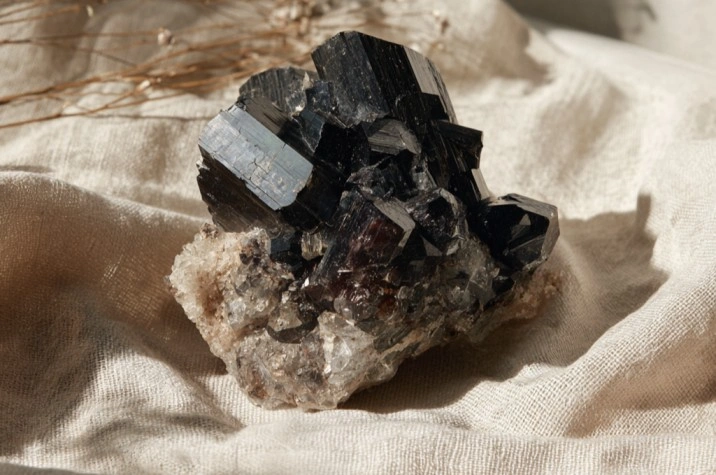
The Witch's Guide to Black Tourmaline
Black tourmaline is the most widely used protective stone in modern witchcraft. A complete profile: mineralogy, magical correspondences, threshold and grounding work, the selenite pairing, the EMF claim examined honestly, and sourcing guidance.
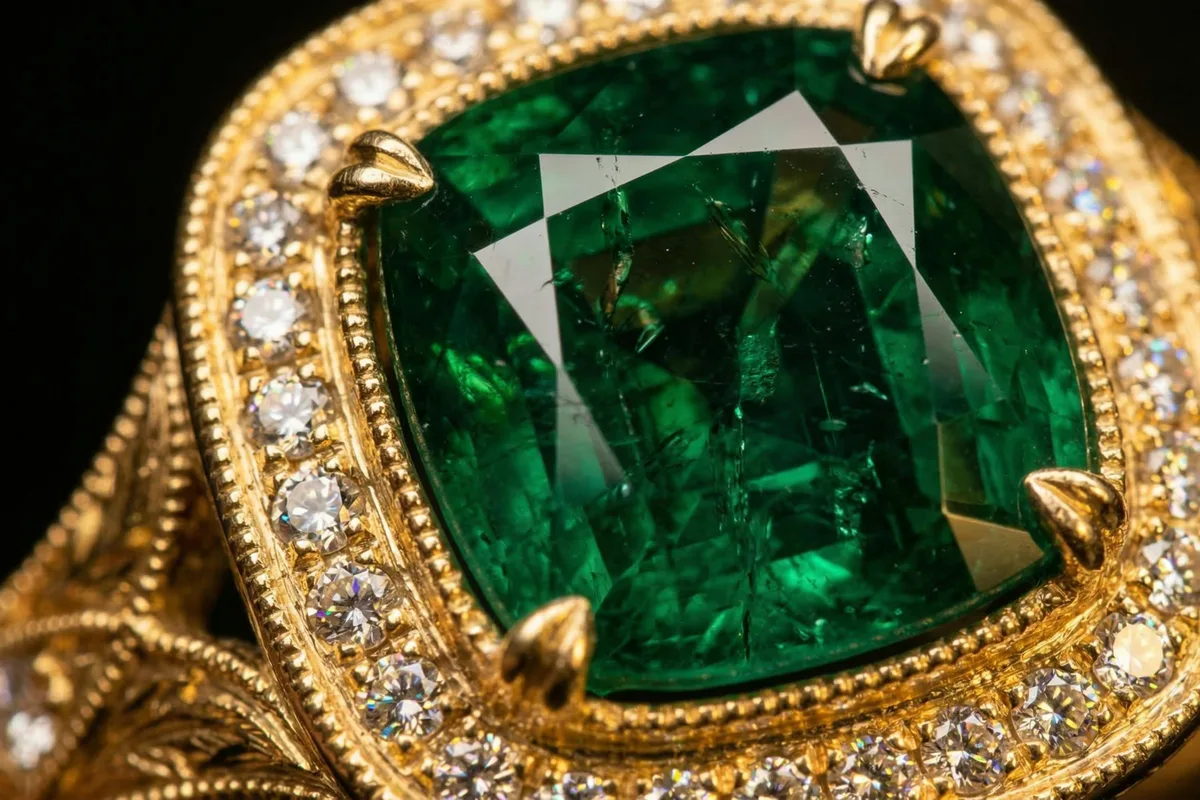
Emeralds: Stones of Rebirth, Protection, and Divine Vision
The May birthstone has been mined for five thousand years, carried by pharaohs and alchemists, and set above all other green stones across nearly every culture that encountered it. Here is why, and how to work with it.
Begin your practice
Grimoire is available now on Android and as a web app. Start today.