Crystals
The Witch's Guide to Black Tourmaline
Rowenna
Solitary witch and the founder of Grimoire. Built the app she couldn't find anywhere else. Writes about the craft with primary sources, honest lineage notes, and a low tolerance for vague correspondences. Based in the UK with more herbs than shelf space.
· 8 min read
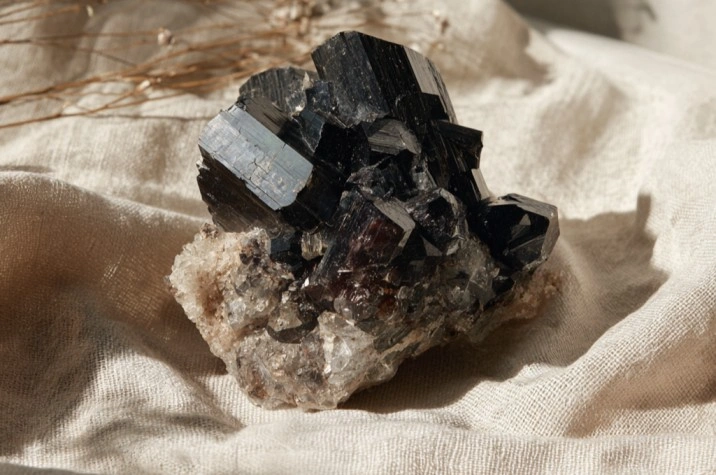
This piece publishes on the day of the Pisces lunar eclipse: an energetically volatile threshold if the astrological tradition means anything, and exactly the kind of day when the grounding and protective stone teaching is most practically useful. Eclipse Season 2026 covers the eclipse itself. This piece covers the stone you want in your hand.
Black tourmaline is the most widely used protective crystal in modern witchcraft. It sits at more thresholds, fills more pouches, and features in more protection workings than any other stone. This is a full profile: what it is, what it is genuinely suited for, what the modern practice gets right, and what one specific popular claim gets wrong.
The stone itself
Black tourmaline's mineralogical name is schorl: a word that comes, unglamorously, from a German village. The mines around Zschorlau in Saxony produced significant amounts of the stone alongside tin, and local miners called the black mineral "Schörl" long before formal geological description caught up with the name. It stuck.
Schorl is a sodium iron aluminium borosilicate, and it is the most abundant variety of the tourmaline mineral group. Where verdelite is the green tourmaline and rubellite the red or pink, schorl is the black: the common one, the one that forms in long, striated prismatic columns in granitic pegmatites and metamorphic rock across the world. It is hard (7 to 7.5 on the Mohs scale), opaque, and recognisable by those vertical striations running the length of the crystal face, as though scored by a fine blade.
Tourmaline has a genuine and documented physical property worth knowing: it is both piezoelectric and pyroelectric, generating a small electrical charge when placed under pressure or heated. 18th-century Dutch traders called it aschentrekker (ash-drawer) because a heated tourmaline crystal would attract and then repel ash due to this charge. This property is real. It is also the partial basis for a popular modern claim about the stone that requires a careful look, addressed below.
The tradition, and when this stone entered it
The honest history first. Black tourmaline's dominant position in modern witchcraft as the protective stone is a 20th-century development, concentrated in the 1980s and 90s North American crystal practice that shaped the contemporary spiritual marketplace. Pre-modern European protective-stone work reached for different materials: jet, the fossilised wood found along the Yorkshire coast and used in protective jewellery since the Bronze Age; obsidian, the volcanic glass with sharp edges and a long history in ritual use; holed flint (hag stones) whose natural aperture was considered a window for protective sight; and iron, the metal most widely credited with warding off malevolent spirits in the folk tradition. The Witch's Guide to Hag-Stones covers the older protective-object tradition in more depth.
Black tourmaline was known to European mineralogy from at least the 18th century, but it was not a primary material in folk protective practice. Its current position in the craft arrived through the modern crystal healing movement and has been thoroughly absorbed into witchcraft practice over the last four decades. That absorption is now so complete that it is effectively traditional (practices become traditional through use, not age) but knowing the timeline is part of working with any material honestly.
Magical correspondences
Black tourmaline is a Saturn stone. The planet of boundaries, structure, restriction, and the deliberate marking of what belongs inside and what stays out: Saturn's domain maps precisely onto the stone's primary uses. Grounding, protection, and threshold-guarding all fall under the same principle: the clear and intentional maintenance of a boundary.
Element: Earth. Direction: North. Chakra correspondence: the root, the base of the spine, the body's connection to the ground beneath it. Working with black tourmaline in meditation typically involves holding the stone and directing attention downward: into the base of the body, into the floor, into the earth below the building. That deliberate downward direction is what grounding means in practice, and this stone supports it reliably.
Its powers, as modern crystal practice frames them: grounding excess or scattered energy, psychic protection, shielding the body's energetic field from intrusive or harmful influences, guarding thresholds, and neutralising what practitioners call negative energy: a term that covers a wide range of specific intentions, from the residue of a difficult event in a space to the influence of a draining person. The stone benefits from regular cleansing when used for absorption work, for the same reason a cloth benefits from washing: the point of using it is that it takes on what you want removed.
Working with black tourmaline
Threshold placement. The most standard protective working in modern witchcraft: one piece of black tourmaline at each exterior door, and pieces at windows that feel energetically open or troubled. The stone is placed with clear intention (spoken aloud, or held with a specific stated purpose) and left in position. This is a long-running, low-maintenance working. Set it, state its purpose, and cleanse the pieces monthly.
The selenite pairing. Black tourmaline and selenite are the most common crystal pair in modern practice, and the pairing has practical logic behind it. Black tourmaline absorbs and grounds; selenite raises energy, clears, and recharges. Placed together (selenite beside or above the tourmaline) the selenite continuously cleanses the tourmaline of what it accumulates, extending the effective working life of the protection placement without requiring as frequent manual cleansing. This is the pairing most practitioners discover through experience; it is worth building in from the start.
Grounding practice. Hold a piece of black tourmaline in both hands and direct attention to the base of the spine, the soles of the feet, and the ground below you. Breathe slowly. The practice is simple and it works in the way that any deliberate, embodied attention to physical sensation works: by anchoring the nervous system. Whether the stone participates beyond being a useful focal object is a question each practitioner settles for themselves through use.
Circle and ritual work. Placed at the four cardinal directions of a ritual space, black tourmaline marks and holds the boundary of the working. Combined with the opening and closing of a circle, it is a straightforward protective structure for practice.
Cleansing and charging
Black tourmaline is one of the most robust crystals in the collection for cleansing, which matters because the logic of its primary use is that it accumulates what it absorbs.
Salt will not damage it; bury pieces in dry salt or a salt bowl overnight. Water will not damage it; it can be rinsed under running water or left in a bowl of water to cleanse (unlike selenite, which dissolves, or malachite, which is toxic when wet). Prolonged sunlight will not fade it; unlike amethyst, rose quartz, or citrine, schorl's colour is not photosensitive. Smoke, moonlight, sound, and earth burial all work as they do for any stone.
How often to cleanse depends on what the stone is being asked to do. Pieces used at high-traffic thresholds or carried through draining environments benefit from monthly cleansing at minimum, and more frequently if the work has been heavy. A tourmaline used purely as altar decoration needs far less attention.
On the EMF protection claim
The claim that black tourmaline protects against electromagnetic fields from phones, routers, and other devices is widely repeated and deserves a direct response. The reasoning behind it draws on tourmaline's genuine piezoelectric property: the stone does generate a small electrical charge under pressure or heat. From this, the inference is drawn that tourmaline generates a protective field that blocks or neutralises device EMF.
This claim is not supported by scientific evidence. Tourmaline's piezoelectric effect is real but tiny (on the order of millivolts) and operates through entirely different physics from radio-frequency electromagnetic fields. A crystal sitting near a Wi-Fi router does not generate a field measurable against the router's output. The stones do not absorb, block, or neutralise EMF from electronic devices in any experimentally measurable way.
A practitioner can choose to work with black tourmaline as a symbolic or energetic protection against the ambient intensity of a heavily electronic environment; that intention is coherent within a magical framework. The claim that the stone physically blocks measurable radiation is not coherent with what the evidence shows. These are different things, and both deserve honest naming.
Sourcing
Brazil produces the largest volume of black tourmaline on the market, primarily from Minas Gerais. Brazilian schorl is widely available and generally affordable. Madagascar produces significant quantities, often of higher visual quality. Pakistan and Afghanistan (the Gilgit-Baltistan region and Nuristan province respectively) produce excellent crystalline specimens, but both are conflict-affected areas where ethical sourcing requires specific attention: ask suppliers about origin traceability, and where possible buy from dealers who can account for the supply chain. Five Crystals Every Witch Should Own covers ethical sourcing principles for the collection more broadly.
For protective use at thresholds, raw or tumbled pieces are equally effective; the form does not change the working. Spend the premium on ethical sourcing rather than on aesthetics.
Three workings
A home protection placement. Cleanse one piece of black tourmaline for each exterior door of your home. Hold each piece in both hands and state its purpose aloud, specifically: not "protect my home" but "guard this threshold against what does not belong here and hold what does." Place the piece at or near the door: on the lintel, inside the doorframe, or under a doormat. Cleanse the pieces monthly. Renew the intention when you cleanse.
A grounding breath. Sit with your feet flat on the floor and hold a piece of black tourmaline in each hand. Breathe in slowly; as you breathe out, direct attention to the soles of your feet and imagine the out-breath moving down through the floor and into the earth below the building. Repeat for five slow breaths. This takes under three minutes and addresses the specific problem of energetic scatter: the diffuse, unanchored feeling that follows overstimulation, difficult conversations, or eclipse-season intensity.
The selenite pair. Place a piece of selenite beside or above your threshold tourmaline. The selenite does not need any special positioning relative to the tourmaline; proximity is sufficient. State clearly what each is for: the tourmaline holds and grounds what comes through, the selenite keeps the tourmaline clear. Check both pieces monthly, rinse the tourmaline, and leave the selenite to continue its work undisturbed. For why selenite should never be rinsed, see The Witch's Guide to Selenite.
Common questions
Does black tourmaline need to be charged as well as cleansed? Cleansing (removing what the stone has accumulated) is the priority for a stone used in active protection work. Charging, in the sense of directing specific energy into the stone, is secondary. The most effective "charge" for a protection stone is a clear, stated intention renewed at each cleansing. Moonlight charging is pleasant and consistent with the lunar associations of protection work; it is not strictly necessary if the intention work is done.
Can I use black tourmaline for cleansing a space? Black tourmaline grounds and bounds; it does not cleanse in the way that smoke, salt, or selenite does. Use it to hold a boundary after cleansing rather than as the cleansing agent itself. The sequence is: cleanse the space first with smoke or sound, then place the tourmaline to hold what the cleansing established. For the full cleansing methodology, see How to Cleanse and Charge Your Crystals.
Is a larger piece more effective than a small one? Within a magical framework, a small piece used with clear and repeated intention is more effective than a large piece used carelessly. Size is less important than consistency of practice.
Sources
Mineralogical data from standard references: tourmaline group properties, piezoelectric characteristics, and Mohs hardness are established geological fact. For the schorl name etymology: the village of Zschorlau, Saxony, is the documented origin in the mineralogical record. For the pre-modern protective stone tradition, and the historical use of jet, obsidian, and iron in European folk protective practice: Brian Hoggard, Magical House Protection: The Archaeology of Counter-Witchcraft (Berghahn Books, 2019), and the wider British Museum collections of Iron Age and Romano-British protective objects. The EMF protection claim is assessed against the available scientific literature on piezoelectric output and radio-frequency shielding.
Grimoire is a digital practice companion for the solitary witch: a herbology compendium, crystal guide, sacred calendar, daily tarot, and private grimoire journal, all in one place. Now available on Android.
More from the Blog
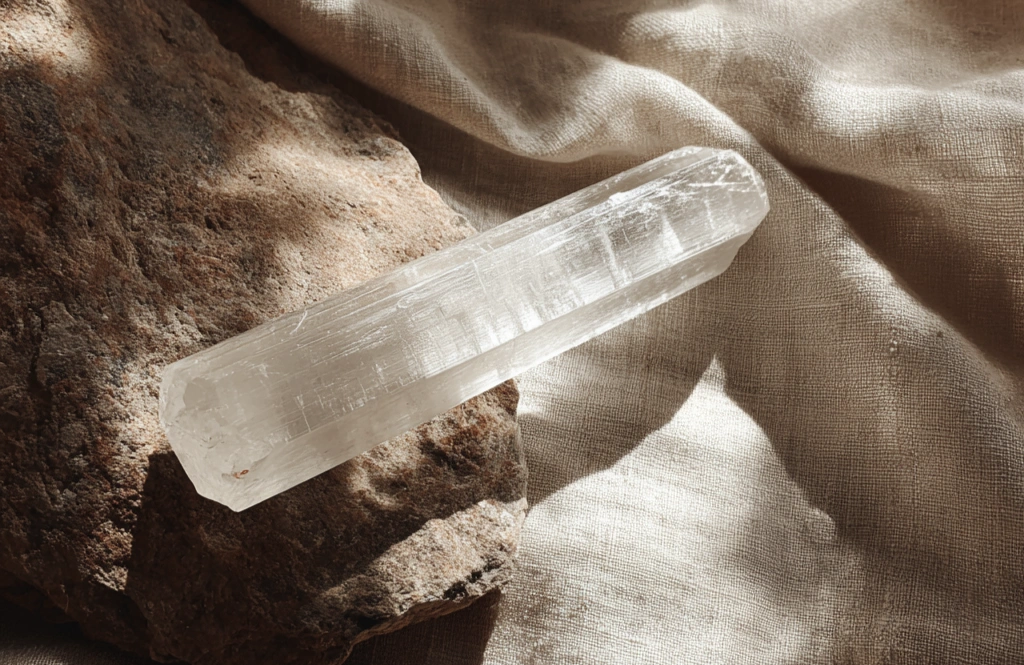
The Witch's Guide to Selenite: Cleansing, Clarity and Practice
Selenite is the cleansing stone of modern witchcraft. The mineralogy, the historical record, why it cannot get wet, and how to work with it accurately as a solitary practitioner.
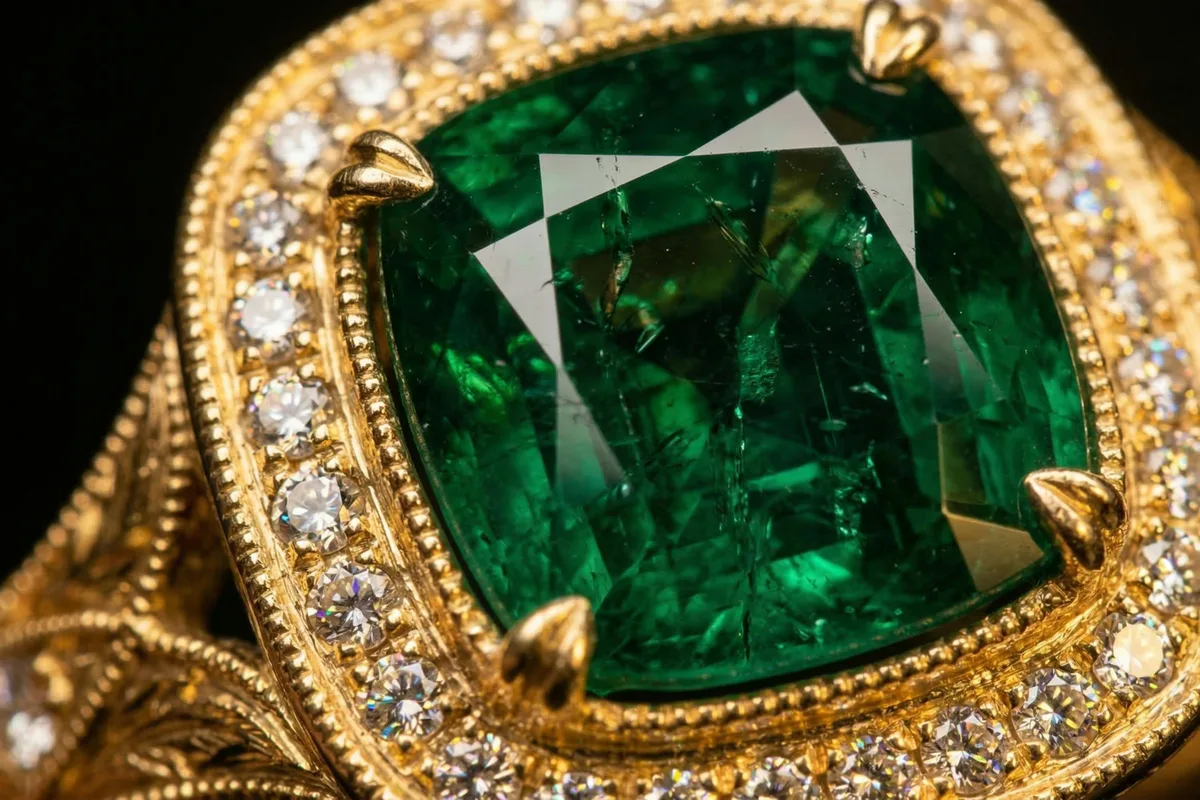
Emeralds: Stones of Rebirth, Protection, and Divine Vision
The May birthstone has been mined for five thousand years, carried by pharaohs and alchemists, and set above all other green stones across nearly every culture that encountered it. Here is why, and how to work with it.
Begin your practice
Grimoire is available now on Android and as a web app. Start today.