Herbology
The Witch's Guide to Rosemary
Rowenna
Solitary witch and the founder of Grimoire. Built the app she couldn't find anywhere else. Writes about the craft with primary sources, honest lineage notes, and a low tolerance for vague correspondences. Based in the UK with more herbs than shelf space.
· 8 min read
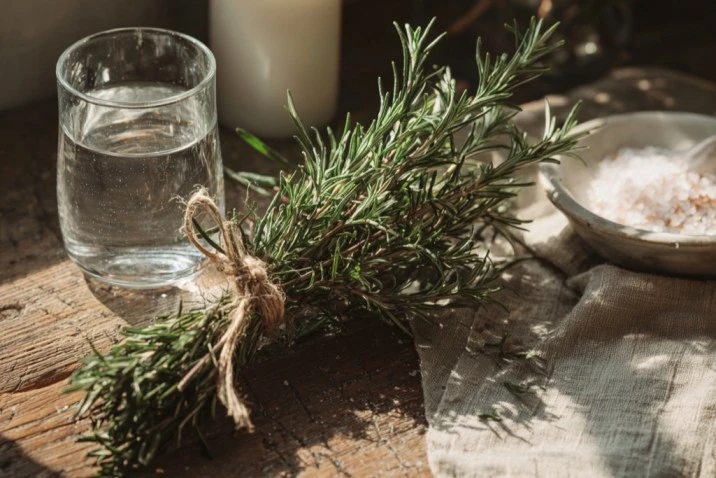
Rosemary appears at the beginning of a life and at its end. For centuries in English tradition it was braided into wedding garlands and packed into mourning wreaths; it accompanied a bride to her new household and it was cast by the handful into a grave. That double presence — fidelity and remembrance, the beginning of a bond and the close of one — tells you almost everything you need to know about this herb before you ever light it or taste it.
This is the third single-herb deep-dive in the series, continuing the pattern of The Witch's Guide to Lavender and The Witch's Guide to Mugwort. Rosemary is the most quietly ubiquitous witchcraft herb in the Western tradition — the one in everyone's kitchen, on every Mediterranean hillside, recommended in every modern cleansing guide. It deserves a proper introduction rather than another list of uses without context.
The plant itself
Rosemary's formal name has recently shifted: what most botanical references still list as Rosmarinus officinalis was reclassified into the Salvia genus around 2017, making it officially Salvia rosmarinus. For practical purposes — growing, harvesting, using — the plant is unchanged; it is the same shrub it has always been. The old name is worth knowing because it is still in wide use, and because its etymology is one of the most beautiful in the herbal tradition. Ros maris: dew of the sea. The plant is native to the rocky coastal cliffs of the Mediterranean, where ocean moisture condenses overnight on its needle-like leaves — the sea's gift to a dry hillside.
Rosemary belongs to the Lamiaceae, the mint family, and shares that family's characteristic aromatic intensity. The needle-like leaves release a smell somewhere between pine, camphor, and something cleaner — the volatile oils (cineole, camphor, borneol) that give it its scent are also what make it medicinally and practically useful. It is an evergreen perennial shrub, drought-tolerant once established, and reliably productive in a UK garden through most of the year. It asks for good drainage, a reasonable amount of sun, and relatively little water — which makes it one of the most forgiving herbs a British practitioner can grow.
Rosemary in folklore
The Romans burned rosemary in temples and homes as a purifying fumigant, used it in household religious practice, and Pliny the Elder noted its domestic protective uses in the first century CE. This is the oldest layer of the Western magical tradition around the herb, and it runs straight through the following two thousand years without significant break.
By the medieval period rosemary had accumulated several distinct associations that ran in parallel. It was a herb of fidelity — planted at doorways and said to flourish where a strong woman governed the household ("where rosemary grows, the mistress is master," as the old saying had it, which gives it a specific domestic-power association that is often overlooked). It was a herb of memory, which made it appropriate at both weddings (the new bride remembering her family, the couple remembering their vows) and funerals (the mourners remembering the dead). The connection between scent and memory that modern neuroscience confirms — the olfactory pathway's directness to the hippocampus — was observed empirically long before it was explained scientifically.
The most famous English literary encounter with rosemary's memory association is Ophelia's in Hamlet: "There's rosemary, that's for remembrance; pray, love, remember." Shakespeare did not invent the correspondence — he reached for it because his audience would already have understood it. The line works because the association was already common knowledge in Elizabethan England. But the scene also places rosemary precisely: Ophelia is distributing herbs to the court in the madness scene following her father's murder. The herb of memory appears at the moment of a grief that cannot be integrated. That is a specific and deliberate choice.
In Mediterranean folk tradition the herb's protective function at thresholds was particularly strong. Rosemary at the doorstep, at the gate, around the perimeter of a garden: the sea-born plant marking and holding the boundary of the domestic world against what lies outside it.
Magical correspondences
Rosemary is most often given to the Sun or to Mars — sources vary, and the honest position is that it works for both. As a Sun herb it carries associations with clarity, vitality, protection against harm, and the illuminating quality of mind that cuts through confusion. As a Mars herb it carries courage, action, fire, and the protective function that comes from strength rather than from secrecy. In practice, the distinction matters less than the intention: what are you asking the herb to do?
For the correspondences at a glance, see the Rosemary reference entry in the Apothecary; what follows is the working detail behind them.
Element: Fire. Gender: Masculine in the traditional framework. Its powers, as the folk tradition frames them: protection, memory, mental clarity and focus, fidelity, purification of spaces and objects, healing (particularly relevant to cognitive and nervous-system complaints in the folk-medicine tradition), and love in the context of commitment rather than attraction — the herb of the kept promise rather than the new desire.
Rosemary as smoke-cleanser — and why it is not a substitute
Most modern content that recommends rosemary for smoke-cleansing frames it as an alternative to white sage — a workaround for the cultural-appropriation question around white sage's Indigenous American sacred use. The framing is not wrong, but it misses something important.
Rosemary smoke has its own independent tradition of cleansing use in European folk practice, stretching back to the Roman period and running continuously through the medieval and early modern eras. Sickrooms were fumigated with rosemary. Churches and homes were purified with it. Protective bundles of it were burned at thresholds. This was not a borrowing from another culture's practice — it was the European practice, developed independently, with its own logic and lineage.
White sage (Salvia apiana) is a different plant from a different tradition, sacred to specific Indigenous American communities of the southwestern United States and California, whose concerns about the mass commercial harvesting and casual appropriation of this plant are well-documented and legitimate. The Herbs of Mabon piece covers this distinction directly in the garden sage section. The point here is related but different: rosemary smoke-cleansing is not a compromise or a second-best. It is the tradition that was always there in European practice, temporarily displaced by the mid-20th century import of white sage aesthetics into mainstream witchcraft. Working with rosemary smoke is not settling. It is returning to something that belongs to this lineage.
To burn rosemary for cleansing: dry a large handful of sprigs, tie them tightly with cotton twine so they will smoulder rather than flare, light the tip and blow it out. Walk the boundaries of the space with the smoke, beginning at the centre and working outward to the doors and windows, speaking your intention clearly. The smoke is aromatic and resinous — quite different from white sage's drier, more bitter character, and well suited to domestic spaces because it does not overwhelm.
Working with rosemary
Kitchen magic. Rosemary in cooking is the most immediate and integrated form of herb work available to a practitioner with access to a kitchen. Cook it into a broth with an intention for clarity. Add it to a roast with an intention for protection and warmth for the household. Eat the food mindfully, with attention to the herb's presence and its purpose. The Spell Crafting for Beginners principle applies here: the intention is the work, and the herb is its material.
A study bundle. Three fresh sprigs of rosemary tied with yellow or white thread, set on the desk beside work that requires concentrated thought. Change the bundle when it dries. The evidence base for rosemary's cognitive effects — primarily cineole's documented effect on acetylcholine activity — is modest but real; the folk practice and the modern finding point the same way, for once.
A bath herb. A handful of fresh or dried rosemary tied in muslin and suspended from the bath tap, or added directly to a hot bath, releases the volatile oils into the water. A rosemary bath before significant work — a reading, a ritual, a difficult conversation — is a cleansing and clarifying practice with both folk backing and sensory logic. The warmth of the water opens the skin; the camphor and cineole enter through the steam.
A memory working. Carry a sprig of fresh rosemary in your pocket before an experience you want to remember clearly — an important conversation, a place you are visiting for the last time, a day that matters. The scent, encountered later in a dried bundle or a sachet, will carry the memory back with unusual precision. This is one of the oldest uses of the herb and one of the most reliably true.
A threshold protection. A growing rosemary plant at the front door or gate is the simplest protective working the herb supports, and one of the most traditional. If outdoor planting is not possible, a pot on the nearest windowsill carries the same intention. The herb does the work it has always done — marking, holding, and protecting the boundary between inside and out.
Sourcing and growing
Rosemary is one of the most rewarding herbs to grow in the UK. It tolerates exposed positions, handles drought once established, and provides a harvestable quantity of herb within one to two growing seasons from a decent-sized young plant. Choose a sunny spot with good drainage — it will rot in waterlogged soil far more readily than it will in dry conditions. Varieties worth growing: 'Miss Jessop's Upright' for a reliable upright form; 'Tuscan Blue' for slightly broader leaves and excellent flavour; prostrate varieties for ground cover but are less productive for harvesting.
If you are buying rather than growing, rosemary is widely available fresh from UK supermarkets and grocers year-round, and from herb specialists in dried bundles. Ethical sourcing is less of a concern here than for rarer imports — rosemary is commercially grown across southern Europe and requires no wild harvesting. Organic where possible, for culinary use especially.
Common questions
Is rosemary safe in pregnancy? Rosemary in culinary quantities — cooking with it normally — is generally considered safe in pregnancy. Concentrated preparations (strong medicinal infusions, essential oil applied topically in large amounts) are traditionally considered emmenagogic and are best avoided. Normal cooking, a bath sachet, or smoke-cleansing do not present the same concern.
Why do some correspondences give rosemary to the Sun and others to Mars? Both attributions have lineage in the Western magical tradition, and the herb's character genuinely spans both: the Sun for clarity, vitality, and light; Mars for protection through strength and courage. Work with the attribution that fits the working rather than trying to resolve the contradiction.
Can I burn fresh rosemary or does it need to be dry? Fresh rosemary will smoke but not smoulder — it needs to be lit repeatedly and is harder to work with as a cleansing bundle. Dry it for two to three weeks in a warm, dark, airy spot before making a smoke bundle. The dried herb smoulders more consistently and the scent is more concentrated.
Sources
Pliny the Elder, Naturalis Historia (77–79 CE) — for the Roman household uses. The wedding and funeral folk traditions are documented across English historical and folklographic record from the medieval period onward; a useful modern summary appears in Maud Grieve, A Modern Herbal (1931), which draws on the earlier tradition. The reclassification of Rosmarinus officinalis to Salvia rosmarinus is established in the current botanical literature (2017). For the white sage and Indigenous American context: the cultural-attribution framing developed in the Herbs of Mabon sage section stands here.
Grimoire is a digital practice companion for the solitary witch — a herbology compendium, sacred calendar, daily tarot, private grimoire journal, and spell builder, all in one place. Now available on Android.
More from the Blog
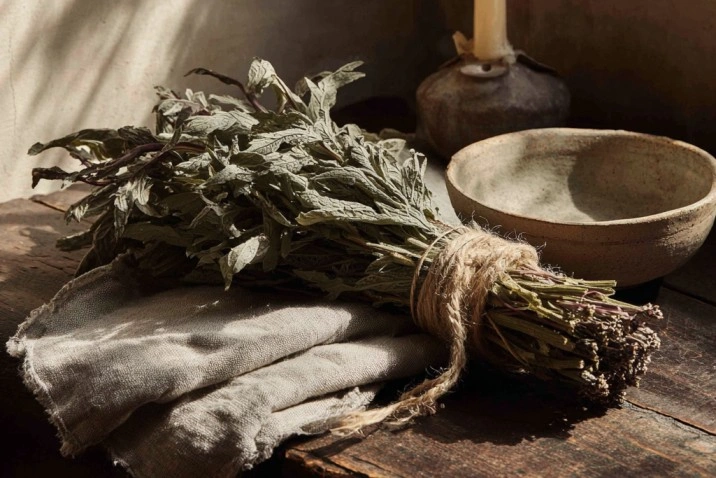
The Witch's Guide to Mugwort
Mugwort is the witch's dreaming herb: the first plant of the Nine Herbs Charm and the most-named herb in this blog. A full profile: botany, folklore, magical correspondences, safe practical use, and three simple workings.
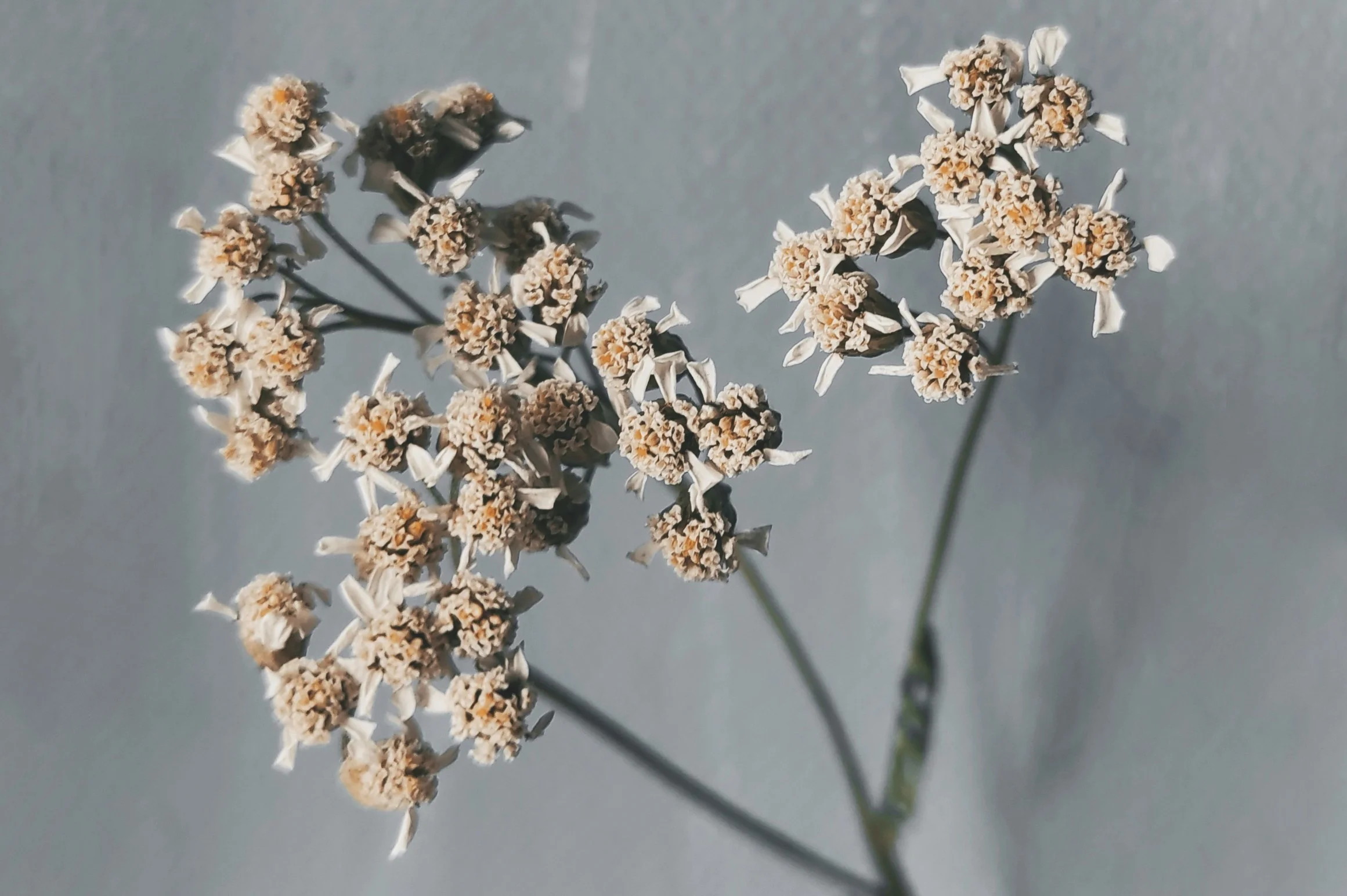
The Witch's Guide to Yarrow
Yarrow has been named in almost every Grimoire herb piece — the wound-herb of Achilles, the I Ching's divinatory stalk, the English love-dream herb. A complete profile: botany, folklore across three distinct traditions, magical correspondences, practical use, and three simple workings.
Begin your practice
Grimoire is available now on Android and as a web app. Start today.