Divination
The Major Arcana for Beginners
Rowenna
Solitary witch and the founder of Grimoire. Built the app she couldn't find anywhere else. Writes about the craft with primary sources, honest lineage notes, and a low tolerance for vague correspondences. Based in the UK with more herbs than shelf space.
· 11 min read
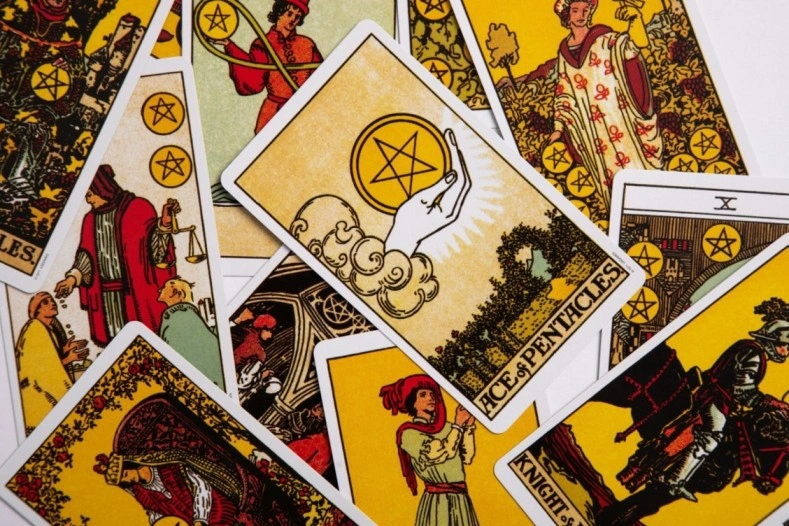
A standard Tarot deck contains 78 cards. 56 of them (the Minor Arcana) are organised into four suits and deal, broadly, with the textures of daily life. The other 22 are different in kind. They carry the deck's deepest archetypal weight, the strongest symbolic charge, and in most readings the most significant messages. When a Major Arcana card appears, it is usually worth pausing. When several appear in one spread, the reading is telling you something about the structure of a situation rather than just its surface.
Most beginner Tarot content treats all 78 cards as a single list to memorise. This piece treats the Major Arcana as the foundation they actually are (the structure everything else hangs from) and gives them the space to be understood properly. If you are building a daily practice, see Daily Tarot Practice for how to use this knowledge consistently over time.
What the Major Arcana are
The word "arcana" is Latin for secrets or mysteries. The Major Arcana are the greater mysteries: 22 cards numbered 0 through 21 that represent archetypal forces, life experiences, and inner states that recur across every human life regardless of culture or era. The Fool, Death, The Tower, The Star: these are not predictions. They are categories of experience. Every reader will encounter each of them, in circumstances as different as any two lives.
The Major Arcana as we know them took their modern form largely through the Rider-Waite-Smith deck of 1909, designed by Arthur Edward Waite and illustrated by Pamela Colman Smith for the Rider Company. The fully illustrated Minor Arcana, the specific imagery on each card, and much of the interpretive framework modern readers use all come from this deck, which drew on the Hermetic and Kabbalistic traditions of the Hermetic Order of the Golden Dawn. Earlier decks (the 15th-century Visconti-Sforza, the French Tarot de Marseille) had the 22 trumps, but with different imagery and no standardised esoteric system attached. The Tarot began as a card game. The esoteric tradition arrived in the 18th century and reshaped it thoroughly. Both parts of that history are real.
The Fool's Journey
The most useful way to learn the Major Arcana is not by memorising a list. It is by following the story.
The Fool's Journey is the name given to the narrative arc implicit in the ordering of the 22 cards. Card 0, The Fool, is pure beginningless potential: a figure stepping off a cliff into the unknown with nothing but a small pack and no idea what comes next. Cards 1 through 21 are what comes next: the full range of human experience, in a sequence that moves from worldly mastery and social formation (The Magician through The Chariot), through the inward turn and encounter with the shadow (Strength through The Devil), through crisis and transformation (The Tower, The Star, The Moon, The Sun), and finally to completion and integration (Judgement, The World).
The Fool does not arrive at The World having escaped difficulty. The Fool arrives having moved through all of it. That is the arc, and it is why Death, The Tower, and The Devil (the cards beginners dread) are not interruptions of a good journey but necessary stages of one. No Hanged Man, no shift in perspective. No Tower, no rebuilt ground. The story does not work without them.
Use this narrative when a card confuses you. Ask where it sits in the arc, what came before it, and what it is making possible.
All 22 cards
0. The Fool. Pure potential and the willingness to begin without guarantees: the step before experience rather than after it. Reversed: recklessness without awareness, or the leap perpetually deferred out of fear.
I. The Magician. Will, skill, and the full toolkit assembled: everything needed is present, and the question is whether you will use it. Reversed: potential untapped, manipulation, or the tools present but the confidence absent.
II. The High Priestess. Deep intuition and the knowledge that cannot be spoken yet: the inner voice that knows before the mind catches up. Reversed: the internal voice silenced or disbelieved, secrets hidden in ways that cost more than disclosure would.
III. The Empress. Abundance, creative fertility, the body and the earth, the nurturing that sustains growth; this is the card of things coming fully into being. Reversed: creative block, depletion, or the nurturing that smothers rather than sustains.
IV. The Emperor. Structure, authority, and the rules that make sustained effort possible: the container that holds without crushing. Reversed: rigidity, authority exercised badly, or structures that have outlived their purpose.
V. The Hierophant. Tradition, institution, and the wisdom transmitted through established channels: the accumulated knowledge of what has worked before. Reversed: dogma that has calcified, a call to find your own authority outside the institution, or received wisdom that no longer applies.
VI. The Lovers. A significant choice, alignment of values, partnership at its most equal; this card is less about romance specifically than about decisions that require you to know what you actually stand for. Reversed: misalignment of values, a choice avoided, or two commitments that cannot both be kept.
VII. The Chariot. Determined forward movement, the willpower that gets you through opposition: not ease, but the drive that carries you when ease is unavailable. Reversed: force applied without direction, aggression where strategy was needed, or the battle that cannot be won by pushing harder.
VIII. Strength. Courage that does not roar: the quiet mastery of what frightens you, approached with patience rather than force. Reversed: self-doubt, repressed power, or force where gentleness was the thing that would have worked. (Note: some decks number Strength as XI and Justice as VIII, following the pre-Rider-Waite Marseille tradition. The meanings are unchanged.)
IX. The Hermit. Solitary wisdom and the necessary inward turn: the light you carry in the dark, earned by going alone into something difficult. Reversed: isolation that has become retreat rather than reflection, or wisdom earned but not yet integrated into ordinary life.
X. The Wheel of Fortune. The turn: fate in motion, the forces outside your control that are moving anyway. This card asks not whether the wheel turns but how you meet the turning. Reversed: resistance to the inevitable, or a run of ill fortune held longer than necessary by refusing to adapt.
XI. Justice. Consequence and accountability, the outcome that is proportionate to the cause: not punishment or reward, but the honest reckoning of what is. Reversed: imbalance, a consequence avoided at growing cost, or an injustice that has not yet been addressed.
XII. The Hanged Man. Willing suspension: the pause before a shift in perspective that cannot be rushed, the sacrifice that opens a door no amount of action would have found. Reversed: the pause refused, martyrdom without transformation, or sacrifice that costs everything and gains nothing.
XIII. Death. Ending and transformation: the necessary close that is the only path to what comes next. This card almost never refers to physical death. It refers to the thing that must end for something new to be possible. Reversed: resistance to change dragging the ending out far beyond its natural completion.
XIV. Temperance. Integration, patience, and the slow alchemy of blending what seemed incompatible; the result is something neither element could have become alone. Reversed: imbalance, excess in either direction, or the rushed solution that does not hold.
XV. The Devil. The bonds you chose and can choose to release: the shadow, the addiction, the belief that the chains are heavier than they are. This card does not mean evil. It means whatever you are giving your power to. Reversed: the chains recognised and the process of release beginning, or the chains tightened precisely because they have been noticed and denial intensifies.
XVI. The Tower. The sudden structural collapse of what was built on an unstable foundation: the event that was always coming, arriving at speed. The Tower is not a pleasant card, but it is an honest one. Reversed: the collapse resisted at increasing personal cost, or the revelation approaching but not yet arrived.
XVII. The Star. Hope after the Tower: the long, quiet light that remains when the crisis has passed, the healing that asks only patience. The Star does not promise speed. It promises direction. Reversed: hopelessness or despair, the light present but not trusted or not yet visible from where the reader is standing.
XVIII. The Moon. Illusion, the unconscious surfacing, the dream-logic where familiar things cast unfamiliar shadows; things are not quite what they appear, and the feeling of the situation is not yet its meaning. Reversed: the illusion beginning to lift, confusion clearing, or a deception moving toward revelation.
XIX. The Sun. Clarity, vitality, and joy that needs no qualification: the light that shows things plainly and warmly. One of the most straightforwardly positive cards in the deck. Reversed: not a dark reading, more a temporary dimming, joy present but not fully reached or expressed yet.
XX. Judgement. The call: the moment of reckoning and summoning, the invitation to become who you have been moving toward throughout the journey. Reversed: the call heard but refused, self-doubt that prevents the rise, or the evaluation avoided because the verdict is feared.
XXI. The World. Completion, integration, the full cycle arrived at and consciously held: the Fool's Journey complete. Reversed: an ending not quite reached, a cycle not fully closed, one more thing needed before the completion can be claimed.
Why the Majors matter differently in a reading
In practice, the distinction between Major and Minor Arcana is one of register. Minor Arcana cards tend to describe the texture of daily life: the mood of a week, the dynamics of a situation, the immediate emotional weather. When the Five of Cups appears, something has been lost and the grief is real. When the Three of Pentacles appears, collaborative work is going well. These are textures.
When a Major Arcana card appears, the reading shifts register. The Tower is not describing this week's difficulty. It is describing a structural event. Justice is not describing today's fairness. It is describing a reckoning. The Majors arrive when something of deeper or longer duration is in motion: a theme that will recur, a pattern that runs beneath the surface events.
A spread with many Major Arcana cards (five or more in a ten-card reading, for instance) is telling you that you are in a period of significant archetypal pressure. Several of the deepest patterns of a life are active simultaneously. This is not necessarily bad; it is simply large. A spread with few or no Majors is not shallow. It is attending to the everyday, which is where most of life is lived.
How to actually learn them
The mistake most beginners make is trying to memorise meaning before building relationship. A card meaning learned from a list and a card meaning earned from a hundred encounters with it in readings are different kinds of knowledge, and only the second kind is useful at the table.
The most reliable method is the one that takes the longest: one card a day. Draw a single Major Arcana card each morning (working through the deck in order is fine, or drawing randomly) sit with it for a few minutes before reading anything about it, and note your first impression. Then read. Then carry the card's theme through the day as a loose frame. What in today looked like The Hanged Man? What looked like The Hermit? After a month of this, the 22 cards will have become 22 lived experiences rather than 22 definitions.
For lunar Tarot pulls and working the Major Arcana alongside the moon cycle, see Working with the Moon. For crystal pairings with Major Arcana work, Five Crystals Every Witch Should Own covers rose quartz and the divination pairing.
The second common mistake is forcing the textbook meaning onto a card regardless of context. The textbook meaning is the starting point, not the endpoint. A well-practised reader holds the card's core theme and lets the specific reading (the question, the position, the cards around it) shape how that theme expresses itself. The Magician in a position about obstacles means something different from The Magician in a position about resources, even though it is the same card. The discipline of Tarot is learning to hold that flexibility without losing the card's essential character.
Reading dynamics
Major-heavy spreads. When the Majors dominate, slow down. The reading is operating at a structural level; the detail questions ("will this specific thing happen this week") are probably not the right questions to ask of a spread like that. Ask instead what the combination of archetypes tells you about the deeper pattern.
The Tower moment. The Tower in a reading is almost never welcome and almost never wrong. The question to ask is not "will this happen" (if the foundations are unsound, it is already happening) but "what is the Tower clearing ground for." Every Tower card is followed eventually by The Star. That is the sequence and it holds.
Reversals. Whether you read reversed cards is a personal practice choice, not a doctrinal one. Many experienced readers do not use them at all, preferring to let position in the spread and surrounding cards carry the shading. If you do use reversals, the most useful frame is not "the opposite of the upright meaning" but "the energy of the card blocked, turned inward, or in the process of shifting." A reversed Death is rarely a death reversed; it is usually the ending being resisted. A reversed Star is rarely hopelessness; it is hope present but not yet reached.
Common questions
Do I need to memorise all 22 cards before I can read? No. You can read with the Major Arcana alone (a 22-card deck is entirely workable, especially for beginners) and build knowledge incrementally. Many readers spend years deepening their relationship with cards they thought they knew after the first month.
Is Death a bad card? It is a significant card. It marks a real ending, and endings are not always comfortable. But in the logic of the Fool's Journey, Death is the necessary close that precedes transformation: it sits between Temperance and The Devil in the arc, between the great integration and the confrontation with shadow. It is not punishment. It is transition.
What is the difference between the Major and Minor Arcana in practice? Register and duration. The Minors describe the texture and weather of daily life. The Majors describe the deeper patterns and structural events: the things that recur across years, not weeks. Both matter. The Majors simply require more stillness when they appear.
Should I use a specific deck? The Rider-Waite-Smith is the practical starting point for most readers, because the majority of written Tarot knowledge assumes its imagery and most other modern decks are in conversation with it. Once you are fluent, read with whatever deck speaks to you.
Sources
The interpretive tradition drawn on here is primarily the modern horoscopic and psychological Tarot tradition as synthesised in and after the Rider-Waite-Smith deck (1909). For Tarot history: the Visconti-Sforza deck is the earliest surviving illustrated Major Arcana (15th century); Antoine Court de Gébelin's Monde Primitif (1781) introduced the (historically inaccurate but enormously influential) claim that the Tarot encoded ancient Egyptian wisdom, generating the Western esoteric Tarot tradition. For ongoing practice: see Daily Tarot Practice.
Grimoire is a digital practice companion for the solitary witch: a daily tarot draw, natal chart, sacred calendar, herbology compendium, and private grimoire journal, all in one place. Now available on Android.
More from the Blog
How to Read Tea Leaves: A Beginner's Guide to Tasseography
How to read tea leaves for beginners: choosing your tea, the ritual, reading the cup, and a symbol dictionary of common shapes and what they mean.
The Minor Arcana for Beginners
The 56 cards of the Minor Arcana are the working core of practical Tarot reading — the suit that tells you not what life-theme is present but how it is showing up this week. A complete beginner's guide: the four suits and their elements, the numerical structure that applies across all 56 cards, the court cards, and how to actually read them.
Begin your practice
Grimoire is available now on Android and as a web app. Start today.