History
Cunning Folk: The Working Witches of English History
Rowenna
Solitary witch and the founder of Grimoire. Built the app she couldn't find anywhere else. Writes about the craft with primary sources, honest lineage notes, and a low tolerance for vague correspondences. Based in the UK with more herbs than shelf space.
· 10 min read
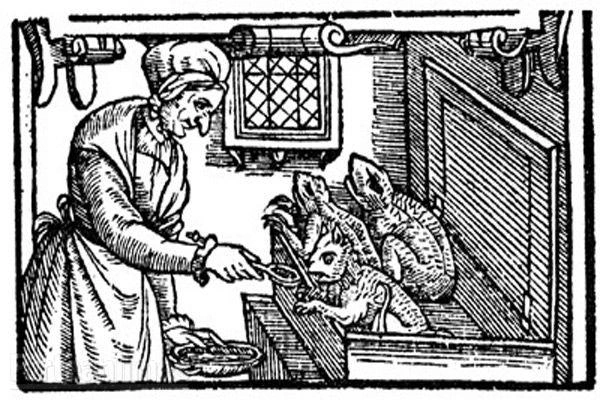
In 1566, a Somerset man named John Walsh was examined by a Justice of the Peace about his magical practice. He described consulting fairies at noon and midnight, using a black book to identify bewitched people, and employing a familiar spirit to help him locate stolen goods and diagnose illness. His neighbours had been coming to him for years. He was not prosecuted as a witch. He was examined as what he was: a cunning man, a professional practitioner of folk magic, doing his trade.
Walsh's examination is one of the earliest detailed records of its kind, but the figure he represents was not unusual. For most of the last five hundred years of English history, when an ordinary person believed they were bewitched, lost something valuable, needed a charm for protection, or wanted to know who had wronged them, they went to the cunning man or cunning woman of their parish. These were paid professional folk-magicians: not hidden, not marginal, but a recognised and widely-used feature of English community life from at least the later medieval period through the Victorian era. They had a name, and that name was not "witch." The distinction was deliberate, and it matters enormously to understanding what modern witchcraft actually inherits and from where.
The name and what it meant
"Cunning" derives from the Old English cunnan: to know, to be skilled. The same root gives us "ken." A cunning man or cunning woman was, literally, a knowing person: someone who possessed specialised knowledge and could apply it in the service of others. The word carried no inherent moral charge. It simply described expertise.
Their clients came to them with practical problems. The most common was unwitching: a person or their livestock were believed to be suffering from a malevolent spell, and the cunning person's job was to diagnose the curse, identify the witch responsible, and break the working. This counter-magical function was their primary trade. They also found lost and stolen property (typically through scrying, using a mirror, a bowl of water, or a crystal) identified thieves, made protective charms for the home and for livestock, prescribed herbal and verbal remedies for illness, and provided love magic. They were, in the most precise sense, a service industry.
The historian Owen Davies, whose Popular Magic: Cunning-Folk in English History (2003) is the standard scholarly account of the tradition, has traced hundreds of named individual practitioners through court records, diaries, household accounts, and the surviving notebooks of practitioners themselves. The range is striking. James Murrell of Hadleigh, Essex (known in local tradition as the Master of Hadleigh, active through the mid-19th century) was famed for his scrying mirror. A cunning woman in early 17th-century Exeter was consulted by members of the gentry as well as labourers. The practice was not socially confined to the rural poor; it ran through every layer of English society, because the needs it addressed were universal.
What cunning folk actually did
The practices of individual cunning folk varied considerably. Some were primarily healers, working at the overlap between herbal medicine and magical remedy. Some were primarily diviners: scryers, casters of horoscopes, readers of palms and faces. A few left manuscript notebooks that give direct access to their working methods: charm texts in Latin and vernacular English, herbal recipes, instructions for making protective objects, notes on specific cases.
The written charm was central to the tradition. Cunning folk produced charms on paper or cloth (verses, divine names, symbols, sometimes fragments of scripture) that were worn on the body, buried at a threshold, placed in the roof of a house, or swallowed as medicine. The physical object mattered as much as the spoken words. This is the same logic that underlies a sachet or a crafted spell today: the intention materialised in a made object that carries the working forward in time.
Herbal knowledge was closely related but not identical. The cunning woman healer used herbs in ways that crossed the boundary between physic and magic: a remedy for a bewitched child might combine an identifiably medicinal plant with a spoken formula and a ritual of disposal. The herb traditions that run through modern pagan practice (mugwort for protection and dreaming, vervain for charms, yarrow for healing) have substantial roots here, in the practical working knowledge of people who were paid to make things better.
The scrying practices are the most directly documented, because they frequently appeared in court examinations. A typical procedure for finding stolen property involved a glass or mirror, sometimes a basin of dark water, and sometimes an assistant (often a child, whose presumed innocence was thought to make the vision clearer) who would look into the speculum and describe what appeared. The procedures were elaborate, professional, and taken seriously by the people who paid for them.
The crucial distinction: cunning folk were not witches
This is the point that most popular accounts of witchcraft history either miss or actively obscure, and it changes everything about the inheritance question.
In English popular thought from the medieval period through at least the mid-19th century, "witch" and "cunning folk" were understood as opposing categories. A witch was someone who caused harm through malevolent magic: who blighted crops, cursed livestock, brought illness to children. A cunning person was someone who detected and countered witches. The two identities were in explicit opposition. People who were accused of witchcraft sometimes tried to defend themselves by claiming to be cunning folk, precisely because the distinction between helping and harming was the whole moral question at stake.
The cunning folk did not identify as witches, did not consider their power diabolical, and were generally understood by their communities not as threats but as protections against the kind of malevolent magic that witches were believed to practise. That is a radically different social position from the one the accused of Pendle or North Berwick occupied. Those accused were caught in legal and religious machinery that largely had nothing to do with actual magical practice. The cunning folk were operating a recognised and used service in an economy of practical magic that the same society maintained entirely separately from the witch trials.
Cunning folk were occasionally prosecuted (the Elizabethan and Jacobean witchcraft statutes covered them) but the penalties were typically far lower than those for witchcraft, and the tone of most documented examinations is more regulatory than panicked. Society wanted their services. It was ambivalent about their legality. It was not trying to exterminate them.
The documentary record
We know about cunning folk in unusual detail because they left, and generated, a great deal of paper. Assize court records document prosecutions and examinations. Ecclesiastical court records show the church's attempts to regulate them. Household account books and diaries record payment to them, again, by people at every social level. And, most valuably, some cunning folk kept their own notebooks: working records of charms, recipes, client cases, and procedures that give direct access to how the practice was actually structured.
The survival of these notebooks is uneven and largely accidental. Many were destroyed, lost, or kept as curiosities rather than preserved as records. But enough survive (in county archives, in the British Library, in private collections) to establish the contours of a coherent professional tradition that was not secret, not underground, and not apologetic about what it was.
The decline
The tradition did not end with any single event. It faded across several generations, driven by converging forces that addressed, one by one, the practical needs the cunning folk had filled.
Mass elementary education (accelerated by the Education Act of 1870) changed the epistemic landscape of rural England. The arrival of accessible general practice medicine, dispensaries, and eventually the National Health Service addressed the healing demand. The repeal of the Witchcraft Acts in 1736, replaced by the Vagrancy Act's framing of magical practice as fraud rather than diabolism, gradually shifted the social and legal context without ending the trade. Davies documents examples of practising cunning folk into the early 20th century, but by then they were isolated survivals rather than a functioning network.
What did not survive was the community infrastructure that had made them possible: the shared belief system, the recognised social role, the word-of-mouth reputation that brought clients from twenty miles away. When the need dissolved, the practice dissolved with it.
What modern witchcraft actually inherits
The honest reckoning is this: the modern witch who works with herbs, makes charms, scries, practises counter-magic, or crafts protective objects for the home is working in a tradition that descends substantially from the cunning folk, not from the accused witches of the trials, who were overwhelmingly ordinary people caught in a legal and religious machinery, and not from a continuous pre-Christian "Old Religion" surviving underground, which is a modern myth comprehensively addressed by Ronald Hutton in The Triumph of the Moon.
The herb work that runs through the seasonal practice on this blog (the herbs of Litha and Lughnasadh, the single-herb deep-dives) descends from the practical herbal knowledge of people like John Walsh and Cunning Murrell, not from a druidic priesthood. The charm-making tradition descends from the written and material charms in the cunning-folk notebooks. The scrying tradition, the counter-magical instinct, the idea that a skilled practitioner can diagnose and address a harmful working: all of this is the cunning-folk inheritance.
The 20th-century Wiccan movement, as Hutton demonstrates, drew heavily on this folk-magical material (filtered through the Hermetic and ceremonial traditions, through Aleister Crowley, and through Gerald Gardner's particular synthesis) and reframed the practitioner as the witch, collapsing the old distinction in favour of a positive reclamation of the term. That reclamation was conscious and deliberate and has been enormously generative. But knowing that it was a reclamation (that "witch" once meant something specific and threatening that the cunning folk explicitly were not) is part of knowing what you are standing in.
Aradia, the 19th-century Italian text that forms part of the Ancient Occult Texts cluster, is in some ways an attempt to find an Italian equivalent of the English cunning-folk tradition: a surviving underground of practical magic-workers connected to older sources. The parallels and the differences between Leland's Italian material and what Davies documents in England are one of the more interesting threads in the modern tradition's actual genealogy.
Common questions
Were cunning folk the same as white witches? The term "white witch" is a modern one, and an imprecise one. Historically, cunning folk were distinguished from witches entirely: they were not the benevolent version of the same thing but a categorically different kind of practitioner. The white witch framing is a 20th-century softening of a much older and sharper distinction.
Did cunning folk practice in secret? No. That is one of the most important points. They operated openly. Their trade was known to their communities. They were consulted publicly and paid for their services. Secrecy was occasionally a personal choice, but the profession itself was not underground.
Were there cunning folk outside England? Yes. Equivalent figures appear across Europe under different names: the kloka gumman in Sweden, the pellar tradition in Cornwall, the benandanti in Friuli (documented by the historian Carlo Ginzburg), cunning women across Scotland and Ireland. The English tradition is the most extensively documented in English-language scholarship, but it was not unique.
Is the cunning-folk tradition still practised? Not as a continuous, unbroken professional tradition. The documented practice faded in the early 20th century. What survives is the folk-magical material itself (the charm-types, the herbal knowledge, the working logic) absorbed into modern witchcraft, often without attribution.
Where this sits
For the broader History cluster: the witch-trial pieces (The Pendle Witches and The North Berwick Witch Trials) cover the people who were prosecuted as witches. This piece covers the people who were not prosecuted as witches because they were doing something categorically different. The two halves of the cluster are in conversation with each other.
Sources
Owen Davies, Popular Magic: Cunning-Folk in English History (Hambledon Continuum, 2003): the standard scholarly account and the backbone of this piece; Davies's archival research across hundreds of named practitioners is the foundation for most of what is known about the English tradition. Ronald Hutton, The Triumph of the Moon: A History of Modern Pagan Witchcraft (Oxford University Press, 1999): essential for the transition from cunning-folk practice to modern witchcraft. For individual practitioner accounts, the examination of John Walsh (1566) is reproduced in various documentary collections of early modern English magic.
Grimoire is a digital practice companion for the solitary witch: a herbology compendium, a spell builder, a private grimoire journal, the sacred calendar, and deity work, all in one place. Now available on Android.
More from the Blog
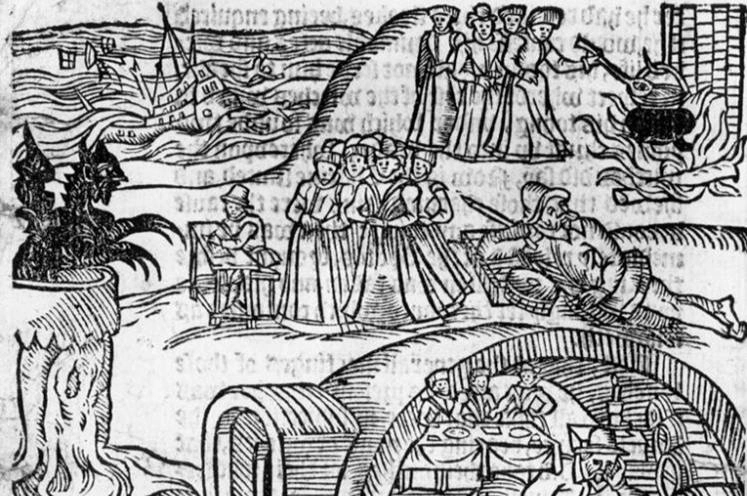
The North Berwick Witch Trials
In 1590, James VI of Scotland personally interrogated accused witches at North Berwick, convinced they had raised storms to sink his ships. What the trial record actually shows, why James wrote Daemonologie in response, and how North Berwick set the template for Scotland's far deadlier witch-hunting tradition.
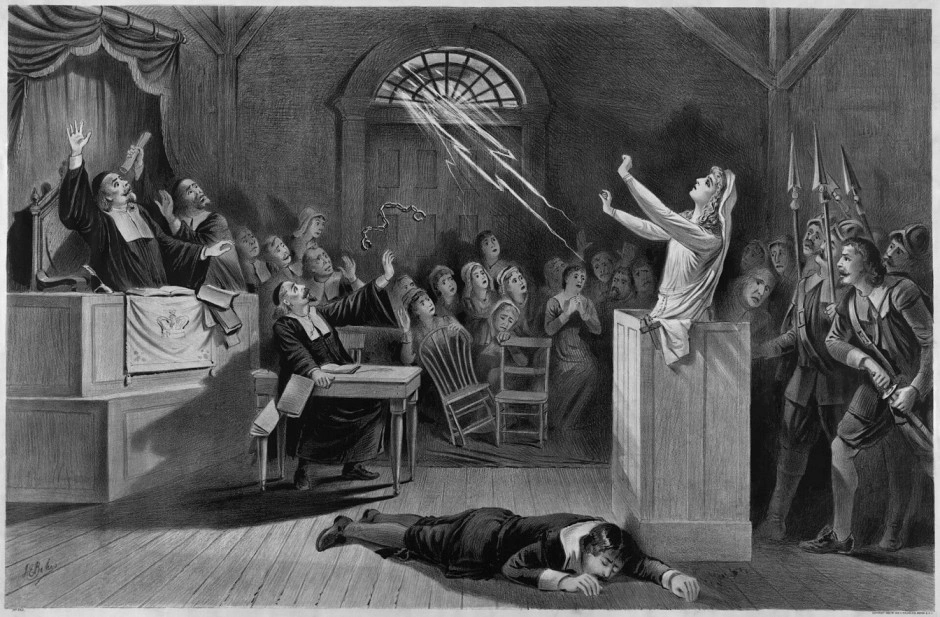
The Salem Witch Trials
The Salem witch trials of 1692 are the most mythologised in history, and the most misunderstood. A source-critical account of what actually happened, who the accused really were, why it happened when and where it did, and what the modern pagan reception gets wrong.
Begin your practice
Grimoire is available now on Android and as a web app. Start today.